
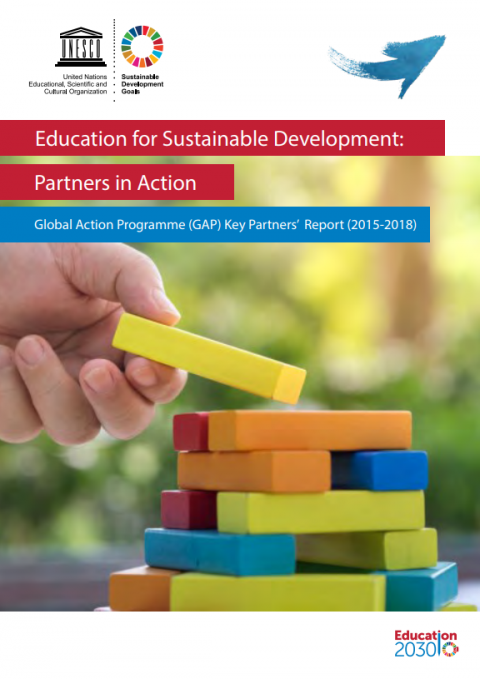
Education for Sustainable Development: Partners in Action; Global Action Programme (GAP) Key Partners' Report (2015-2018)
- المؤلف المؤسسي
- منظمة الأمم المتحدة للتربية والعلم والثقافة (UNESCO)
- الترتيب
- 15 p.
- لغة المورد
- الإنجليزيةالفرنسيةالإسبانيةالروسيةالعربية
- سنة النشر
- 2019
- أنواع الموارد
- تقارير المؤتمر والبرنامج
- مستوى التعليم
- رعاية وتعليم الطفولة المبكرةالتعليم الابتدائيالتعليم الثانويالتعليم العاليالتعلم مدى الحياةالتعليم والتدريب التقني والمهنيالتعليم غير الرسميأخرى
- المناطق
- جميع دول العالم
- مكان النشر
- Париж
The Global Action Programme (GAP) on Education for Sustainable Development (ESD) was launched by UNESCO as a follow up to the United Nations Decade of ESD in order to accelerate progress on sustainable development and scale up action in all areas of education and learning. Its duration is from 2015 to 2019.To that end, UNESCO works with a network of 97 GAP Key Partners from government, civil society, the private sector and academia active in five Priority Action Areas: advancing policy, transforming learning environments, building the capacity of educators, empowering youth, and accelerating sustainable solutions at the local level. Each GAP Key Partner committed to meet specific targets by 2019.
To measure progress in meeting the targets set by the GAP Key Partners, 10 indicators were identified, two in each Priority Action Area. Through surveys sent to them by UNESCO, GAP Key Partners report against these 10 indicators and toward the targets set for each indicator. In the surveys, GAP Key Partners are also invited to rate the benefits of participation in the GAP for their work and provide qualitative data concerning their implementation progress.
Three progress reports are scheduled to be produced:
- The first report, covering progress between 2015 and 2016, was released by UNESCO in 2017
- This second report, covering 2015-2018, is to be published in 2019
- The third and final report, covering the entire period of the GAP, 2015-2019, will be published in 2020
This second report presents the results of the GAP Key Partners survey carried out at the end of 2018, with a response rate of 78%. The report presents the analysis of the quantitative responses of GAP Key Partners to each of the 10 indicators. Based on the qualitative responses provided by the GAP Key Partners, a short comment on each of the progress status is also provided.
موارد ذات صلة
-
 IIEP-UNESCO 12th Medium-Term Strategy: 2026–2029
 -
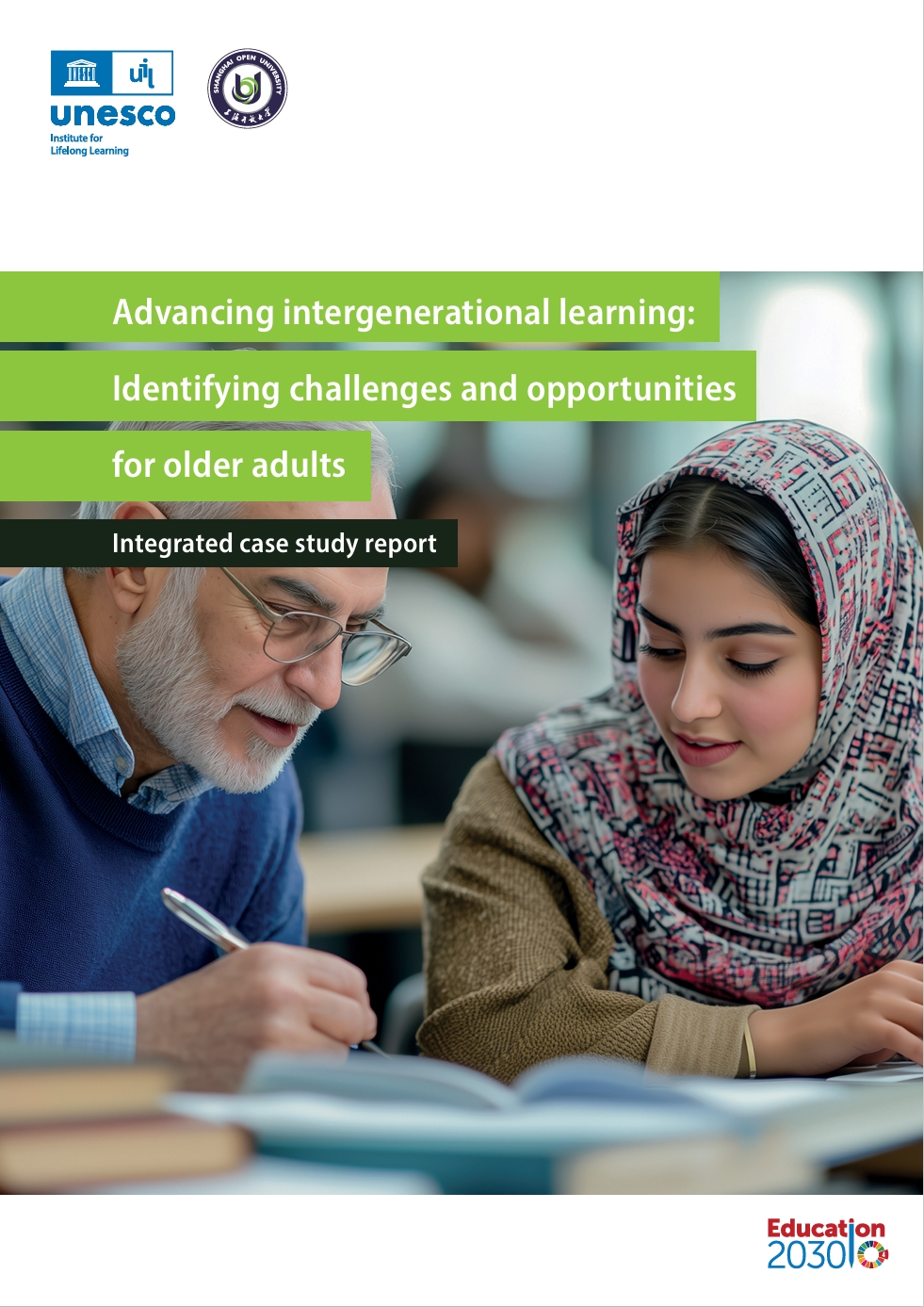 Advancing Intergenerational Learning: Identifying Challenges and Opportunities for Older Adults; Integrated Case Study Report
 -
 Digital Empowerment for Lifelong Learning and Transformative Andragogy (DELTA) for Adult Educators: Introduction to the DELTA Framework and Resources
 -
 Bridging the Grey Digital Divide: Enhancing ICT Learning for Older Adults; Research Report