
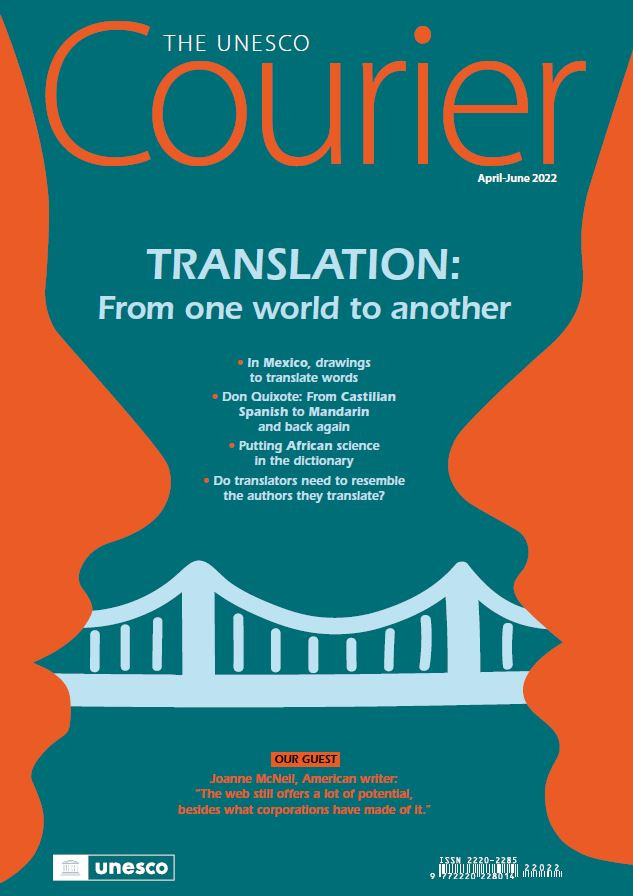
Translation: From One World to Another (The UNESCO Courier No. 2; April-June 2022)
- Corporate Author
- UNESCO
- ISBN
- ISSN 2220-2285 (eng, print); ISSN 2220-2293 (eng, online)
- Collation
- 49 p.
- Resource Language
- EnglishFrenchSpanishRussianArabicChineseCatalanEsperanto
- Year of publication
- 2022
- Topic
- Diversity / Cultural literacy / InclusivenessGlobalisation and social justice / International understanding
- Resource Type
- Research papers / journal articles
- Level of education
- Technical and vocational education and trainingOthers
- Region
- Global
- Place of publication
- Paris
To translate is “to say almost the same thing”, in the words of the Italian writer Umberto Eco. A whole world is contained in this “almost”. To translate is to confront the other, the different, the unknown. It is often the essential prerequisite for those who want to access a universal, multiple, diverse culture. It is therefore no coincidence that the League of Nations took up the issue in the 1930s, envisaging the creation of an Index Translationum.
Taken over by UNESCO in 1948, this Index allowed the first census of translated works in the world. Two years later, the Representative Works programme was launched to translate masterpieces of world literature. UNESCO’s support for the publication last year of a lexicon of words from indigenous languages of Mexico that are untranslatable into Spanish is a continuation of these efforts.
Although their disappearance was predicted as early as the 1950s, translators – who are most often women – have never been as numerous as they are today. The machines developed in the aftermath of the war have not been able to outdo this behind-the-scenes profession. Nor have digital translation tools, which have become the standard feature of our globalized conversations, even if they have contributed to transforming the job.
This is because language is more than just a means of communication. It is that, and much more. It is what written or oral works make of it, contributing to forge what is sometimes called the ‘genius of the language’, which the most powerful applications cannot restore.
Related Resources
-
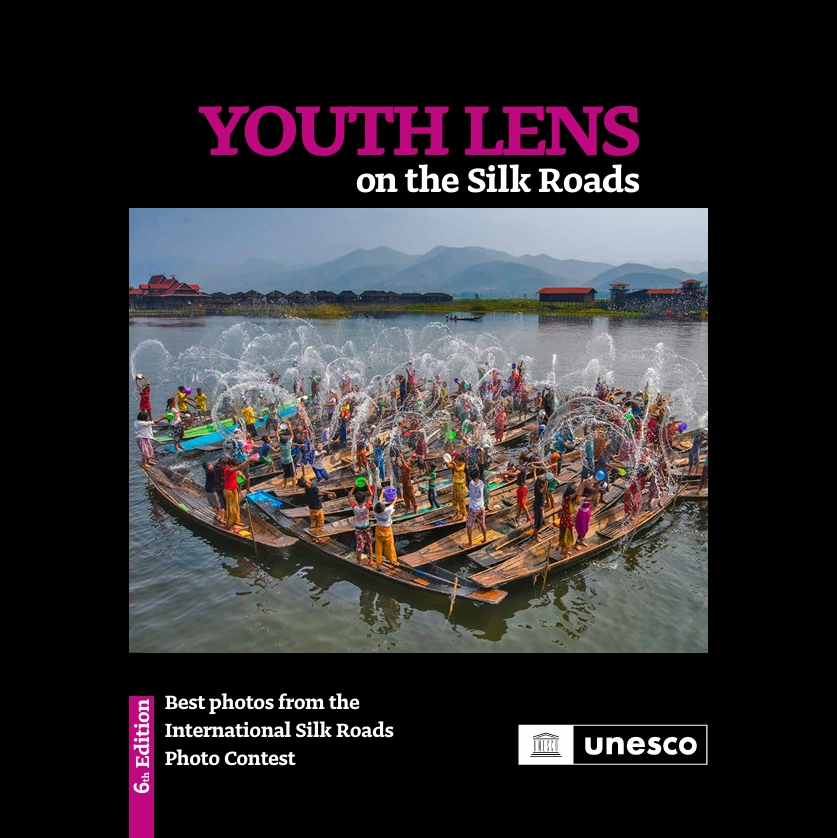 Youth Lens on the Silk Roads: Best Photos from the International Silk Roads Photo Contest; 6th Edition
 -
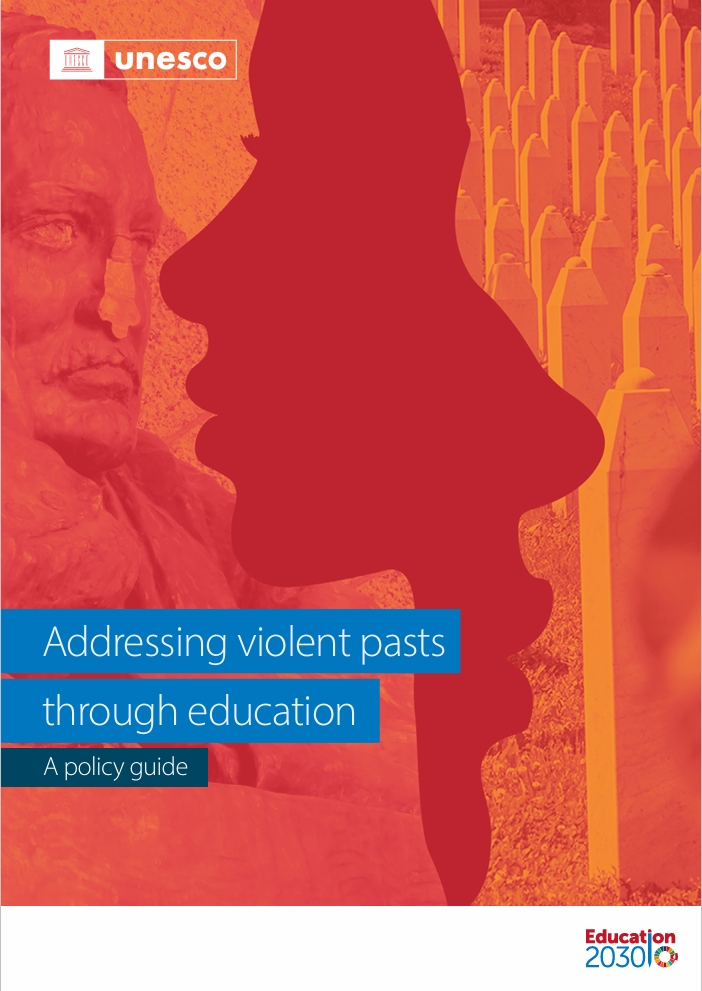 Addressing Violent Pasts through Education: A Policy Guide
 -
 UNESCO Framework for Culture and Arts Education: Implementation Guidance
 -
 The Representation of Jews, Judaism and Antisemitism in School Textbooks and Curricula in Europe