
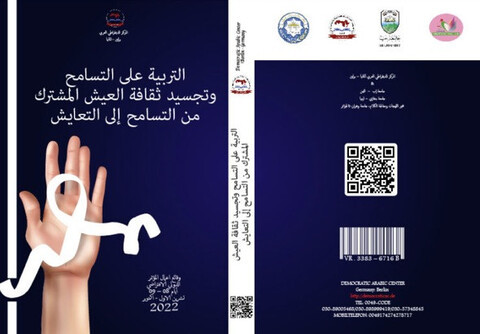
Tolerance Education and the Embodiment of Coexistence Culture: From Tolerance to Coexistence
- Corporate Author
- Democratic Arab Center
- Collation
- 423 p.
- Resource Language
- Arabic
- Year of publication
- 2022
- Resource Type
- Conference and programme reports
- Level of education
- Primary educationSecondary educationHigher educationLifelong learning
- Region
- Arab StatesGlobal
- Place of publication
- برلين
The concept of tolerance has received great attention in light of contemporary societal changes in order to ensure the stability of society and the coexistence of its members in harmony and peace, in addition to its importance at the level of relations between countries.
Tolerance is a human value of a universal nature. The concept of tolerance emerged from the need of societies mired in war and civil strife. It gave remarkable progress to societies and institutions in the West, and liberated people from the shackles of fear. The concept of tolerance established more humane laws and imposed on countries new patterns of thinking. And using reason to devise ways to avoid violence and intolerance for humanity. The United Nations has committed to strengthening tolerance by promoting mutual understanding between cultures and peoples.
The United Nations Educational, Scientific and Cultural Organization, UNESCO, became aware of the issue of the culture of tolerance and issued, on November 16, 1995, a declaration containing the basic principles of tolerance as an educational, psychological and social culture. Since the twenty-eighth session of the UNESCO General Conference, this day has become an international day for tolerance.
 Addressing Violent Pasts through Education: A Policy Guide
  UNESCO Framework for Culture and Arts Education: Implementation Guidance
  Mainstreaming the General History of Africa into Education Systems: The Curriculum Pathway
 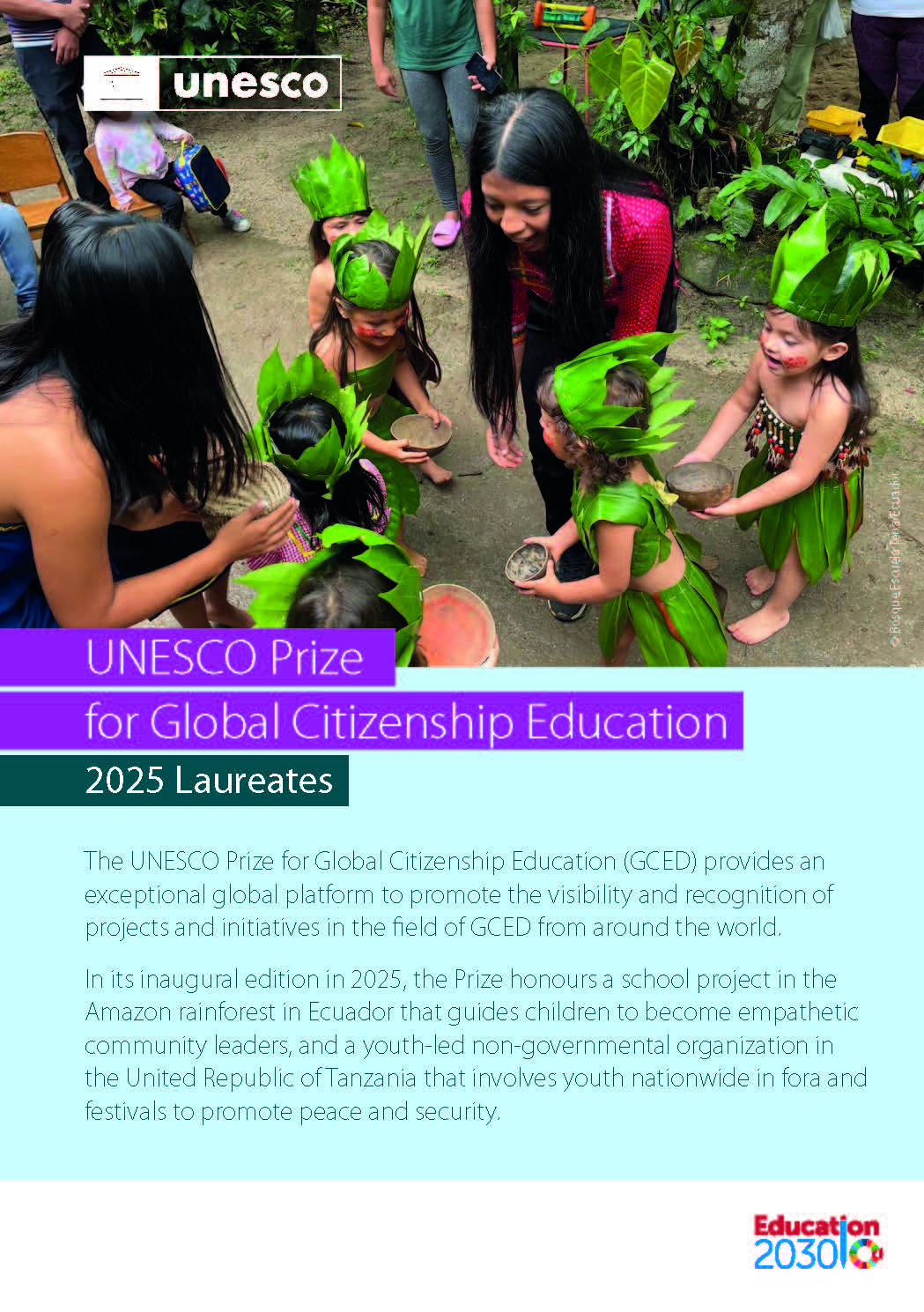 UNESCO Prize for Global Citizenship Education 2025 Laureates