
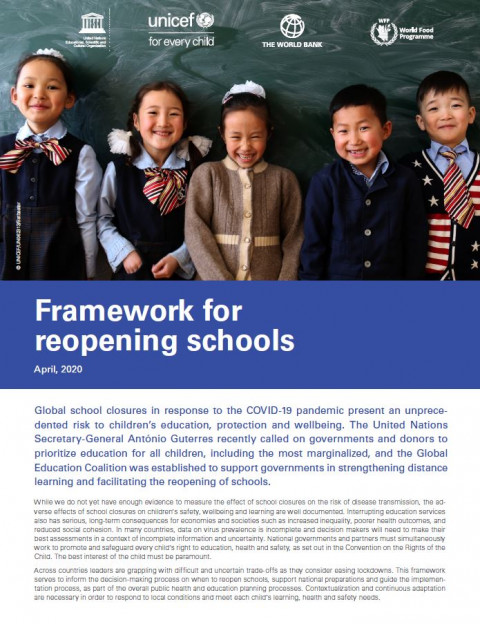
Framework for Reopening Schools; April, 2020
- Collation
- 5 p.
- Resource Language
- English
- Year of publication
- 2020
- Topic
- Diversity / Cultural literacy / InclusivenessGlobalisation and social justice / International understandingSustainable development / Sustainability
- Resource Type
- International normative instruments / policy and advocacy documentsCurriculum, teaching-learning materials and guides
- Level of education
- Early childhood care and educationPrimary education
- Region
- Global
- Place of publication
- Geneva
By late April, nationwide school closures were still disrupting the learning of more than 73 per cent of students, or more than 1.2 billion children and youth. When deciding whether to reopen schools, authorities should look at the benefits and risks across education, public health and socio-economic factors, in the local context, using the best available evidence. The best interest of every child should be paramount.
The guidelines aim to inform the decision-making process regarding school reopening, support national preparations and guide the implementation process, as part of overall public health and education planning processes. It is designed to be a flexible tool that can be adapted to each context and updated as the situation changes. The guidelines outline six key priorities to assess the readiness of those schools and inform planning.
Related Resources
-
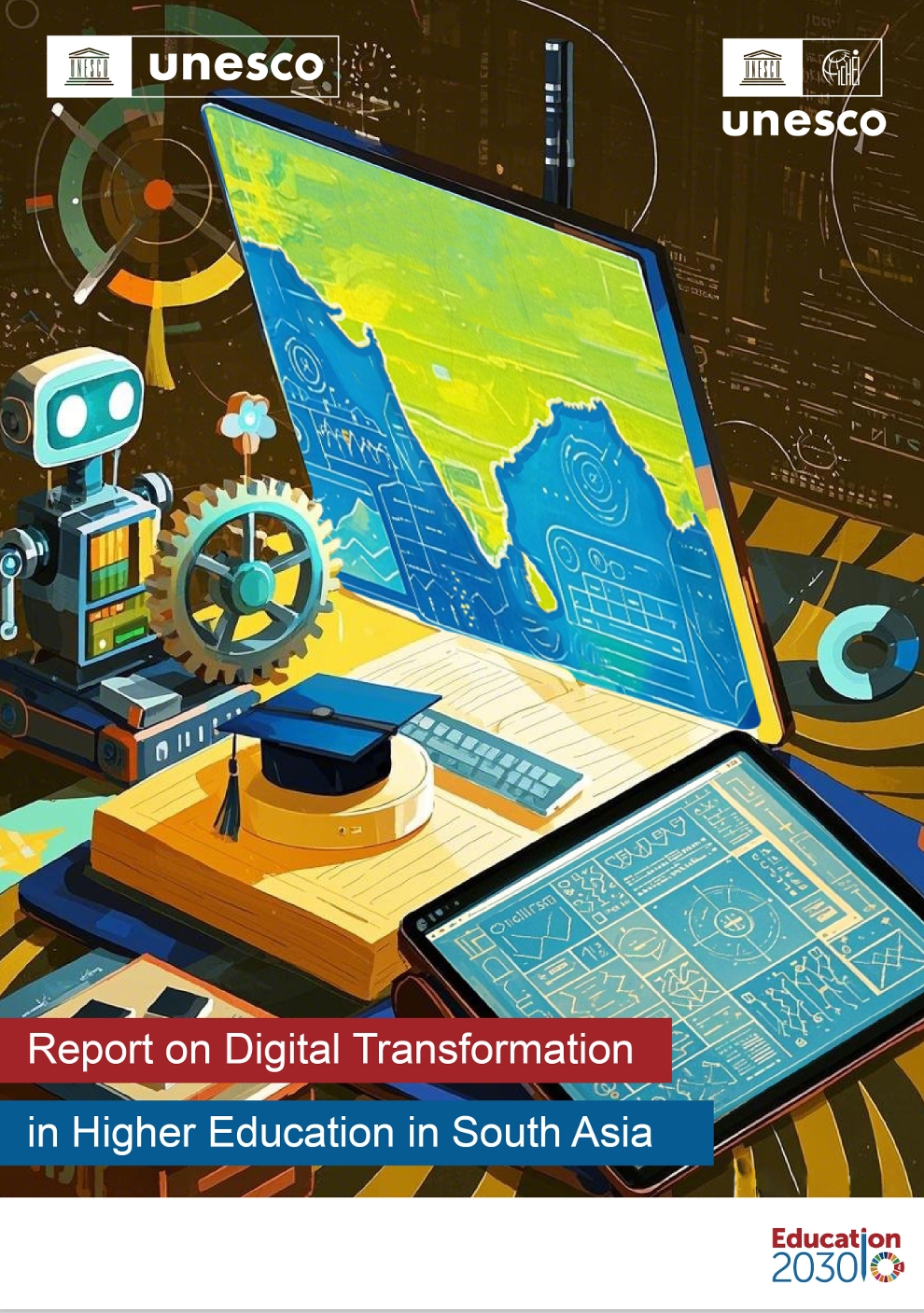 Report on Digital Transformation in Higher Education in South Asia
 -
 Voices Against Violence: Middle Years
 -
 Study on the Historical Impact of the 1974 Recommendation concerning Education for International Understanding, Cooperation and Peace and Education relating to Human Rights and Fundamental Freedoms
 -
 IIEP-UNESCO 12th Medium-Term Strategy: 2026–2029