
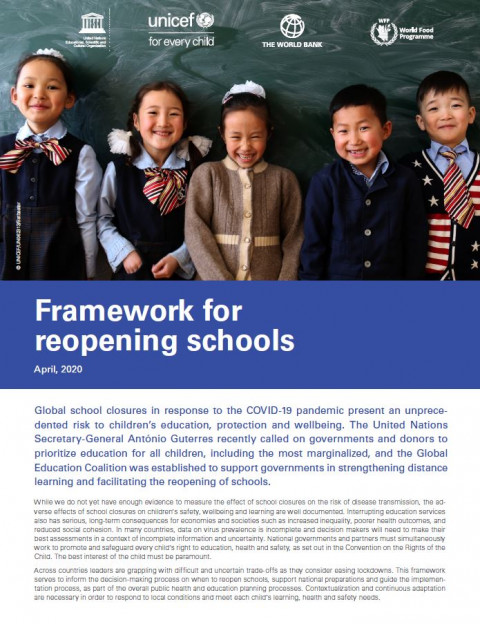
Framework for Reopening Schools; April, 2020
- Auteur institutionnel
- Organisation des Nations Unies pour l'éducation, la science et la culture (UNESCO)United Nations Children's Fund (UNICEF)World BankWorld Food Programme
- Collation
- 5 p.
- Langue de la ressource
- Anglais
- Année de publication
- 2020
- Thème
- Diversité / Compétence culturelle / InclusionMondialisation et justice sociale / Compréhension internationaleDéveloppement durable / Durabilité
- Type de ressource
- International normative instruments / policy and advocacy documentsProgrammes d'études, matériel d'enseignement et d'apprentissage et guides
- Niveau d’éducation
- Éducation et protection de la petite enfanceEnseignement primaire
- Région
- Global
- Lieu de publication
- Geneva
By late April, nationwide school closures were still disrupting the learning of more than 73 per cent of students, or more than 1.2 billion children and youth. When deciding whether to reopen schools, authorities should look at the benefits and risks across education, public health and socio-economic factors, in the local context, using the best available evidence. The best interest of every child should be paramount.
The guidelines aim to inform the decision-making process regarding school reopening, support national preparations and guide the implementation process, as part of overall public health and education planning processes. It is designed to be a flexible tool that can be adapted to each context and updated as the situation changes. The guidelines outline six key priorities to assess the readiness of those schools and inform planning.
Ressources associées
-
 IIEP-UNESCO 12th Medium-Term Strategy: 2026–2029
 -
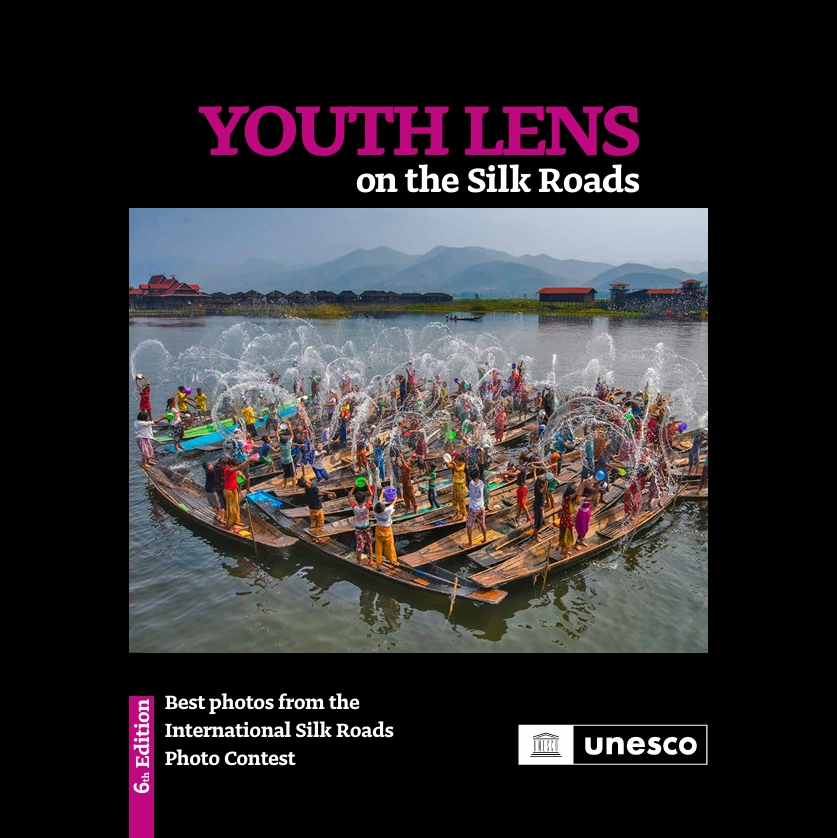 Youth Lens on the Silk Roads: Best Photos from the International Silk Roads Photo Contest; 6th Edition
 -
 Advancing Intergenerational Learning: Identifying Challenges and Opportunities for Older Adults; Integrated Case Study Report
 -
 Digital Empowerment for Lifelong Learning and Transformative Andragogy (DELTA) for Adult Educators: Introduction to the DELTA Framework and Resources