
Resources
Explore a wide range of valuable resources on GCED to deepen your understanding and enhance your research, advocacy, teaching, and learning.
8,374 Results found
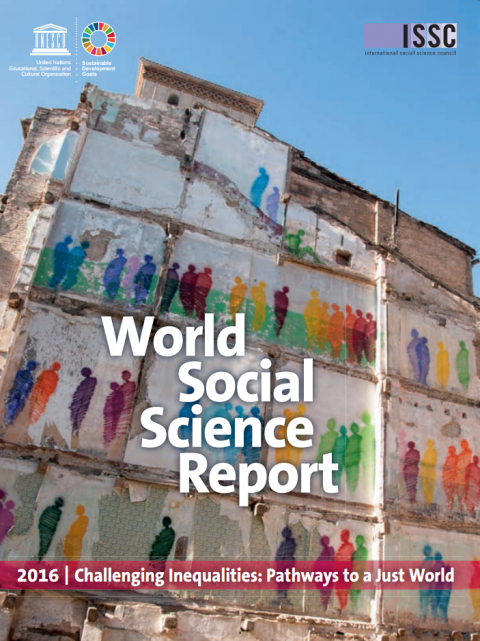 World social science report, 2016: Challenging inequalities; pathways to a just world Year of publication: 2016 Corporate author: UNESCO Never before has inequality been so high on the agenda of policy-makers worldwide, or such a hot topic for social science research. More journal articles are being published on the topic of inequality and social justice today than ever before. This Report draws on the insights of over 100 social scientists and other thought leaders from all over the world, across various disciplines, to emphasize transformative responses to inequality at all levels, from the grass roots to global governance. Too many countries are investing too little in researching the long-term impact of inequality on the sustainability of their economies, societies and communities. Unless we address this urgently, inequalities will make the cross-cutting ambition of the Sustainable Development Goals (SDGs) to ‘leave no one behind’ by 2030 an empty slogan.
 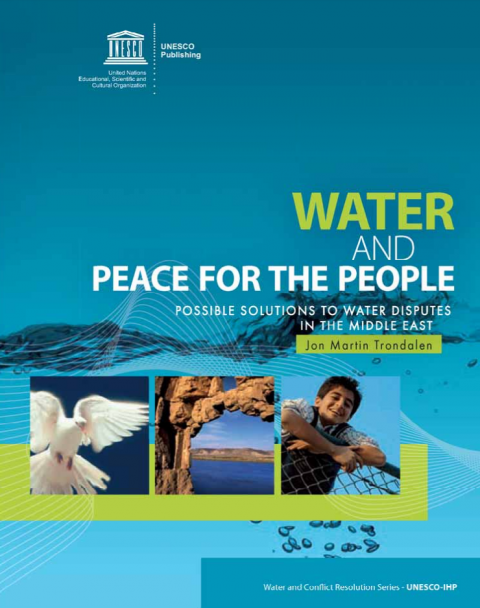 Water and peace for the people: possible solutions to water disputes in the Middle East Year of publication: 2008 Corporate author: UNESCO This book proposes practical and objective solutions to the entrenched water conflicts in the Middle East. The author reveals and clarifies the complexity of the water conflicts, drawing on years of experience facilitating and chairing water negotiations in the region. The bottom line is: Unless the countries involved co-operate, the consequences will be devastating. The lack of plentiful and clean water for the people will not only result in severe human suffering, but could also have grave geopolitical consequences.
  The United Nations world water development report 2016: water and jobs Year of publication: 2016 Corporate author: UNESCO Three out of four jobs worldwide rely on water. As such, water shortages and lack of access may limit economic growth in the years to come, according to the World Water Development Report 2016. From its collection, through various uses, to its ultimate return to the natural environment, water is a key factor in the development of job opportunities either directly related to its management (supply, infrastructure, wastewater treatment, etc.) or in economic sectors that are heavily water-dependent such as agriculture, fishing, power, industry and health. In its analysis of the economic impact of access to water, the report cites numerous studies that show a positive correlation between investments in the water sector and economic growth. It also highlights the key role of water in the transition to a green economy.
  70 quotes for peace: UNESCO's 70th anniversary celebrations Year of publication: 2015 Author: Guila Clara Kessous Corporate author: UNESCO This book, created to mark the 70th anniversary of the United Nations Educational Scientific and Cultural Organization (UNESCO), features 70 quotes from artists, intellectuals, activists, politicians and statesmen. The quotes all testify to a strong conviction that peace, in order to be sustainable, must be built upon a mutual understanding between people and the intellectual solidarity of humankind. But they also demonstrate that each person bears within himself a huge capacity for tolerance and dignity that he can choose to use to achieve this ideal.
  Human rights: questions and answers Year of publication: 2009 Author: Leah Levin Corporate author: UNESCO This 5th edition presents an overview of the scope and content of international human rights law, procedures to monitor its implementation, organizations and institutions working for human rights, major international events, as well as new developments and challenges. It also offers a brief commentary on the articles of the Universal Declaration of Human Rights explaining their meaning and providing examples on their practical implications. A permanent feature of this publication, and one of the reasons of its success, are the cartoons of Plantu, a well-known French political cartoonist and a devoted human rights activist.
 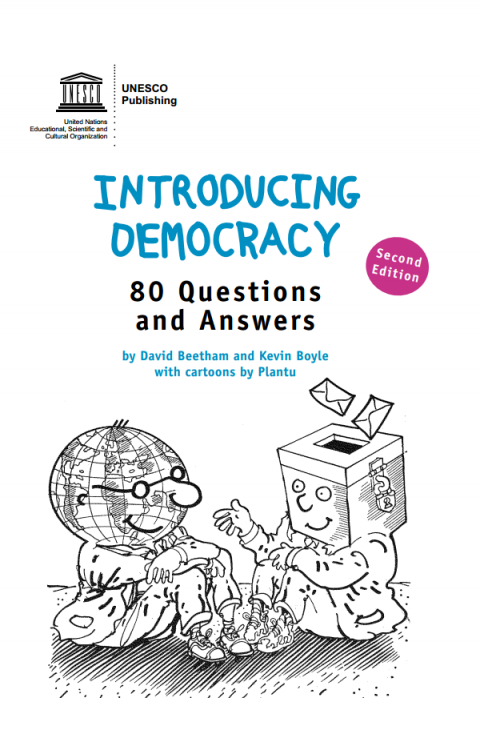 Introducing democracy: 80 questions and answers Year of publication: 2009 Author: David Beetham | Kevin Boyle Corporate author: UNESCO Humorously illustrated by Plantu, the famous cartoonist of the French newspaper Le Monde, this book is a valuable tool for all those who want to know more about democracy and human rights, whether it be students, activists, civil servants, or simply as interested citizens. What is democracy? What is the relation between democracy and individual rights? Is majority rule always democratic? How can democracy be maintained and improved? This book tackles these and other questions about democracy, covering six broad areas: basic concepts and principles; free and fair elections; open and accountable government; individual rights and their defence; democratic or civil society; the future of democracy.
  Quality Physical Education (QPE): guidelines for policy makers Year of publication: 2015 Author: Nancy, McLennan | Jannine, Thompson Corporate author: UNESCO A key feature of the Post-2015 Development Agenda is sustainable development. Sustainable development starts with safe, healthy, well-educated children. Participation in quality physical education (QPE), as part of a rounded syllabus, enhances young peoples’ civic engagement, decreases violence and negative patterns of behaviour, and improves health awareness. The UNESCO QPE Policy Package is an original piece of work, which draws upon results from extensive global research (including the Worldwide Survey of School Physical Education). These guidelines, designed for global application and local adaptation, provide a means of analysing current policy through practical guidance and a ‘how-to’ approach. The materials have been developed in consultation with key partners including the European Commission, the International Council for Sport Science and Physical Education (ICSSPE), UNDP, UNICEF, UNOSDP and WHO.
  Manifesto for Education - Empowering Educators and Schools Year of publication: 2015 Corporate author: Radicalisations Awareness Network (RAN) The manifesto is a call to action to help empower the very group of people who have the potential to be some of the most influential in the lives of our young people and to help them truly prevent violent extremism. As it is impossible for schools to solve the problem alone and immediately, on different levels (the educator, the school, the partners and the government) suggestions are made to inspire interventions that could start tomorrow (short term) and help establish a sustainable approach for the future (long term). These insights are mostly based on experiences in secondary education but can easily be translated to primary, vocational and higher education.
  Radicalisations Awareness Network (RAN) Edu's Guide on training programmes 'Effective and confident teachers and other school staff' Year of publication: 2016 Corporate author: Radicalisations Awareness Network (RAN) This document will help teachers, principals, schools and (local and national) authorities discuss and design training programmes. Different training modules are identified, like (de)polarisation training, critical thinking, and how to turn a school into a safe and democratic mini society.
  Promoting inclusive teacher education: methodology Year of publication: 2013 Author: Ian Kaplan | Ingrid Lewis Corporate author: UNESCO Bangkok ‘Promoting Inclusive Teacher Education’ is a series of five advocacy guides. The guides discuss challenges and barriers to inclusive education in different areas of teacher education and offer related strategies and solutions for effective advocacy towards more inclusive practices. The series begins with this introductory guide. It provides an overview of inclusive teacher education and of what advocacy means in this context. It also provides an introduction to the topics covered in the four other guides in the series. These are ‘Policy’, ‘Curriculum’, ‘Materials’, and ‘Methodology’.Advocacy Guide 5: Methodology – changing teaching methodology within teacher education institutions. Methodology refers to the theory and practice of teaching and learning. This addresses how teaching and learning is understood, organized, and conducted. Methodology, then, is the overall framework or approach to teaching which encompasses specific teaching methods. For example, an overall inclusive teaching methodology involves specific approaches to individualized/personalized instruction, and learner-centred teaching. These four advocacy guides are structured so that they: • break the issue down into several key challenges; • analyse the broad situation in the region, and suggest questions that advocates could ask to help them investigate the situation in their specific context; and • suggest pertinent advocacy goals, and the messages that advocates may want to convey, as well as indicators for deciding whether advocacy on the issue is having any impact. Tables at the end of each advocacy guide summarize the advocacy messages and suggest potential targets for each message, and then offer space for readers to make notes about how they might convey these messages to each target (drawing on advice provided in the brief guide to advocacy in this introductory guide). Illustrative case studies are provided wherever possible, and readers are encouraged to use their own investigations within their context to identify local case studies that they can use to back up their advocacy messages.