
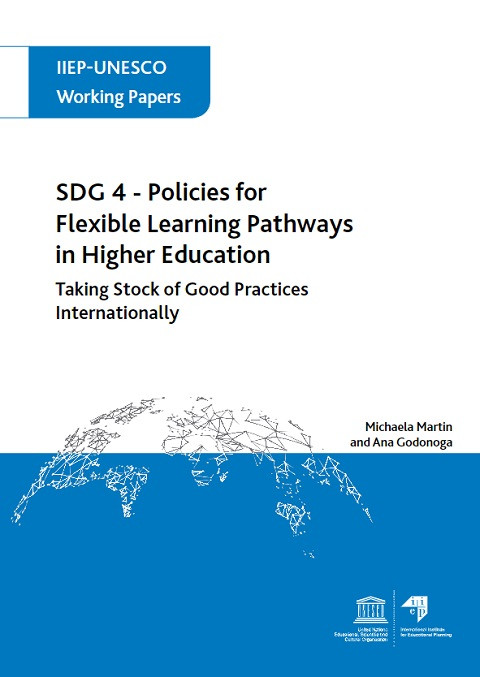
SDG 4 - Policies for flexible learning pathways in higher education: Taking stock of good practices internationally (IIEP-UNESCO Working Papers)
- Autor Corporativo
- UNESCO International Institute for Educational Planning (IIEP)
- Colección
- 51 p.
- Idioma del recurso
- inglés
- Año de publicación
- 2020
- Tipo de Recurso
- International normative instruments / policy and advocacy documentsResearch papers / journal articles
- Nivel de Educación
- Educación superiorEducación permanenteEducación y Formación Técnica y ProfesionalEducación no formal
- Región
- Global
- Lugar de publicación
- Paris
This paper draws on country examples across different UNESCO regions to illustrate policy-relevant as well as practical approaches to developing flexible learning pathways in higher education. It shows that policies can facilitate flexible learning pathways include legislative and regulatory frameworks, articulation and transfer policies, and lifelong learning policies. It also presents a number of supportive policy instruments that can serve to bridge policy and practice, such as national qualifications frameworks, quality assurance and accreditation, credit accumulation and transfer systems, and information and guidance services. Finally, apart from discussing system-wide approaches, this paper also gives examples of more decentralized, institution-led practices that contribute to flexible learning pathways. This paper concludes that well-designed policy frameworks and instruments and targeted measures can create an enabling environment for flexible learning pathways, but their effectiveness requires strong administrative capacity and coordination, as well as the involvement of all relevant stakeholders, including those who design, implement, and benefit from policies. It is also essential that policies, instruments, and practices are in alignment with one another and work towards a common objective. Therefore, a holistic approach, comprising an adequate and well-coordinated mix of policies, instruments, and targeted measures, is required, in order to translate flexible learning pathways from a national priority into an institutionalized practice that reaches its intended beneficiaries.
Recursos Relacionados
-
 IIEP-UNESCO 12th Medium-Term Strategy: 2026–2029
 -
 Advancing Intergenerational Learning: Identifying Challenges and Opportunities for Older Adults; Integrated Case Study Report
 -
 Digital Empowerment for Lifelong Learning and Transformative Andragogy (DELTA) for Adult Educators: Introduction to the DELTA Framework and Resources
 -
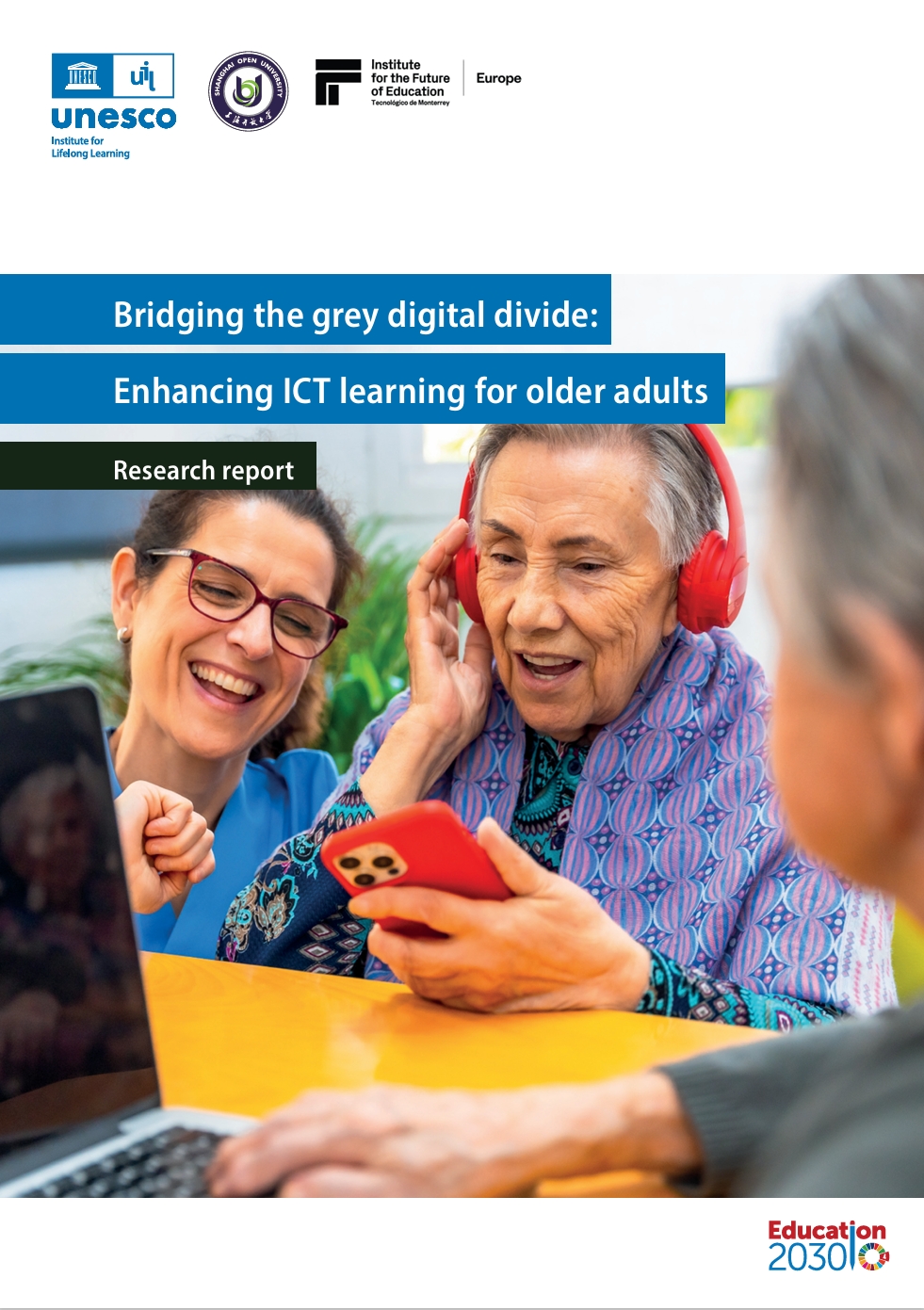 Bridging the Grey Digital Divide: Enhancing ICT Learning for Older Adults; Research Report