
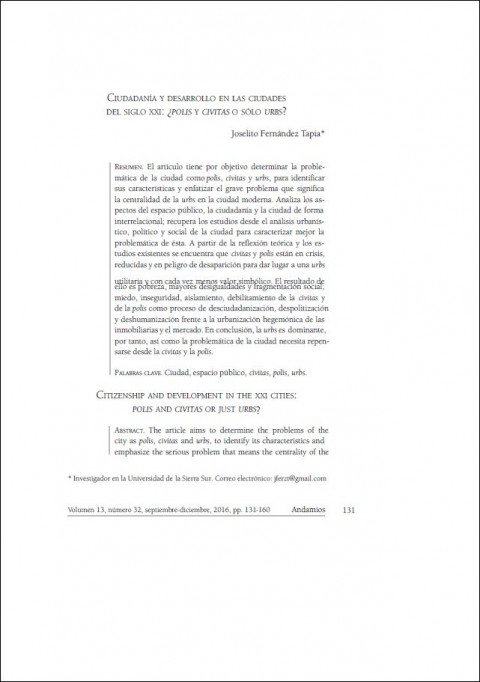
Citizenship and Development in the XXI Cities: Polis and Civitas or Just Urbs?
- Auteur
- Joselito Fernández Tapia
- ISBN
- ISSN 1870-0063
- Collation
- p. 131-160
- Langue de la ressource
- Espagnol
- Année de publication
- 2016
- Thème
- Civisme / Citoyenneté / DémocratieMondialisation et justice sociale / Compréhension internationaleDiversité / Compétence culturelle / InclusionDéveloppement durable / DurabilitéAutres
- Type de ressource
- Research papers / journal articles
- Niveau d’éducation
- Autres
- Région
- Amérique latine et Caraïbes
- Lieu de publication
- Ciudad de México
The article aims to determine the problems of the city as polis, civitas and urbs, to identify its characteristics and emphasize the serious problem that means the centrality of the urbs in the modern city. It analyzes aspects of public space, citizenship and city, as interrelated, recovering from urban studies, political and social analysis of the city, to better characterize their problems. From the literature and existing studies we found that civitas and polisare in crisis, and reduced danger of disappearing, to result in a urbs, utilitarian and less and less symbolic value. The result is poverty, greater inequality and social fragmentation, fear, insecurity, isolation, weakening of the civitas and polis, disenfranchisement, depoliticization and dehumanization; against the hegemonic and development of real estate market. It is concluded that dominates the urbs, which, as all the problems of the city needs to be rethought from the civitas and polis.
Ressources associées
-
 Study on the Historical Impact of the 1974 Recommendation concerning Education for International Understanding, Cooperation and Peace and Education relating to Human Rights and Fundamental Freedoms
 -
 IIEP-UNESCO 12th Medium-Term Strategy: 2026–2029
 -
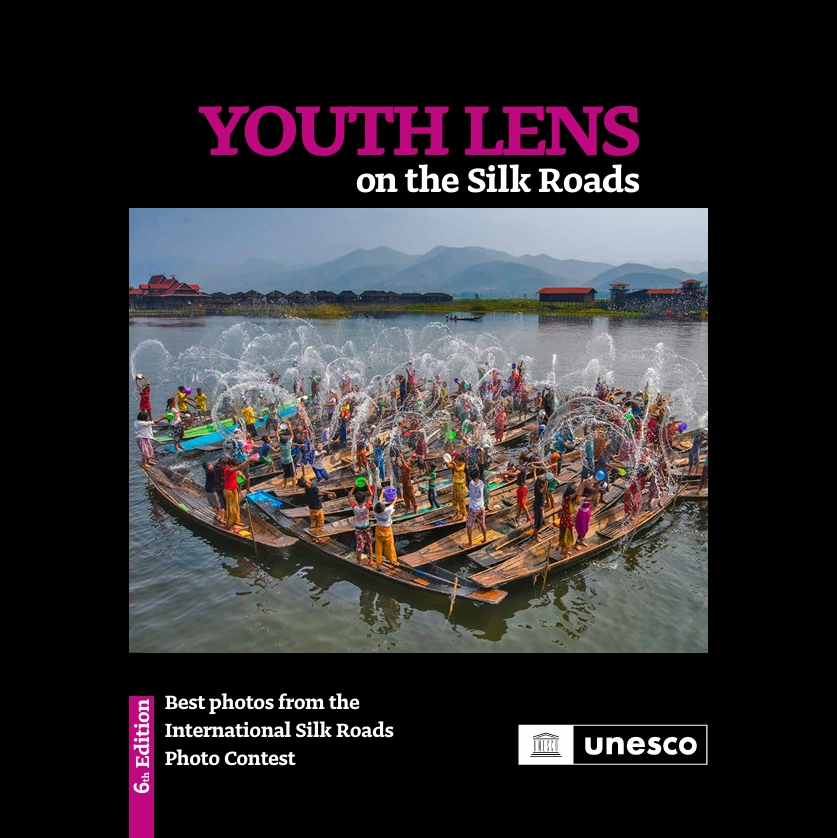 Youth Lens on the Silk Roads: Best Photos from the International Silk Roads Photo Contest; 6th Edition
 -
 More than Welcome: Intercultural Integration of Migrants in and Through Higher Education