
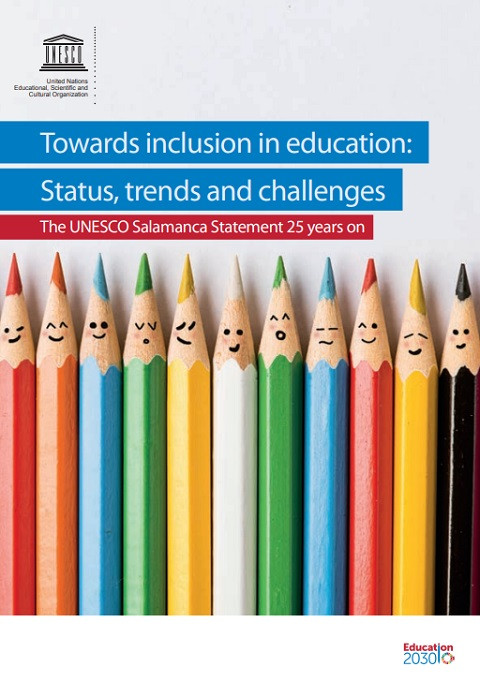
Towards Inclusion in Education: Status, Trends and Challenges: The UNESCO Salamanca Statement 25 Years on
- Auteur institutionnel
- Organisation des Nations Unies pour l'éducation, la science et la culture (UNESCO)
- ISBN
- ISBN 978-92-3-100396-7
- Collation
- 43 p.
- Langue de la ressource
- Anglais
- Année de publication
- 2020
- Thème
- Diversité / Compétence culturelle / InclusionMondialisation et justice sociale / Compréhension internationaleDéveloppement durable / Durabilité
- Niveau d’éducation
- Éducation et protection de la petite enfanceEnseignement primaireEnseignement secondaireApprentissage tout au long de la vieÉducation non formelle
- Région
- Global
- Lieu de publication
- Paris
The 2030 Agenda for Sustainable Development focuses on leaving no one behind with its Goal 4 on education calling upon education systems ‘to ensure inclusive and equitable quality education and promote lifelong learning opportunities for all’. With ten years remaining to the target date of 2030, countries need to step up e¬orts to reach out to all learners, respect their diverse needs, abilities and characteristics and eliminate all forms of discrimination in the learning environment. This requires adopting an inclusive approach whose foundations have been laid by the UNESCO World Conference on Special Needs Education held in Salamanca, Spain, in 1994. The publication looks at the past, present and future since Salamanca. It provides examples from around the world and make recommendations to guide the further development of inclusive national policies and practices.
Ressources associées
-
 IIEP-UNESCO 12th Medium-Term Strategy: 2026–2029
 -
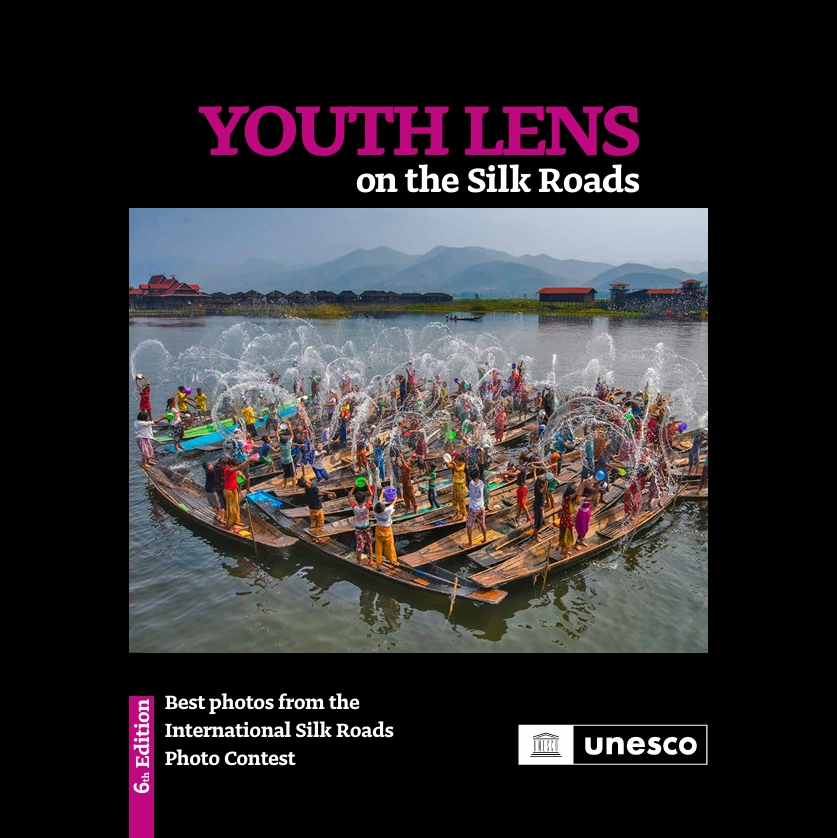 Youth Lens on the Silk Roads: Best Photos from the International Silk Roads Photo Contest; 6th Edition
 -
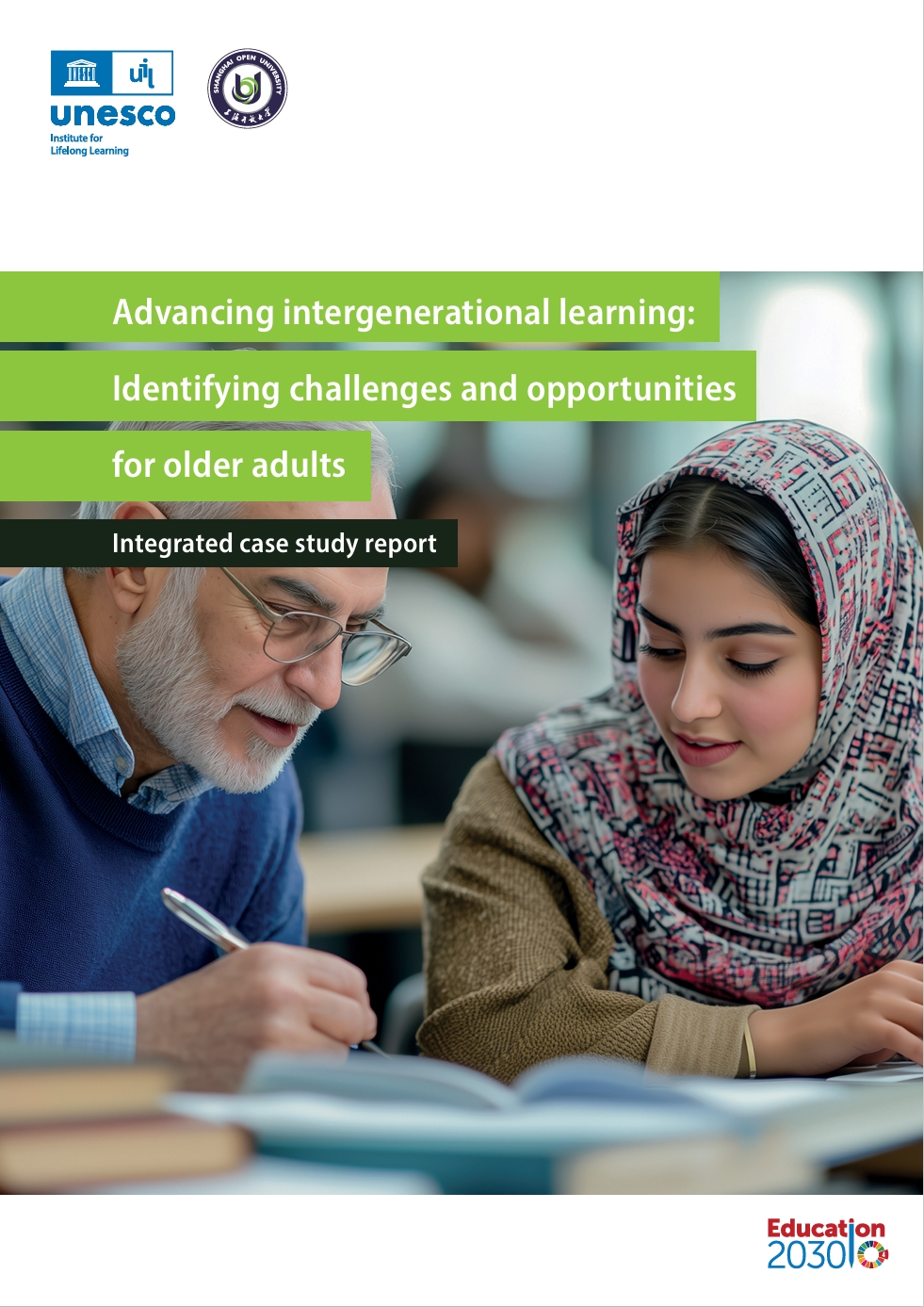 Advancing Intergenerational Learning: Identifying Challenges and Opportunities for Older Adults; Integrated Case Study Report
 -
 Digital Empowerment for Lifelong Learning and Transformative Andragogy (DELTA) for Adult Educators: Introduction to the DELTA Framework and Resources