
Ressources
Explorez une large gamme de ressources sur le GCED afin d’approfondir votre compréhension et de renforcer vos activités de recherche, de plaidoyer, d’enseignement et d’apprentissage.
2,162 résultats trouvés
 Greening Communities Guidance: Lifelong Learning for Climate and Sustainability Action Année de publication: 2025 Auteur institutionnel: UNESCO Institute for Lifelong Learning (UIL) | World Organization of the Scout Movement Climate change poses a serious threat to communities around the world, compelling us to protect vulnerable lives and shape resilient futures. By nurturing lifelong learning and empowering local initiatives, communities can drive transformative change – amplifying local efforts into global impact.Green communities are municipalities of any size that embrace lifelong learning to empower individuals to take meaningful climate and sustainability action. This is achieved by extending climate education beyond the classroom and offering learning opportunities in non-formal and informal settings – rooted in and responsive to local culture and context. By engaging learners of all ages across a variety of learning environments, residents of green communities are equipped to take informed, proactive and responsible action for the climate and environment, contributing to more sustainable living.The sections of this document provide an overview of the diverse learners, learning spaces and educational approaches that can contribute to greening communities. It outlines practical steps for developing a comprehensive green learning strategy and action plan that mobilizes learners of all generations in climate and sustainability efforts.Municipal governments, along with a wide range of local stakeholders and change agents in both urban and rural areas, are invited to use this guidance to foster green communities through a lifelong learning lens.Together, let’s green our communities!
  Digital Empowerment for Lifelong Learning and Transformative Andragogy (DELTA) for Adult Educators: Introduction to the DELTA Framework and Resources Année de publication: 2025 Auteur institutionnel: UNESCO Institute for Lifelong Learning (UIL) | Shanghai Open University (SOU) The UNESCO Institute for Lifelong Learning (UIL), in partnership with Shanghai Open University (SOU), has unveiled the DELTA Framework — Digital Empowerment for Lifelong Learning and Transformative Andragogy. This global initiative aims to enhance adult educators’ digital competencies and foster inclusive, lifelong learning opportunities for all.
  학습도시와 지속가능발전목표: 실행을 위한 가이드 Année de publication: 2017 Auteur institutionnel: UNESCO Institute for Lifelong Learning (UIL) 학습도시의 핵심 특징(Key Features of Learning Cities)에 맞추어 이 실행 가이드는 환경 친화적이며 건강한 학습도시(환경적 지속가능발전), 평등하고 포용적인 학습도시(개인 권한 부여, 상호문화적 대화, 사회적 통합), 학습도시 내에서의 고용 및 기업가정신(경제 발전 및 문화적 번영)이라는 세 가지 주제영역으로 구성되어 있다. 지속가능발전의 이 세 가지 영역은 근본적으로 서로 연계되어 있으며, 도시에서의 평생학습 활동이 언제나 여기에 영향을 미칠 것임을 인식하는 것은 중요하다. 지속가능발전목표의 다른 영역과 마찬가지로 중요한 네 번째 영역은 문화(문화적 표현, 유산, 그리고 다양성) 영역이며, 이는 다음 장에서 공통 주제로 포함시켰다.
 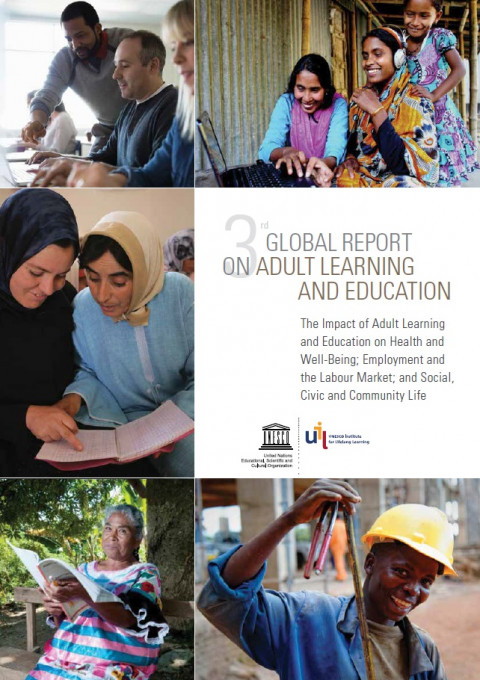 Third Global Report on Adult Learning and Education: The Impact of Adult Learning and Education on Health and Well-Being; Employment and the Labour Market; and Social, Civic and Community Life Année de publication: 2016 Auteur institutionnel: UNESCO Institute for Lifelong Learning (UIL) This Report on Adult Learning and Education (GRALE III) comes out as the international community works towards the 2030 Agenda for Sustainable Development. It is also reference and advocacy documents, providing information for analysts and policymakers, and reminding Member States of their commitment. Here policymakers will find high-quality evidence to support policies, strategies and budgets. Stakeholders will find compelling arguments for how adult learning and education promotes sustainable development, healthier societies, better jobs and more active citizenship. Researchers will find entry points and ideas for future research.
 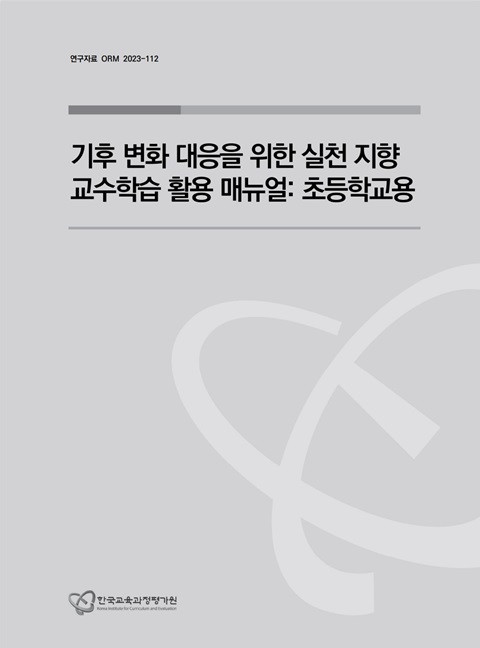 기후 변화 대응을 위한 실천 지향 교수학습 활용 매뉴얼: 초등학교용 Année de publication: 2023 Auteur: 유은정 | 장유정 | 최정순 | 홍원준 Auteur institutionnel: 한국교육과정평가원 기후 변화 대응 실천 지향 교수학습이란 “완화”와 “적응”이라는 기후 행동을 이끄는 학습 경험을 제공함으로써 인간과 환경이 공존하는 지속가능한 삶을 위해 개인적 실천 및 사회적 실천에 참여할 수 있도록 하는 시민성과 역량을 기르는 교수학습이다. 본 자료는 이를 학교 현장에 적용하기 위한 내용 체계, 교수학습 프레임워크 등을 제시하고 활용 및 점검을 위한 가이드라인을 담고 있다.
 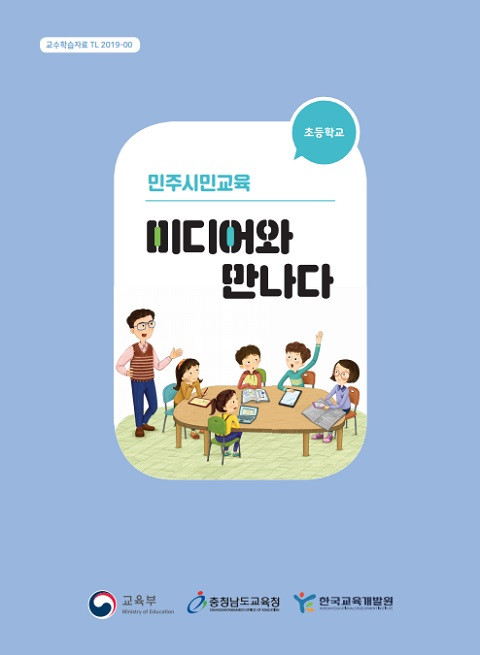 민주시민교육, 미디어와 만나다: 초등학교 Année de publication: 2020 Auteur institutionnel: 한국교육개발원 | 대한민국 교육부 | 충청남도교육청 본 자료는 민주시민교육과 미디어리터러시 교육 간의 연계성을 강화하여 민주시민교육과 관련한 수업에 활용하도록 개발된 교수·학습 자료이다. 자율, 존중, 연대, 정의, 평화 등 민주시민교육의 주요 주제들을 기반으로 총 5개 단원, 15개 차시로 구성되어, 교과 및 창의적 체험활동 등 교육 활동 전반에서 활용할 수 있다. 또한, 2015 개정교육과정과 연계하여 활용할 수 있도록 국어, 도덕, 사회 교과의 성취 기준을 토대로 내용과 활동을 편성하고, 활동 중심 수업을 통해 학생이 실천적인 민주시민의식을 함양할 수 있도록 단원을 구성하였다.
 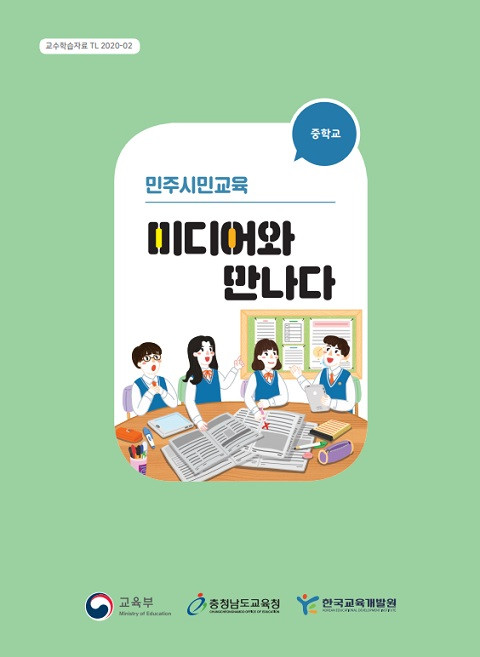 민주시민교육, 미디어와 만나다: 중학교 Année de publication: 2020 Auteur: 주민정 | 고선화 | 이연희 | 전현영 | 최연주 Auteur institutionnel: 한국교육개발원 | 대한민국 교육부 | 충청남도교육청 본 자료는 민주시민교육과 미디어리터러시 교육 간의 연계성을 강화하여 민주시민교육과 관련한 수업에 활용하도록 개발된 교수·학습 자료이다. 자율, 존중, 연대, 정의, 평화 등 민주시민교육의 주요 주제들을 기반으로 총 5개 단원, 15개 차시로 구성되어, 교과 및 창의적 체험활동 등 교육 활동 전반에서 활용할 수 있다. 또한, 2015 개정교육과정과 연계하여 활용할 수 있도록 국어, 도덕, 사회(일반사회), 역사, 미술 교과의 성취 기준을 토대로 내용과 활동을 편성하고, 활동 중심 수업을 통해 학생이 실천적인 민주시민의식을 함양할 수 있도록 단원을 구성하였다. 수업 대상은 중학교 1학년에서 3학년이다.
 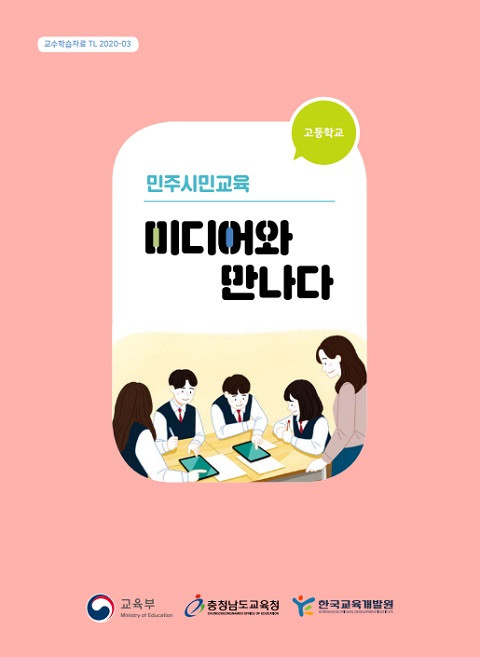 민주시민교육, 미디어와 만나다: 고등학교 Année de publication: 2020 Auteur: 나윤숙 | 김태현 | 임지예 | 정병연 | 조미옥 Auteur institutionnel: 한국교육개발원 | 대한민국 교육부 | 충청남도교육청 ‘민주시민교육, 미디어와 만나다’는 민주시민교육과 미디어리터러시 교육 간의 연계성을 강화하여 민주시민교육과 관련한 수업에 손쉽게 활용할 수 있도록 개발된 자료이다. 이를 통해 민주시민교육에 관심이 있는 선생님들에게 교과, 창의적 체험활동 등 교육활동 전반에 활용할 수 있는 교수-학습 자료를 제공하고자 하였다. 아울러 민주시민교육의 주제별 협력학습, 토론 수업 및 프로젝트 학습 등에 활용 가능한 교육 콘텐츠를 지원하고자 한다. 수업 대상은 고등학교 1학년이다. 다만 학습 주제, 성취기준, 학교 및 교실 여건 등을 고려하여 적용 대상을 달리하여 활용 가능하다.
  Curriculum GlobALE: Competency Framework for Adult Educators Année de publication: 2021 Auteur institutionnel: DVV International | German Institute for Adult Education, Leibniz Centre for Lifelong Learning | International Council for Adult Education | UNESCO Institute for Lifelong Learning (UIL) This publication introduces Curriculum globALE, a basic com- petence framework for the training of adult educators worldwide. By providing a modular, competency-based framework and cross-curricular approach, Curriculum globALE is unique in its aim to professionalize adult learning and education (ALE) on an international scale, via the competencies that support adult educators to work in any educational setting, field or form.It strives to ensure that educators’ knowledge, competencies, skills and attitudes are of a professional standard.Curriculum globALE is suitable to different contexts and its character and structure enables its inclusion in diverse national education systems.Curriculum globALE aims to: enhance the professionalization of ALE by providing a common reference framework for adult learning programmes and a suggested standard of competencies for adult educators; support ALE providers in the design and implementation of ‘train-the-trainer’programmes; foster knowledge exchange and mutual understanding between adult educators worldwide. Curriculum GlobALE: Un curriculum mondial sur l’apprentissage et l’éducation des adultes Année de publication: 2021 Auteur institutionnel: DVV International | German Institute for Adult Education, Leibniz Centre for Lifelong Learning | International Council for Adult Education | Institut de l’UNESCO pour l’apprentissage tout au long de la vie (UIL) Cette publication présente Curriculum globALE, un cadre de compétences de base pour la formation des éducateurs d'adultes dans le monde. En fournissant un cadre modulaire basé sur les compétences et une approche interdisciplinaire, Curriculum globALE est unique dans son objectif de professionnaliser l'apprentissage et l'éducation des adultes (ALE) à l'échelle internationale, via les compétences qui aident les éducateurs d'adultes à travailler dans n'importe quel cadre éducatif, champ ou formulaire. Il s'efforce de veiller à ce que les connaissances, les compétences, les aptitudes et les attitudes des éducateurs soient d'un niveau professionnel. Curriculum globALE est adapté à différents contextes et son caractère et sa structure permettent son inclusion dans divers systèmes éducatifs nationaux. Curriculum globALE vise à : améliorer la professionnalisation de l'AEA en fournissant un cadre de référence commun pour les programmes d'apprentissage des adultes et une proposition de norme de compétences pour les éducateurs d'adultes soutenir les prestataires d'AEA dans la conception et la mise en œuvre de programmes de « formation des formateurs » favoriser l'échange de connaissances et la compréhension mutuelle entre les éducateurs d'adultes du monde entier.