
Ressources
Explorez une large gamme de ressources sur le GCED afin d’approfondir votre compréhension et de renforcer vos activités de recherche, de plaidoyer, d’enseignement et d’apprentissage.
1,443 résultats trouvés
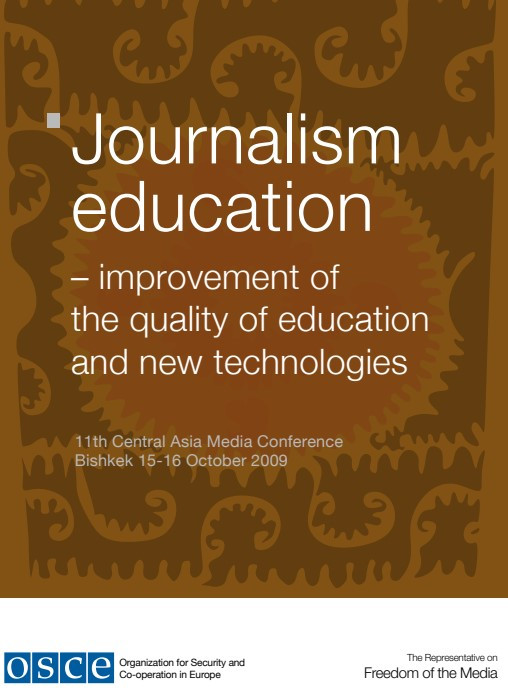 Журналистское образование повышение качества образования и новые технологии Année de publication: 2010 Auteur institutionnel: OOSCE. Office of the Representative on Freedom of the Media Публикация материалов 11 центральноазиатской конференции СМИ. Работники СМИ и официальные лица из всех пяти центральноазиатских государств – Казахстана, Кыргызстана, Таджикистана, Туркменистана и Узбекистана – приняли участие в конференции. Представители научных кругов, преподавательского состава различных университетов, национальные и международные эксперты, представители национальных и международных организаций также участвовали в работе конференции, в ходе которой были обсуждены последние события в сфере СМИ в Центральной Азии. Основной темой конференции стало журналистское образование.
  Central Asia - In Defence of the Future: Media in Multi-Cultural and Multi-Lingual Societies Année de publication: 2003 Auteur institutionnel: OOSCE. Office of the Representative on Freedom of the Media Collection of speeches at the 5th Central Asian Media Conference held in Bishkek, Kyrgyzstan, September 17-18, 2003. Центральная Азия - В защиту будущего: СМИ в многокультурных и многоязычных обществах Année de publication: 2003 Auteur institutionnel: OOSCE. Office of the Representative on Freedom of the Media Сборник выступлений на 5-й Центральноазиатской конференции СМИ, проходившей в Бишкеке, Кыргызстан, 17-18 сентября 2003 г.
 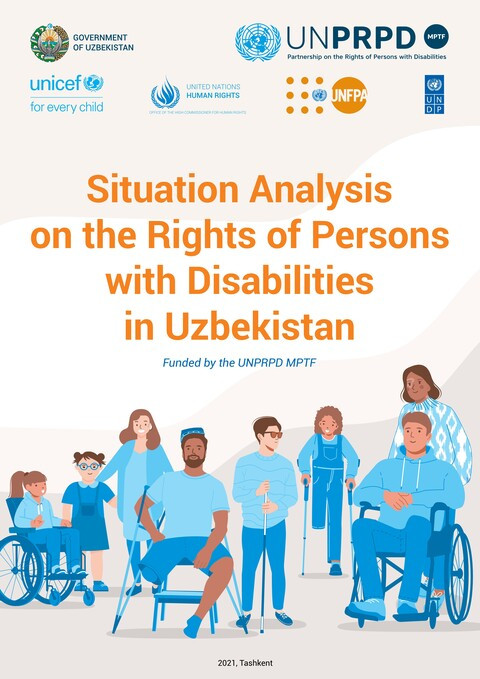 Situation Analysis on the Rights of Persons with Disabilities in Uzbekistan Année de publication: 2021 Auteur institutionnel: UNICEF Uzbekistan | United Nations Population Fund (UNFPA) | United Nations Development Programme (UNDP) | UN. Office of the United Nations High Commissioner for Human Rights (UN. OHCHR) This study is based on the results of a situation analysis of children and adults with disabilities conducted in 2019. The ambition of this Situation Analysis is not merely to point at problems but to lay ground for solutions by identifying the opportunities and catalytic forces emerging today. The report looks at the necessary preconditions for realisation of human rights of persons with disabilities, particularly women, girls, and boys with disabilities, such as a robust equality and non-discrimination framework, availability of inclusive and accessible services in the community, disability inclusive financial and coordination mechanisms, transparent monitoring and accountability systems and meaningful participation of persons with disabilities. Анализ ситуации по обеспечению прав лиц с инвалидностью в Узбекистане Année de publication: 2021 Auteur institutionnel: UNICEF Uzbekistan | United Nations Population Fund (UNFPA) | United Nations Development Programme (UNDP) | UN. Office of the United Nations High Commissioner for Human Rights (UN. OHCHR) Данное исследование основывается на результатах ситуационного анализа детей и взрослых с инвалидностью, проведенного в 2019 г. Цель данного анализа – не в том, чтобы указать на проблемы, а в том, чтобы заложить основу для их решения путем выявления возможностей и сил содействия, возникающих сегодня. В отчете рассматриваются необходимые предпосылки для реализации прав человека людей с инвалидностью, особенно женщин, девочек и мальчиков с инвалидностью, такие как надежная система обеспечения равенства и недискриминации, наличие инклюзивных и доступных услуг в сообществе, финансовые и координационные механизмы, учитывающие интересы людей с инвалидностью, прозрачные системы мониторинга и отчетности, а также значимое участие людей с инвалидностью.
  2021 문화다양성 정책 연차보고서 Année de publication: 2022 Auteur: 윤소영 | 정보람 | 신아름 Auteur institutionnel: 한국문화관광연구원 2021 문화다양성 정책 연차보고서는 2021년 한 해 동안 중앙부처와 지방자치단체에서 추진한 문화다양성 보호·증진 정책 추진 현황 및 세부 이행결과에 대해 분석하고 평가결과를 정리하였다. 또한 2021년 문화다양성 정책 관련 국내외 환경변화 및 정책동향을 살피고 국내 문화다양성 정책 및 주요 의제로 중앙부처·지자체 문화다양성 정책 사업과 활동, 주요 대학·기관·산업계의 관련 활동을 분석하고 주요 국제기구 및 주요 협약 당사국의 문화다양성 정책 및 현황을 다루고 있다. 본 저작물은 문화체육관광부에서 2022년 작성하여 공공누리 제 4유형으로 개방한 '2021 문화다양성 정책 연차보고서(윤소영, 정보람, 신아름)'를 이용하였으며 해당 저작물은 문화체육관광부 누리집 (www.mcst.go.kr/)에서 무료로 다운받으실 수 있습니다.
 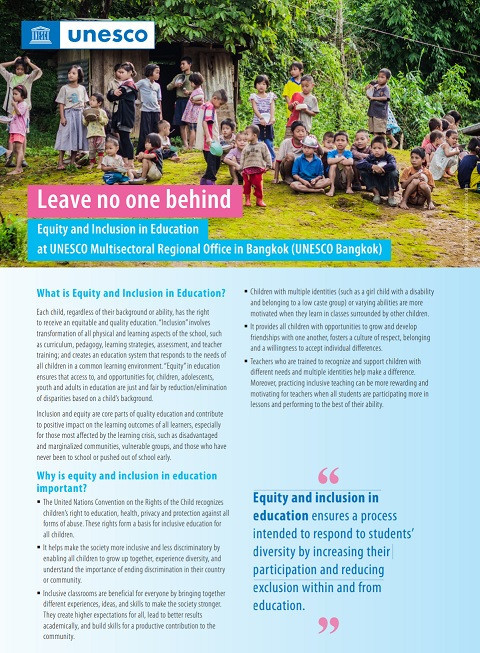 Leave No One Behind: Equity and Inclusion in Education at UNESCO Multisectoral Regional Office in Bangkok (UNESCO Bangkok) Année de publication: 2023 Auteur institutionnel: UNESCO Bangkok Equity and inclusion in education ensures a process intended to respond to students’ diversity by increasing their participation and reducing exclusion within and from education.
  Generative AI and the Future of Education Année de publication: 2023 Auteur institutionnel: UNESCO. Assistant Director-General for Education, 2018- (Giannini, Stefania) The digital revolution has brought about significant changes in how we live, learn, and interact, with multiple waves of technological advancements. The current AI revolution represents a new and profound shift, particularly through AI's ability to simulate human language and conversation. This development challenges our understanding of language, intelligence, and the role of technology in education and society.As AI begins to generate human-like responses and knowledge, it raises fundamental questions about its impact on education, societal values, and our concept of humanity. Education systems are now grappling with how to integrate and regulate AI, which has been rapidly introduced into classrooms without sufficient oversight. The author emphasizes the importance of carefully considering the risks and ethical implications of AI, particularly in its potential to manipulate and shape knowledge systems. There is a need for balanced development, where AI technology is aligned with human values, and education remains a deeply human-centered process.UNESCO is working with countries to develop strategies for the safe use of AI in education, emphasizing the need for a cautious approach and robust regulatory frameworks. The overarching message is that while AI offers immense possibilities, it must be integrated thoughtfully to ensure it enhances education and society without undermining human agency, equity, or the foundational values of learning. La IA generativa y el futuro de la educació Année de publication: 2023 Auteur institutionnel: UNESCO. Assistant Director-General for Education, 2018- (Giannini, Stefania) La revolución digital ha traído cambios significativos en cómo vivimos, aprendemos e interactuamos, con múltiples olas de avances tecnológicos. La actual revolución de la inteligencia artificial representa un cambio nuevo y profundo, particularmente a través de la capacidad de la IA para simular el lenguaje humano y la conversación. Este desarrollo desafía nuestra comprensión del lenguaje, la inteligencia y el papel de la tecnología en la educación y la sociedad. A medida que la IA comienza a generar respuestas y conocimientos similares a los humanos, surgen preguntas fundamentales sobre su impacto en la educación, los valores sociales y nuestro concepto de humanidad. Los sistemas educativos ahora están lidiando con la forma de integrar y regular la IA, que ha sido introducida rápidamente en las aulas sin una supervisión adecuada. El autor enfatiza la importancia de considerar cuidadosamente los riesgos y las implicaciones éticas de la IA, particularmente en su potencial para manipular y moldear los sistemas de conocimiento. Existe una necesidad de un desarrollo equilibrado, donde la tecnología de la IA esté alineada con los valores humanos y la educación siga siendo un proceso profundamente centrado en el ser humano. UNESCO está trabajando con los países para desarrollar estrategias para el uso seguro de la IA en la educación, enfatizando la necesidad de un enfoque cauteloso y marcos regulatorios robustos. El mensaje general es que, si bien la IA ofrece inmensas posibilidades, debe integrarse de manera reflexiva para asegurar que mejore la educación y la sociedad sin socavar la agencia humana, la equidad o los valores fundamentales del aprendizaje. L’IA générative et le futur de l’éducation Année de publication: 2023 Auteur institutionnel: UNESCO. Assistant Director-General for Education, 2018- (Giannini, Stefania) La révolution numérique a apporté des changements significatifs dans nos modes de vie, d'apprentissage et d'interaction, avec plusieurs vagues de progrès technologiques. La révolution actuelle de l'IA représente un nouveau tournant profond, notamment grâce à la capacité de l'IA à simuler le langage et la conversation humaine. Ce développement remet en question notre compréhension du langage, de l'intelligence et du rôle de la technologie dans l'éducation et la société.Alors que l'IA commence à générer des réponses et des connaissances semblables à celles des humains, cela soulève des questions fondamentales quant à son impact sur l'éducation, les valeurs sociétales et notre conception de l'humanité. Les systèmes éducatifs se retrouvent désormais face au défi d'intégrer et de réguler l'IA, qui a été introduite rapidement dans les salles de classe sans une supervision suffisante. L'auteur insiste sur l'importance de prendre en compte les risques et les implications éthiques de l'IA, en particulier son potentiel à manipuler et à influencer les systèmes de connaissance. Il est nécessaire d'adopter un développement équilibré, où la technologie de l'IA est en phase avec les valeurs humaines, et où l'éducation reste un processus profondément centré sur l'humain.L'UNESCO travaille avec les pays pour élaborer des stratégies visant à utiliser l'IA en toute sécurité dans l'éducation, en insistant sur la nécessité d'une approche prudente et de cadres réglementaires solides. Le message principal est que, bien que l'IA offre d'immenses possibilités, elle doit être intégrée de manière réfléchie afin de garantir qu'elle améliore l'éducation et la société sans compromettre l'autonomie humaine, l'équité ou les valeurs fondamentales de l'apprentissage.