
Ressources
Explorez une large gamme de ressources sur le GCED afin d’approfondir votre compréhension et de renforcer vos activités de recherche, de plaidoyer, d’enseignement et d’apprentissage.
1,322 résultats trouvés
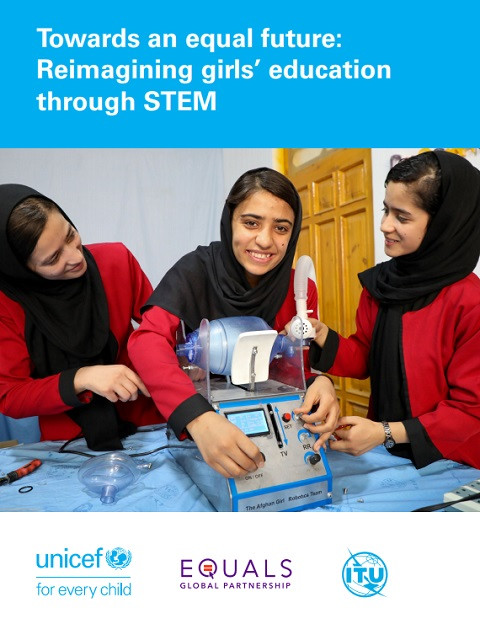 Towards an Equal Future: Reimagining Girls’ Education Through STEM Année de publication: 2020 Auteur institutionnel: United Nations Children's Fund (UNICEF) | International Telecommunication Union (ITU) This document seeks to call attention to the potential of STEM education to transform gender norms in the education system, to improve quality learning opportunities for girls, and to highlight key actions that can accelerate girls’ transition between education and technical expert jobs in STEM industries. Critically, STEM education also has the potential to contribute to personal empowerment, transformation of communities and nations, and building economies for the future.The evidence presented here provides a foundation for a call to action for global, national and regional actors. All stakeholders are called to work together to dismantle the barriers that girls face to develop the skills they need to become users, shapers and creators of scientific knowledge and new technologies. This will allow girls to choose the skills they want to learn and how to apply them, empowering them to contribute to a gender-equal world.
  지역아동센터 관리자·교사가 알아야 할 디지털 시민성과 교육 Année de publication: 2019 Auteur: 김양은 | 최숙 | 김형태 | 배은주 | 박상호 | 장준영 | 박정원 Auteur institutionnel: 방송통신위원회 | 한국정보화진흥원 본 자료는 지역아동센터와 같은 지역사회 돌봄서비스 내에서 디지털시민성 교육을 진행할 수 있도록 제작된 가이드북이다.
  International Principles of Practice for Educators Année de publication: 2020 Auteur institutionnel: Childhood Education International This document is a unique tool for educators that outlines how universally accepted beliefs about education can guide them in their work to help young people reach their full potential. By emphasizing the responsibilities and challenges that educators around the world share, it also helps to inspire them as members of a professional community that has inestimable value for promoting positive transformation.
  In Our Own Words: Bringing Authentic First Peoples Content to the K-3 Classroom Année de publication: 2020 Auteur: Jo Chrona | Heather Froste | Nadine McSpadden | Trena Lynn Sutton | Heidi Wood Auteur institutionnel: First Nations Education Steering Committee (FNESC) | First Nations Schools Association (FNSA) This teacher resource guide has been developed to offer teachers information and guidance about how to incorporate authentic First Peoples materials into their instruction and assessment practices. Inside, you will find lesson plans, curriculum connections, assessment resources and suggested texts.
  Référentiel de compétences harmonisé: Deuxième phase de la recherche-action sur la mesure des apprentissages des bénéfi ciaires des programmes d'alphabétisation Année de publication: 2020 Auteur: Madina Bolly | Hakima Megherbi Auteur institutionnel: Institut de l’UNESCO pour l’apprentissage tout au long de la vie (UIL) Le Référentiel de compétences harmonisé constitue un guide pour l’élaboration des programmes d’alphabétisation et un outil formatif novateur destiné aux 12 pays de la Recherche-action sur la mesure des apprentissages des bénéficiaires des programmes d’alphabétisation (RAMAA). Résultant d’une mise en commun des compétences (littératie et numératie), des connaissances, et de leurs niveaux de maitrise, éléments pris en compte dans les différents programmes d’alphabétisation, il a été développé et validé par l’ensemble des pays de la RAMAA et est aujourd’hui utilisé dans ces derniers par les directions chargées de l’alphabétisation des ministères de l’Éducation et par les organisations de la société civile. Moyennant des adaptations, le référentiel de la RAMAA peut servir de point de départ pour d’autres pays qui ne sont pas encore dotés d’un tel instrument mais souhaitent cependant standardiser leurs offres de formation et en améliorer la qualité.
  Education at a Glance 2020: OECD Indicators Année de publication: 2020 Auteur institutionnel: Organisation for Economic Co-operation and Development (OECD) Education at a Glance is the authoritative source for information on the state of education around the world. It provides data on the structure, finances and performance of education systems across OECD countries and a number of partner economies. More than 100 charts and tables in this publication – as well as links to much more available on the educational database – provide key information on the output of educational institutions; the impact of learning across countries; access, participation and progression in education; the financial resources invested in education; and teachers, the learning environment and the organisation of schools.The 2020 edition includes a focus on vocational education and training, investigating participation in vocational education and training at various levels of education, the labour market and social outcomes of vocational graduates as well as the human and financial resources invested in vocational institutions. Two new indicators on how vocational education and training systems differ around the world and on upper secondary completion rate complement this topic. A specific chapter is dedicated to the Sustainable Development Goal 4, and investigates the quality and participation in secondary education.
  The Impact of COVID-19 on Education: Insights From Education at a Glance 2020 Année de publication: 2020 Auteur: Andreas Schleicher Auteur institutionnel: Organisation for Economic Co-operation and Development (OECD) OECD Director for Education and Skills Andreas Schleicher gives his insights and interpretations from the OECD’s Education at a Glance 2020 report – the go-to source for information on the state of education around the world. This brochure focuses on a selection of indicators from Education at a Glance, selected for their particular relevance in the current context. Their analysis enables the understanding of countries’ response and potential impact from the COVID-19 containment measures.
 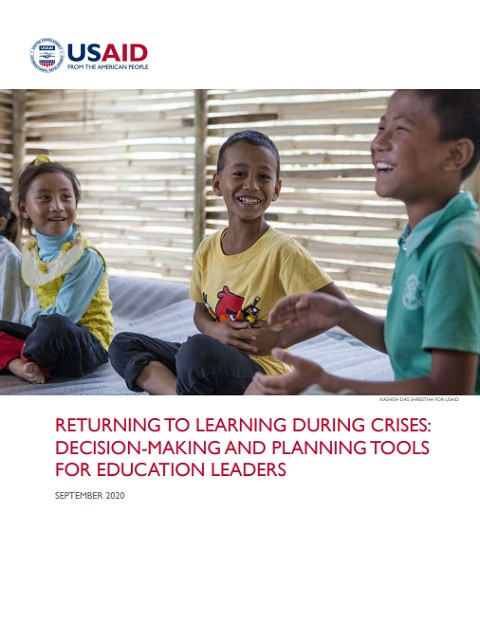 Returning to Learning During Crises: Decision-Making and Planning Tools for Education Leaders Année de publication: 2020 Auteur institutionnel: United States Agency for International Development (USAID) This toolkit is for USAID Mission staff and their partner national and local education officials, implementing partners, and administrators and educators of education institutions. It helps education planners plan and make key decisions on the return to learning during and after education disruptions caused by crises, such as COVID-19, in a way that is equitable, inclusive, and builds the resilience of education systems. To provide timely support to the field, this toolkit includes a first set of tools and identifies several tools that are forthcoming. The toolkit is expected to be updated with the full set of tools in late 2020.
 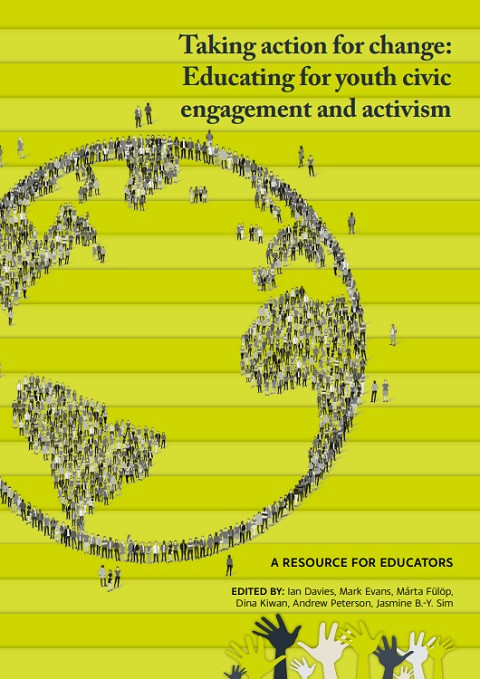 Taking Action for Change: Youth Civic Engagement and Activism; A Resource for Educators Année de publication: 2019 Auteur: Ian Davies | Mark Evans | Márta Fülöp | Dina Kiwan | Andrew Peterson | Jasmine B.-Y. Sim Auteur institutionnel: University of York ‘Youth activism, engagement and the development of new civic learning spaces’ was a project funded by the Leverhulme Trust and developed by an international network of researchers. The project took place between 2016 and 2019.In this resource for education, each member of the project team discusses developments in their own country and identifies key ideas and issues about how young people participate in society and what implications have for education. This book gives several examples that have already been done in different geographical areas and educational perspectives and includes promising practices that begin to illustrate ways in which educators may act.
 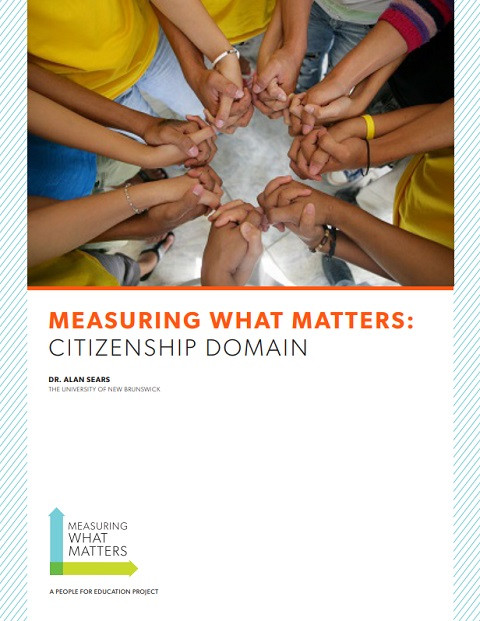 Measuring What Matters: Citizenship Domain Année de publication: 2014 Auteur: Alan Sears Auteur institutionnel: People for Education This report examines why citizenship is a core value for long term success for students and a cohesive, democratic society.