
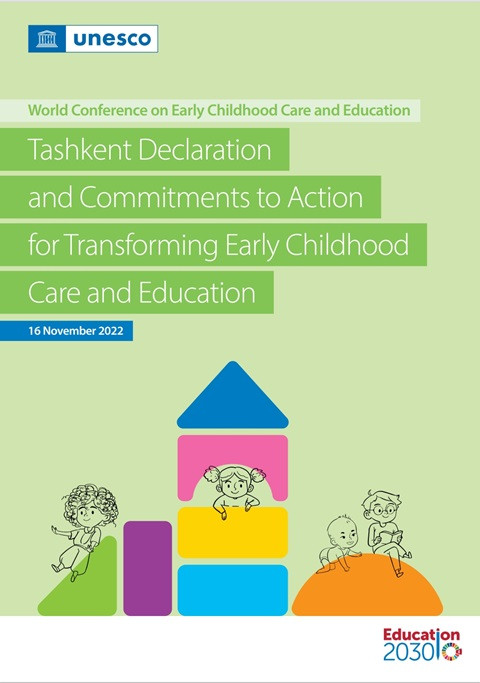
World Conference on Early Childhood Care and Education: Tashkent Declaration and Commitments to Action for Transforming Early Childhood Care and Education, 16 November 2022
- 단체 저자
- 유네스코
- 형태사항
- 6 p.
- 원래 언어
- 영어러시아어프랑스어중국어아랍어
- 발행 연도
- 2022
- 키워드
- Early childhood educationEducational qualityРанее детское образованиеКачество образованияEducación de la primera infanciaCalidad de la educación早期学习جودة التعليمتعليم الطفولة المبكرة양질의 교육
From 14 to 16 November 2022, the second World Conference on Early Childhood Care and Education took place in Tashkent, Uzbekistan. Over 2,600 conference participants from 147 Member States, including ministers, development partners, practitioners, scientists, civil society, and private organizations, came together to reaffirm the right of every young child to quality early childhood development, care, and education.
The Tashkent Declaration and Commitments to Action for Transforming Early Childhood Care and Education (ECCE) sets out the guiding principles and strategies for the urgent transformation of ECCE for accelerating achievement of SDG Target 4.2, and concrete actions for Member States, the international community, non-governmental organizations, and UNESCO to be regularly monitored, reviewed, and evaluated.
관련 자료
-
 IIEP-UNESCO 12th Medium-Term Strategy: 2026–2029
 -
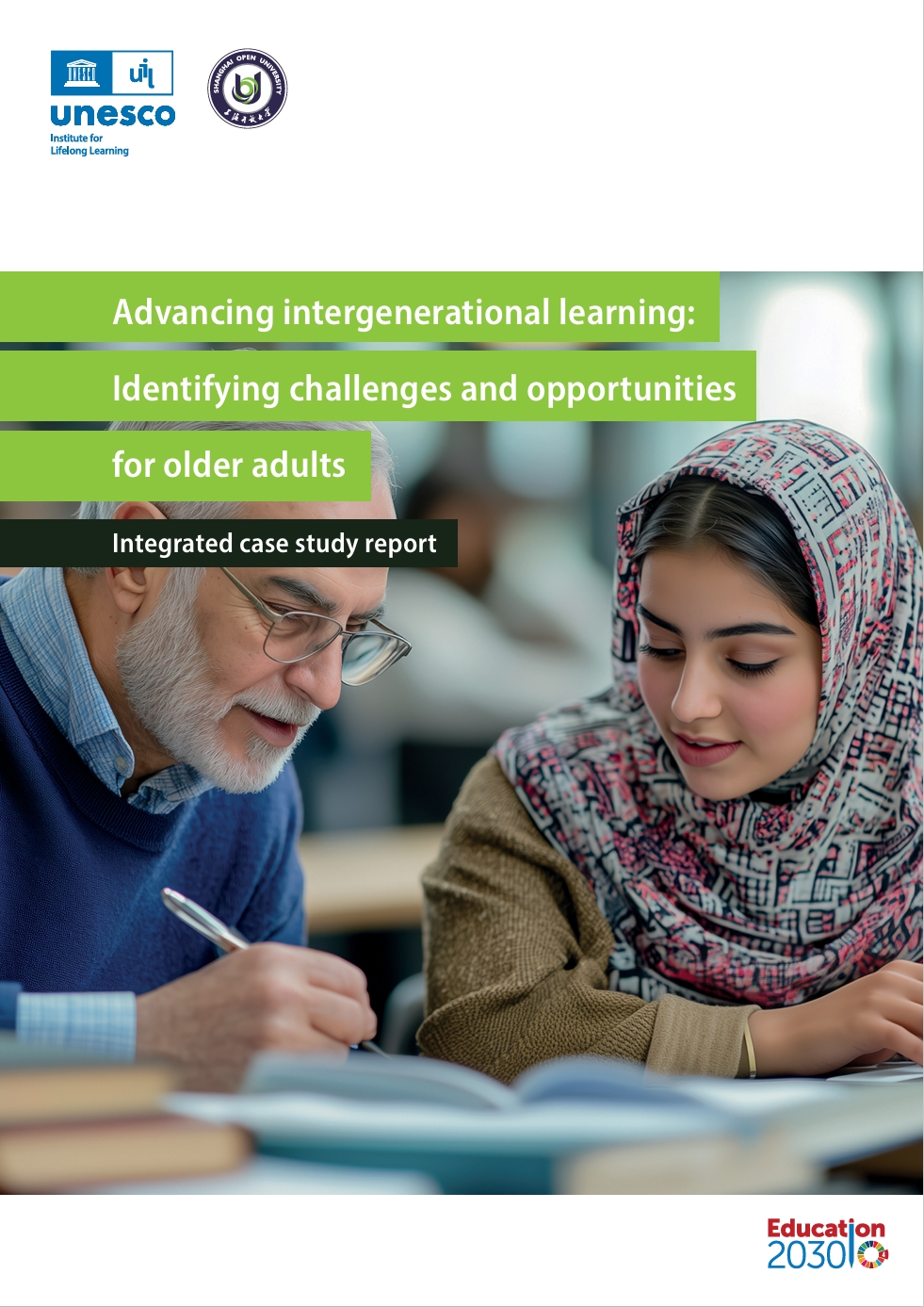 Advancing Intergenerational Learning: Identifying Challenges and Opportunities for Older Adults; Integrated Case Study Report
 -
 Digital Empowerment for Lifelong Learning and Transformative Andragogy (DELTA) for Adult Educators: Introduction to the DELTA Framework and Resources
 -
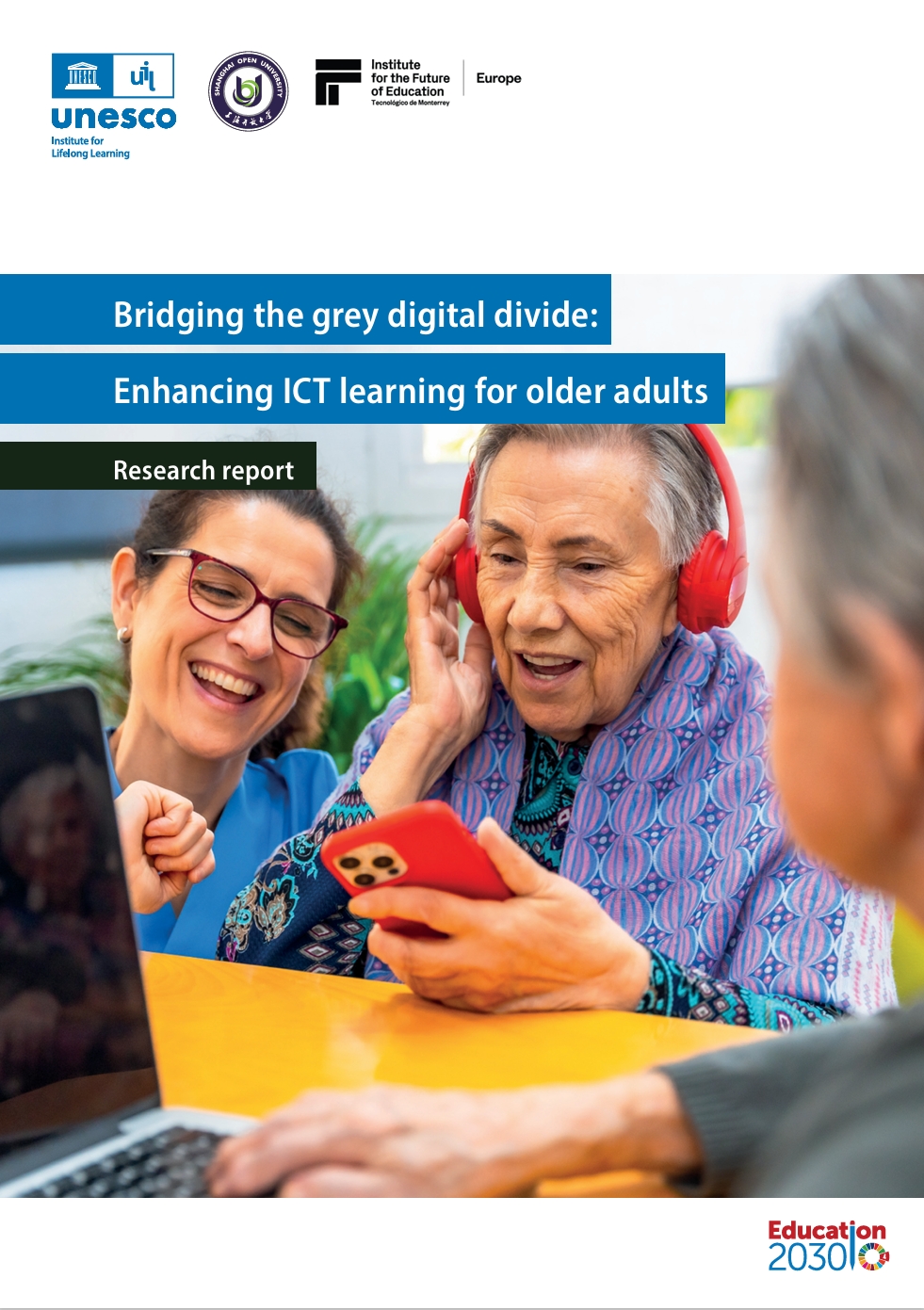 Bridging the Grey Digital Divide: Enhancing ICT Learning for Older Adults; Research Report