
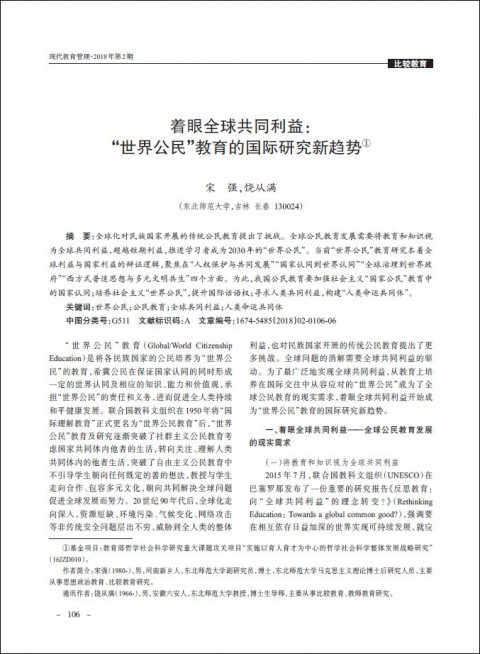
Focus on Global Common Good:The New International Research Trend on World Citizenship Education
Globalization has posed challenges for national-states to develop traditional citizenship education. To develop the citizenship education in the world needs to regard education and knowledge as global common good, surpass short- term benefit,and promote learners to be world citizens by 2030. Start with the dialectical logic on global benefit and national benefit,the researches of world citizenship education focus on“human rights protection and joint development”,“from national identity to world identity”,“from global governance to world government”, and “western universal mind vs. multi- civilizations intergrowth”. Chinese citizenship education needs to reinforce the national identity in socialism national citizenship education; cultivateing socialism world citizenship and promoteing international discourse power;seek human common good and build community of common destiny for all mankind.
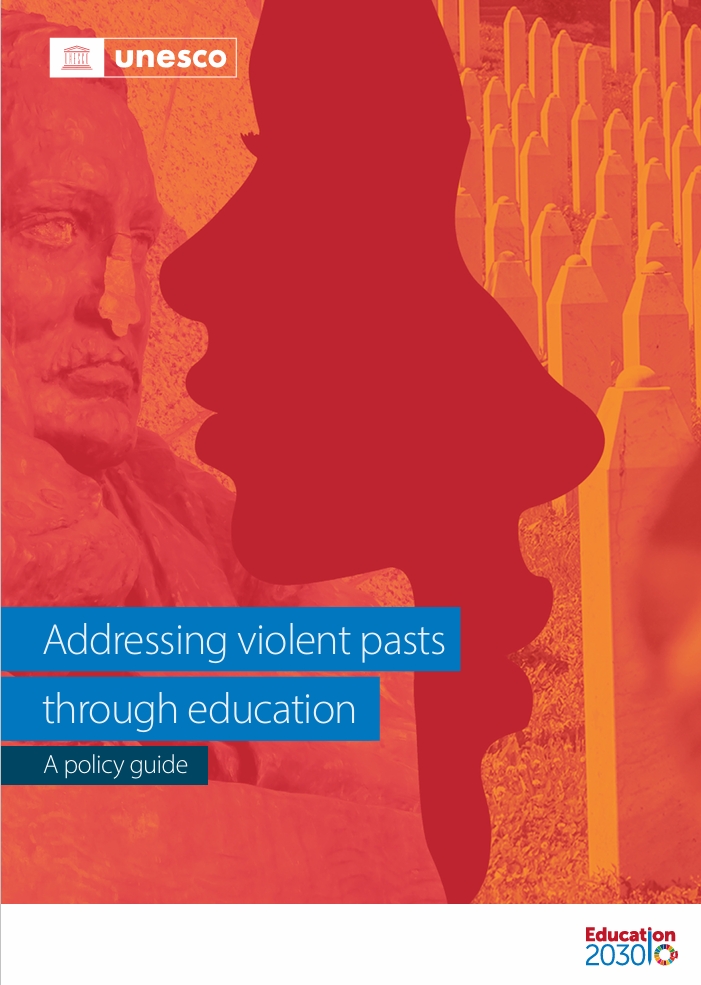 Addressing Violent Pasts Through Education: A Policy Guide
 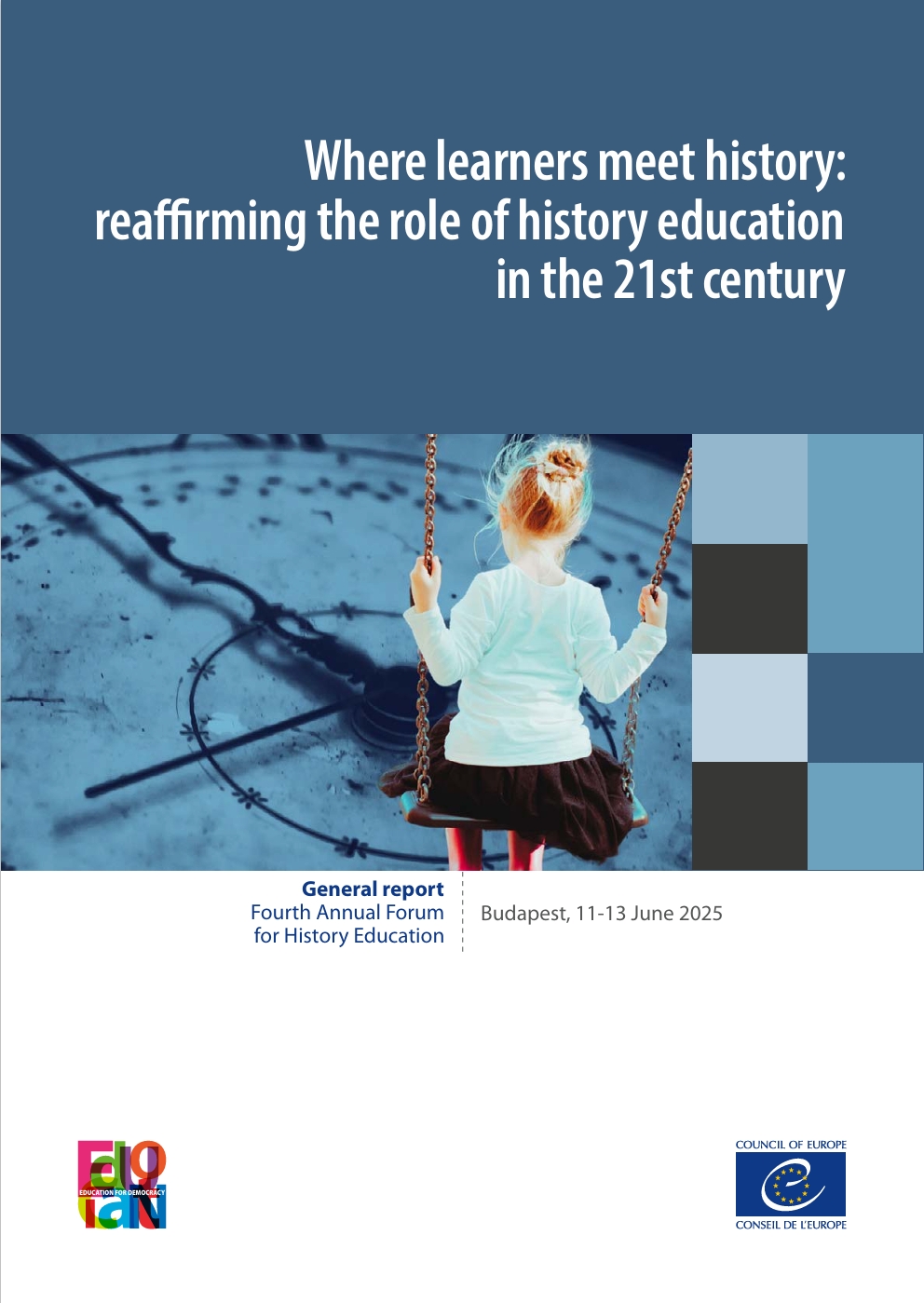 Where Learners Meet History: Reaffirming the Role of History Education in the 21st Century
 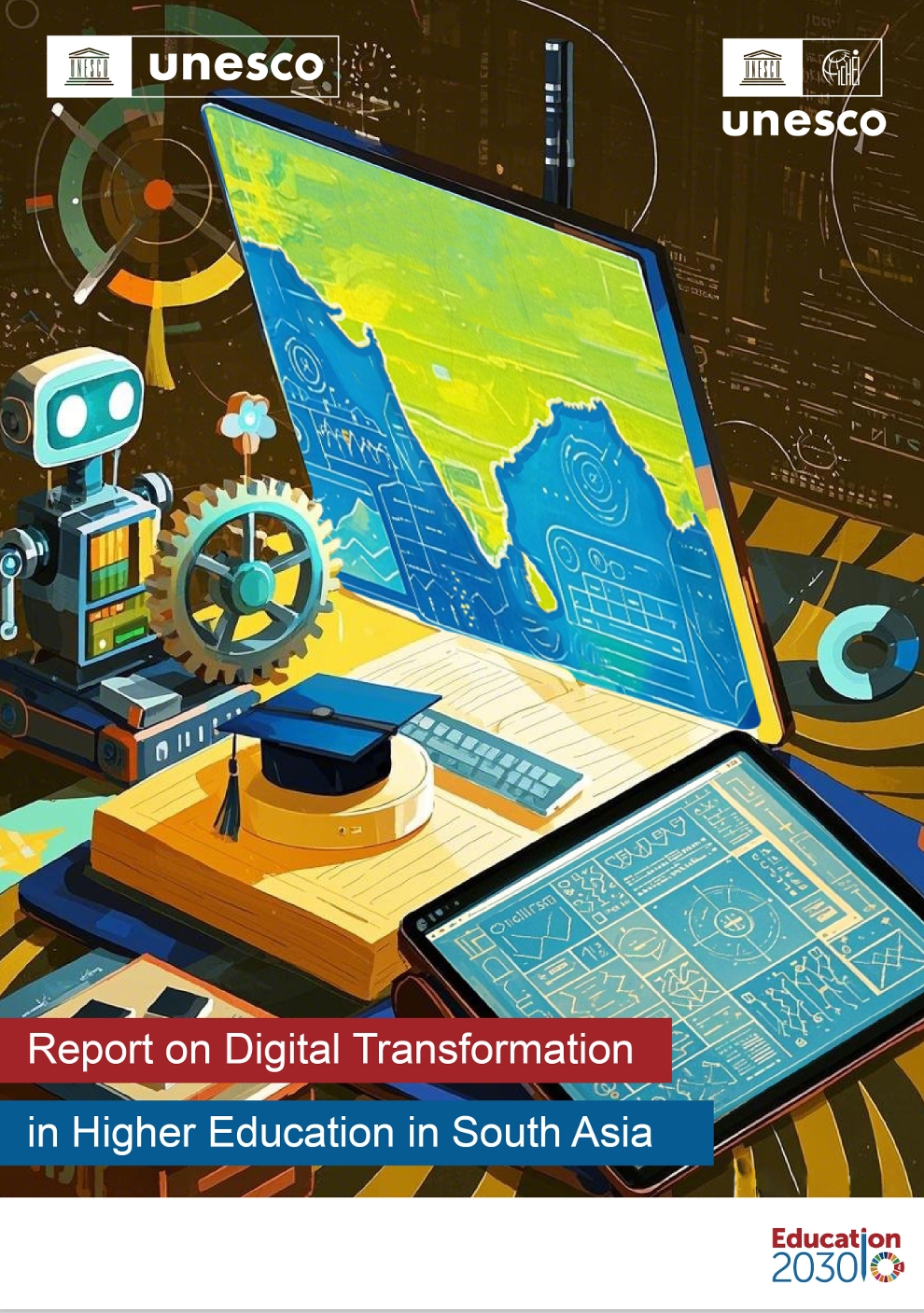 Report on Digital Transformation in Higher Education in South Asia
  Voices Against Violence: Middle Years