
자료
세계시민교육에 대한 이해를 넓히고 연구, 옹호 활동, 교수, 학습 등을 향상시킬 수 있는 다양하고 유용한 자료를 찾아보세요.
8,354 건의 결과가 검색되었습니다
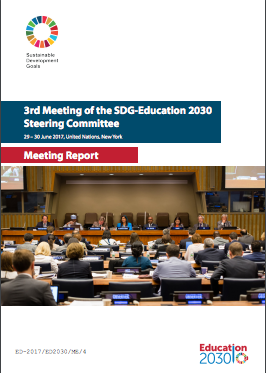 3rd Meeting of the SDG-Education 2030 Steering Committee, 29-30 June 2017, United Nations, New York: meeting report 발행 연도: 2017 단체 저자: 유네스코 An inclusive high-level multi-stakeholder partnership, the SDG-Education 2030 Steering Committee (SC) provides a global forum for consultation and a mechanism to coordinate and harmonize global education efforts. It is mandated to provide strategic guidance to Member States and the education community, make recommendations for catalytic action, advocate for adequate financing, and monitor progress toward SDG4 targets through the UNESCO Institute for Statistics and the Global Educational Monitoring (GEM) Report. The 3 rd meeting of the SC was organized in New York on 29-30 June 2017 back to back with the HighLevel Action SDG Action Event on Education convened by the President of the UN General Assembly, Peter Thompson, in partnership with key SDG 4 stakeholders, to drive a new push for inclusive and equitable quality education and lifelong learning opportunities. At this meeting the SC examined successes and challenges in the implementation of SDG4 since the adoption of the 2030 Agenda. After highlighting the critical role of regional organizations as policy peer learning mechanisms in enhancing effective implementation of SDG4-Education 2030, the SC endorsed a set of recommendations for improved implementation in 2018 and 2019.
  A Decade of progress on education for sustainable development: reflections from the UNESCO Chairs Programme 발행 연도: 2017 저자: Michelsen, Gerd | Wells, Peter J. 단체 저자: 유네스코 The UNITWIN/UNESCO Chairs Programme, launched in 1992, today forms an extensive network of inter-university cooperation involving more than 700 higher education institutions in 128 countries worldwide. Through knowledge sharing and collaborative research in the priority areas of UNESCO’s work in education, the natural and social sciences, culture, communication and information, the Chairs provide a vital contribution to the Organization’s mission. The current volume focuses on the activities undertaken by UNESCO Chairs dedicated to the field of Education for Sustainable Development (ESD) within the context of the UN Decade of ESD which culminated in the UNESCO World Conference on ESD, held in AichiNagoya, Japan, 2014. The case studies included, showcase the good practices, applied research and curricula innovations pioneered by the individual UNESCO Chairs, as well as highlighting the challenges and lessons learned both for the new follow-up Global Action Programme (GAP) on ESD and the wider Education 2030 Agenda.
 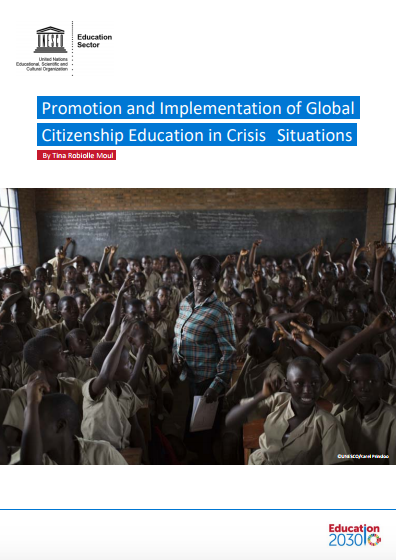 Promotion and implementation of global citizenship education in crisis situations 발행 연도: 2017 저자: Robiolle Moul, Tina 단체 저자: 유네스코 Crisis situations affect the realization of human rights of many people and communities across all regions of the world. Within UNESCO’s relevant areas of work, GCED is a powerful approach to education that can empower people to recover from crises and transform their communities into peaceful and sustainable societies. UNESCO commissioned a desk study that aimed at reviewing existing research on the promotion and implementation of GCED and related programs in countries affected by crisis situations, with particular attention to initiatives benefiting the refugee population. This study unveils the key challenges these programs encounter in such contexts, as well as promising practices that can guide the design and implementation of future GCED in crisis situations. This report is a synthesis of this desk study and supports the evidence that, after analyzing the context and the available means, GCED and related programs can and should be systematically adapted and implemented in crisis situations, including in response to refugee crises.
  Learning to live together: an intercultural and interfaith programme for ethics education: Executive Summary 발행 연도: 2015 단체 저자: United Nations Children's Fund (UNICEF) | Interfaith Council on Ethics Education for Children | Arigatou Foundation What is the Learning to Live Together? How was it developed? Where and how can it be used? In the Executive Summary you can find answers to all these questions, as well as information about outstanding projects that show the potential of the programme.
  모두를 위한 교육 2000-2015: 성과와 과제; EFA 세계 현황 보고서, 2015; 요약본 발행 연도: 2015 단체 저자: 유네스코 At the World Education Forum in Dakar, Senegal, in 2000, governments from 164 countries, together with representatives of regional groups, international organizations, donor agencies, non-government organizations (NGOs) and civil society, adopted a Framework for Action to deliver Education for All (EFA) commitments. The Dakar Framework comprised 6 goals and their associated targets to be achieved by 2015, and 12 strategies to which all stakeholders would contribute. The EFA Global Monitoring Report (GMR) has monitored progress on an almost annual basis towards the EFA goals and the two education-related Millennium Development Goals (MDGs). The 2015 GMR provides a complete assessment of progress since 2000 towards the target date for reaching the Dakar Framework’s goals. It takes stock of whether the world achieved the EFA goals and stakeholders upheld their commitments. It explains possible determinants of the pace of progress. Finally, it identifies key lessons for shaping the post-2015 global education agenda.
 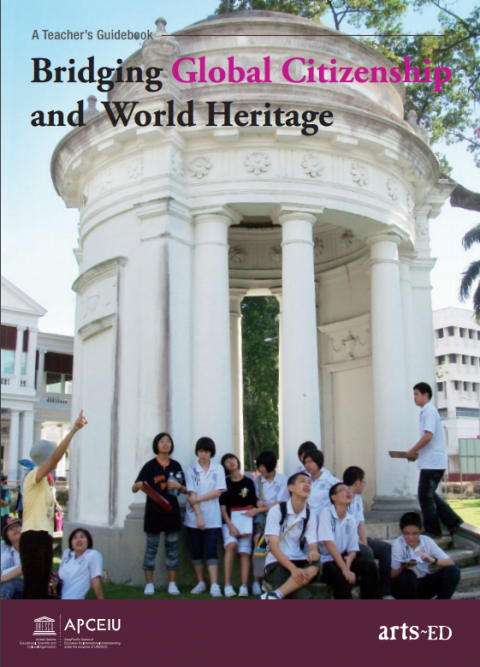 세계문화유산 활용 세계시민교육 교사 지침서 발행 연도: 2016 단체 저자: 유네스코 아시아태평양 국제이해교육원 문화다양성과 상호이해 증진을 위한 세계유산 활용 세계시민교육 자료개발 사업의 일환으로 발간된 이 교사 지침서는 말레이시아의 세계문화유산을 활용해 진행했던 실천사례와 수업예시 등을 담고 있어 일선 교사들이 향후 세계시민교육 수업을 구성하고 진행하는데 실질적인 도움을 줄 것으로 기대된다.<목차>발간사도표와 그림1장. 믈라카와 조지타운 세계유산 소개2장. 세계시민교육: 더 나은 세상을 함께 만들기 위한 시민의 역량을 기르다.3장. 세계유산과 세계시민교육을 활용한 수업 구성하기4장. 실천 사례 및 수업 교안참고자료
  2016 한-유네스코 펠로우십 프로그램 최종보고서 발행 연도: 2016 단체 저자: 유네스코 아시아태평양 국제이해교육원 본 보고서는 2016년 9월 1일부터 10월 31일까지 열린 ‘2016 한-유네스코 펠로우십 프로그램’에서이루어진 활동 내용과 성과물에 대한 요약을 담고 있다. 올해 10회를 맞이하는 본 프로그램에는 아시아태평양 및 아프리카 17개국 25명의 교육자들이 참가하였으며, 두 달간 기초교육, ICT교육(e-러닝), 세계시민교육 및 소녀교육의 4가지 주제영역에 대한 참가자들의 이해 증진과 역량강화를 위한 연수로 진행되었다. 이 보고서를 통해, 다양한 주제관련 강의, 워크숍, 현장학습활동, 교육자료 개발 프로젝트 등으로 이루어진 이 프로그램의 내용과 참가자들의 교육현장에서 의미 있게 적용될 수 있는 결과물과 실행계획 등 성과에 대한 내용을 살펴볼 수 있다. 문의: 유네스코 아태교육원 교육연수실(ent@unescoapceiu.org)
  제2차 세계시민교육 청년리더십 워크숍 최종보고서 발행 연도: 2016 단체 저자: 유네스코 아시아태평양 국제이해교육원 본 보고서는 2016년 7월 11일부터 16일까지 부산에서 열린 ‘제2차 세계시민교육 청년리더십 워크숍(2nd Youth Leadership Workshop on GCED)’에서 이루어진 활동 개요를 제공한다. 이 워크숍은 유네스코 아태교육원과 유엔 사무총장의 글로벌교육우선구상(GEFI)가 공동주최하고 부산외국어대학교와 부산광역시 금정구가 후원하였다.이 프로그램에 전세계 38개국 49명의 청년활동가들이 참가하여 세계시민교육에 대한 아이디어를 교환하며, 세계시민교육을 전 세계적으로 확산하고 지역·국가적 차원의 청년활동을 증진하기 위한 리더십 전략을 논의하였다. 본 보고서는 6일간의 워크숍 활동들에 대한 기록과 더불어 세계시민교육의 주체로서 청년들의 세계시민교육의 의미와 우선 과제들에 대한 목소리를 담고자 했다. 문의: 유네스코 아태교육원 교육연수실(ent@unescoapceiu.org)
  폭력적 극단주의 예방을 위한 교사 지침서 발행 연도: 2016 단체 저자: 유네스코 이것은 유네스코 최초의 교육을 통한 ‘폭력적 극단주의 예방을 위한 교사지침서(Teacher's Guide on the Prevention of Violent Extremism)’이다. 이 문서는 2015년 10월 유네스코 집행이사회가 채택한 결정문(197/EX Decision 46)안에 언급된 것으로서 유네스코 회원국의 요구에 직접 반응하기 위하여 개발되었으며, 국제 기구가 인권 중심의 글로벌시민교육(GCED) 프로그램을 통해 폭력적 극단주의에 대한 교육 부분에서의 대응을 강화하고, 각국의 상황을 염두하여 국가적인 지원과 도움을 제공하는 능력을 향상시킬 것을 요구하고 있다. 따라서 본 지침서는 교육 부문과 관련하여 유네스코가 유엔 사무 총장의 폭력적 극단주의를 예방하기 위한 행동 계획을 실행하는 데에 있어서 처음으로 기여한 것으로 여겨진다. 그리고 이 지침서와 더불어 현재 교육부 내의 교육 정책 결정자를 위한 기구(Organization for Education Policy-Makers)에서는 기술적 지침을 개발 중이다. 이 지침은 포괄적이고 실용적인 교육 부문 차원의 대응을 통해 폭력적 극단주의의 동인(動因)이 되는 것들을 다루기 위한 국가적 역량을 구축하고 강화시키는 데 도움을 줄 수 있는 일련의 자원들을 국가에 제공하고자 한다. 각양 각색의 지리학적 및 사회 문화적 맥락 안에서 본 교사지침서가 타당성을 갖추기 위하여 여러 지역의 전문가와 교사, 그리고 선택된 국가의 교육 분야 이해 관계자들이 현장에서 실시한 광범위한 상담 과정을 거쳐 개발되었다. 그러므로 이 지침서는 학습자의 특정 요구에 부응하기 위해서, 더욱 맥락화 시키고, 적용시키고, 번역하는 프로토타입으로 간주하거나 이 자체를 그대로 사용할 수 있다.
  세계시민의식 고취를 위한 중학교 사회과ㆍ도덕과 교육과정 선진화 연구 발행 연도: 2009 저자: 이근호 | 김덕근 | 민병수 | 오현정 | 엄정민 | 김효정 | 박준식 | 김종람 단체 저자: 한국교육과정평가원 This study was conducted to analyze the determinants (i.e. multicultural acceptability, national identity, and moral values) influencing global citizenship in order to examine the construct of global citizenship as well as to find the moral education about global citizenship for teacher education. Hierarchical regression was used to analyze the survey of 116 college students in university of education. The results are following. Firstly, The hierarchical regression analysis of ModelⅢ with influencing three factors to global citizenship explained 25% of the variance in student’s global citizenship, and it was found common good among moral values and experience of living a life in the foreign countries as important factors in the model. Second, They regressed into the variance of moral values even though a few ones of multi-cultural acceptability and national identity were influential factors before modelⅢ. Contrary to theoretical expectations, they are turned into be a half of influential factors to global citizenship. Based on the results, we suggested that to solve the global problems need to be strengthen in the developing the education curriculum for global citizenship. Furthermore, future research with stratified sampling will be conducting to generalize the result of this study.