
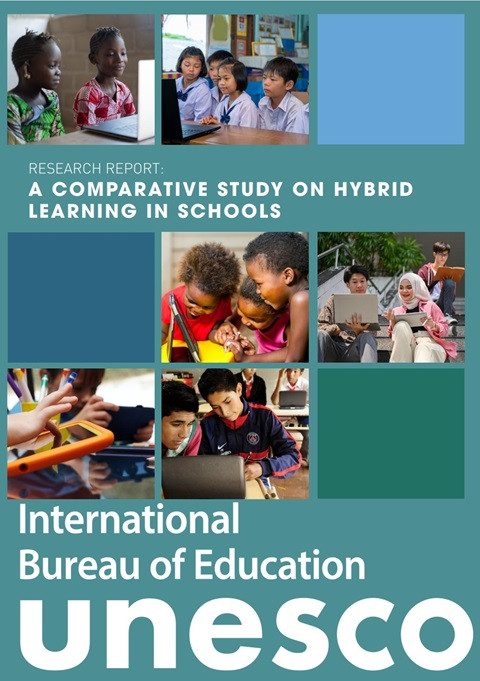
Research Report: A Comparative Study on Hybrid Learning in Schools
- Корпоративный автор
- UNESCO International Bureau of Education (IBE)
- Колляция
- 226 p.
- Язык ресурса
- Английский
- Год публикации
- 2024
- Тема
- Разнообразие / Культурная грамотность / ИнклюзивностьУстойчивое развитие / УстойчивостьМедийная и информационная грамотность / Цифровое гражданствоТрансформационные инициативы / Трансформационные педагогики
- Тип ресурса
- Исследовательские работы / журнальные статьи
- Уровень образования
- Раннее детское развитие, уход и образованиеНачальное образованиеСреднее образованиеВысшее образованиеОбучение на протяжении всей жизниТехническое и профессиональное образование и обучениеНеформальное образование
- Регион
- Глобальный
- Место публикации
- Geneva
During the COVID-19 lockdown, policymakers and educators faced an unprecedented challenge disrupting all levels of education. The initial optimism about replacing physical classes with virtual lessons diminished as complex interconnected issues emerged. To address the need for continuous and sustainable learning, school systems implemented variations of hybrid learning during the pandemic, seeking to integrate physical and virtual classes. These approaches prompted this comparative study led by UNESCO-IBE.
The initial phase of this study involved collecting and analysing data on hybrid strategies from six countries. The research aimed to examine factors influencing hybrid learning implementation during the lockdown, with a subsequent focus on developing and validating a practical Hybrid Learning Framework for Schools. The cross-case analysis was designed not to rank or compare, but to understand and connect different scenarios and contexts. Phase I focuses on current hybrid learning practices and influencing factors, while Phases II and III will concentrate on using the information gathered to create and validate a Hybrid Learning Framework for Schools.
Aligned with UNESCO-IBE’s overarching vision of a comprehensive, personalized, and democratized curriculum accessible to all, hybrid learning facilitates inclusive education across diverse regions, overcoming geographical and temporal limitations. The approach aims to unlock the unique potential of every learner, fostering a more flexible educational environment.
Связанные ресурсы
-
 IIEP-UNESCO 12th Medium-Term Strategy: 2026–2029
 -
 Youth Lens on the Silk Roads: Best Photos from the International Silk Roads Photo Contest; 6th Edition
 -
 Advancing Intergenerational Learning: Identifying Challenges and Opportunities for Older Adults; Integrated Case Study Report
 -
 Digital Empowerment for Lifelong Learning and Transformative Andragogy (DELTA) for Adult Educators: Introduction to the DELTA Framework and Resources