
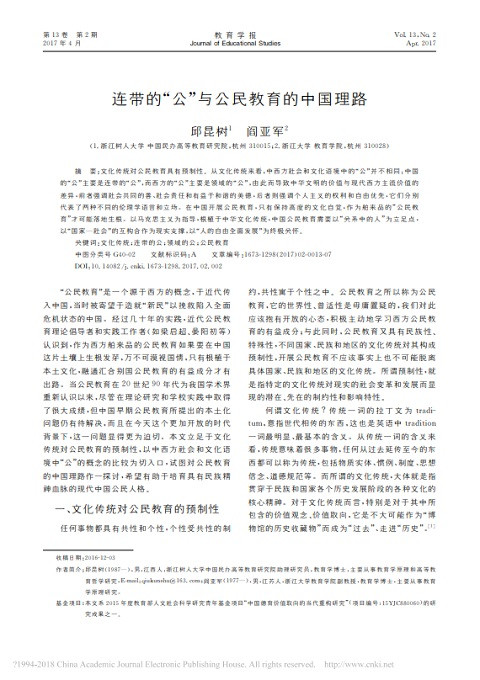
The Connective “Public” and the Chinese Logic of Citizenship Education (Journal of Educational Studies; Vol. 13, No. 2)
- المؤلف
- Qiu KunshuYan Yajun
- المؤلف المؤسسي
- Beijing Normal University
- ISBN
- ISSN 1673-1298
- الترتيب
- p. 13-19
- لغة المورد
- الصينية
- سنة النشر
- 2017
- الموضوعات
- المدنية / المواطنة / الديمقراطية
- أنواع الموارد
- الأوراق البحثية/ مقالات المجالات
- مستوى التعليم
- التعليم غير الرسميأخرى
- المناطق
- آسيا والمحيط الهادئ
- مكان النشر
- Beijing
Cultural tradition has pre-conditionality on citizenship education. From the point of view of cultural tradition, the “public” in citizenship education has different meaning in China and the West: Chinese “public” is mainly a kind of connective “public”, while the western “public” mainly means domanial “public”. This lead to the difference in Chinese and modern western main stream values. The former emphasizes the common goodness of the whole society, social responsibility and virtue which is favorable to harmony, while the later emphasizes individualist rights and priority of freedom. They represent two kinds of ethics language and position. It is essential to maintain high cultural awareness for the implementation of citizenship education in China and the localization of exotic “citizenship education”. Guided by Marxism and rooted in Chinese cultural tradition, Chinese citizenship education should be based on “people in relation”, use the actual support of “state-society” cooperation, and offer ultimate concern to “the free and comprehensive development of human”.
موارد ذات صلة
-
 IIEP-UNESCO 12th Medium-Term Strategy: 2026–2029
 -
 Advancing Intergenerational Learning: Identifying Challenges and Opportunities for Older Adults; Integrated Case Study Report
 -
 Digital Empowerment for Lifelong Learning and Transformative Andragogy (DELTA) for Adult Educators: Introduction to the DELTA Framework and Resources
 -
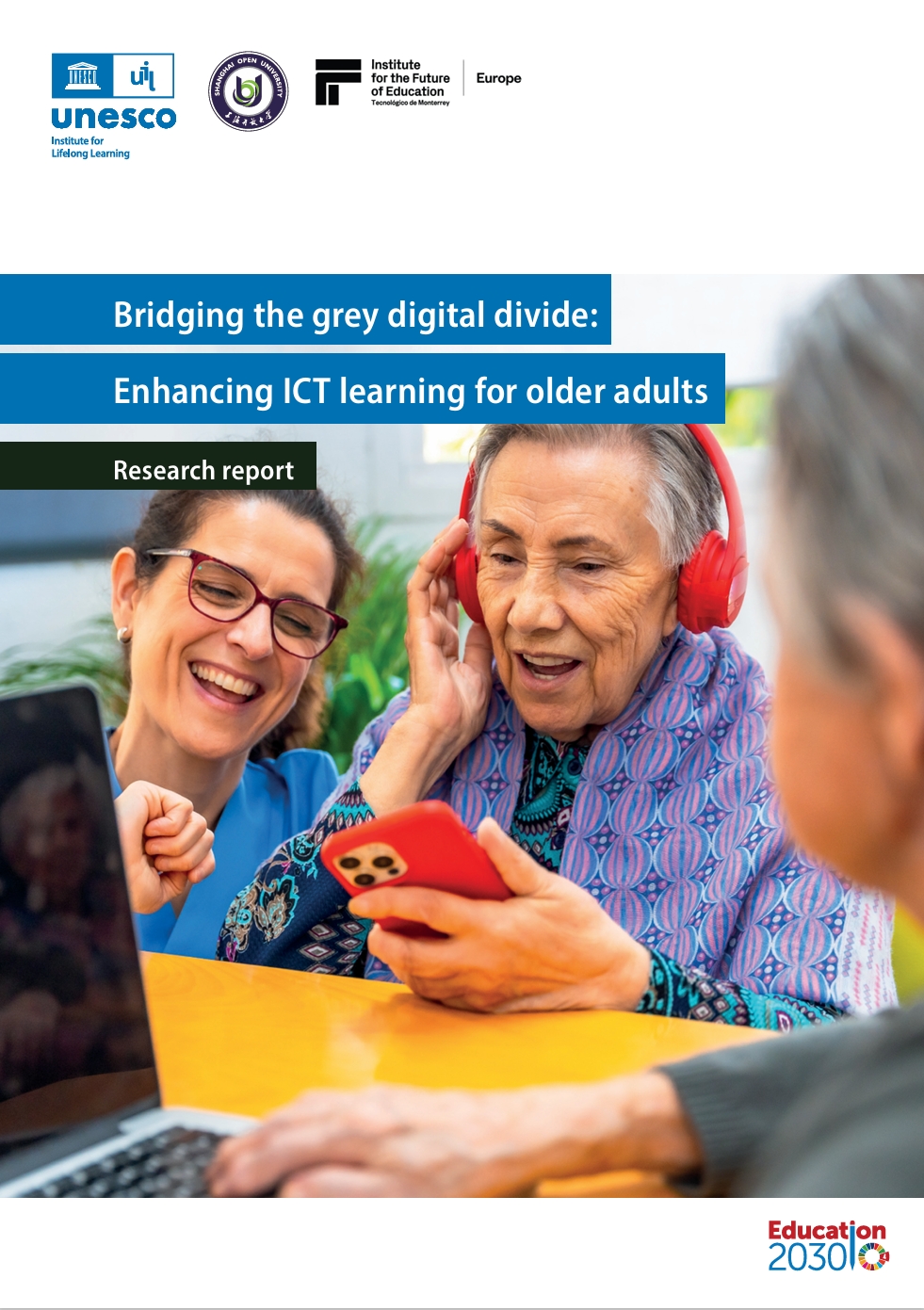 Bridging the Grey Digital Divide: Enhancing ICT Learning for Older Adults; Research Report