
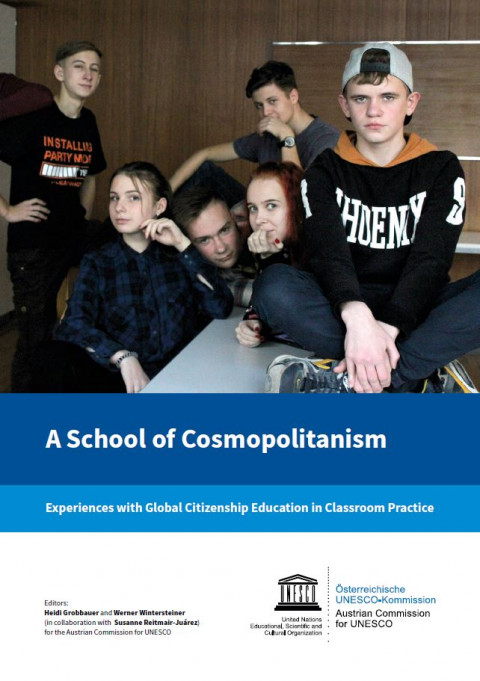
A School of Cosmopolitanism: Experiences with Global Citizenship Education in Classroom Practice
- Corporate Author
- Austrian Commission for UNESCO
- Collation
- 39 p.
- Resource Language
- English
- Year of publication
- 2019
- Topic
- Civic / Citizenship / DemocracyDiversity / Cultural literacy / InclusivenessGlobalisation and social justice / International understandingPeace / Culture of peaceSustainable development / SustainabilityTransformative initiatives / Transformative pedagogies
- Resource Type
- Research papers / journal articles
- Level of education
- Secondary education
- Region
- Europe and North America
- Place of publication
- Vienna
This publication focuses on examples from academic practice: this best practice collection demonstrates how young people can successfully be inspired to “think globally, act locally”. What is crucial is maintaining a view of the wider world; in particular, cooperation efforts with educational institutes outside of Europe (e.g. “élèves pour élèves” in Burkina Faso) provide a critical awareness of global connections.
Learning to know/Learning to do/Learning to be/Learning to live together – these four pillars form the pedagogical foundation of the work carried out at more than 90 UNESCO schools throughout the whole of Austria. Since their founding in 1957, UNESCO schools have been considered model schools at which lessons are structured in a project-oriented, participative and even topic-specifc way. The unique ‘spirit’ of UNESCO schools often makes special projects possible. In the programme for the annual meetings of recent years, for example, Global Citizenship Education has been an ongoing topic of focus, accompanied by experts from various specialised institutions and NGOs.
The pedagogical preparation of contents in a manner that ensures they are actually absorbed in the classroom presents a major challenge. Different types of schools have different educational goals, and the themes have to be made accessible for different age groups. The pedagogical finesse of each class team or individual teacher lies in finding the most motivating approaches.
Related Resources
-
 IIEP-UNESCO 12th Medium-Term Strategy: 2026–2029
 -
 Youth Lens on the Silk Roads: Best Photos from the International Silk Roads Photo Contest; 6th Edition
 -
 Advancing Intergenerational Learning: Identifying Challenges and Opportunities for Older Adults; Integrated Case Study Report
 -
 Digital Empowerment for Lifelong Learning and Transformative Andragogy (DELTA) for Adult Educators: Introduction to the DELTA Framework and Resources