
Key Concepts: A Feminist Approach to Human Rights Education (Chapter 4)
- Author
- Julie Maia
- Corporate Author
- Stanford Human Rights Education Initiative (SHREI)
- Collation
- 31p
- Resource Language
- English
- Year of publication
- 2014
- Resource Type
- Curriculum, teaching-learning materials and guides
- Level of education
- Primary educationSecondary education
- Region
- Global
- Place of publication
- California
Developed for the Stanford Human Rights Education Initiative (SHREI), this curriculum project examines connections among Gender Studies, feminist theory, and human rights movements around the world.
This SHREI project presents its four key concepts through four curricular units, or chapters, each with a series of activities that can easily be adapted for use in courses in many disciplines. Each chapter contains these elements:
- A definition of the key concept
- An example of the use of the concept in a human rights document
- A brief essay on the value of the concept for human rights education
- A series of activities that
- guide students in using gender, race/ethnicity/nation, and class as lenses for analyzing social justice issues
- include transnational and multicultural perspectives on gender and human rights issues
- use "best practices" pedagogies for teaching human rights topics in community colleges.
Within each chapter, activities are orgaized from simple to complex. Most activities, however, have self-contained objectives and can be used independently of the others. Sections on “Extending the Learning” offer longer readings or in-depth material for advanced courses.
The GCED Clearinghouse introduces only chapter 4, "global citizenship" of this SHERI project.
 Addressing Violent Pasts through Education: A Policy Guide
  The Representation of Jews, Judaism and Antisemitism in School Textbooks and Curricula in Europe
  Strategies to Counter Antisemitism: A Handbook for Educators
 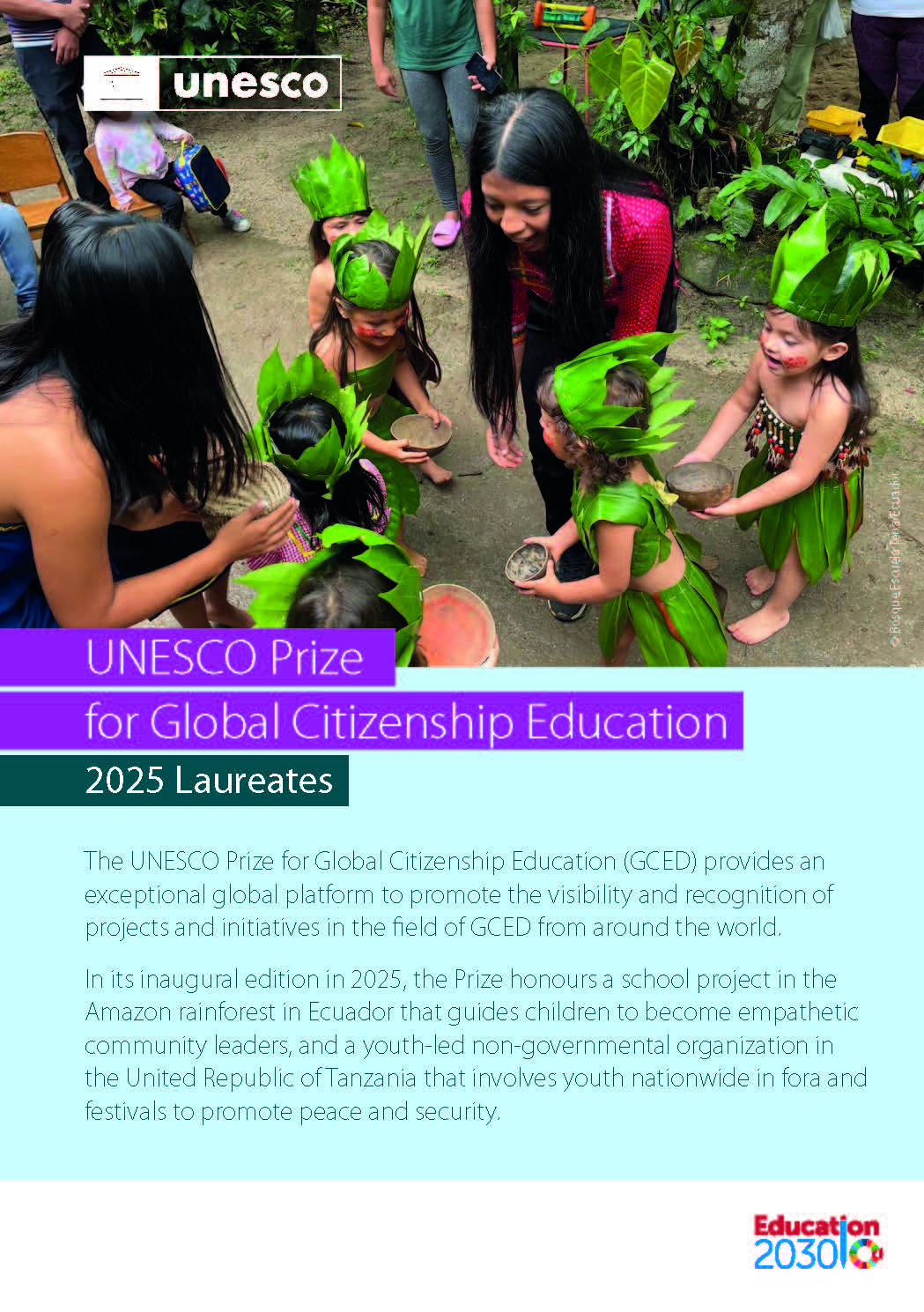 UNESCO Prize for Global Citizenship Education 2025 Laureates