
Resources
Explore a wide range of valuable resources on GCED to deepen your understanding and enhance your research, advocacy, teaching, and learning.
8,376 Results found
 Addressed by Irina Bokova, Director-General of UNESCO on the Occasion of Launch of the Joint Programme in Nepal Empowering Adolescent Girls and Young Women through Education; Kathmandu, 18 April 2016 Year of publication: 2016 Corporate author: UNESCO. Director-General, 2009-2017 (Bokova, I.G.)
 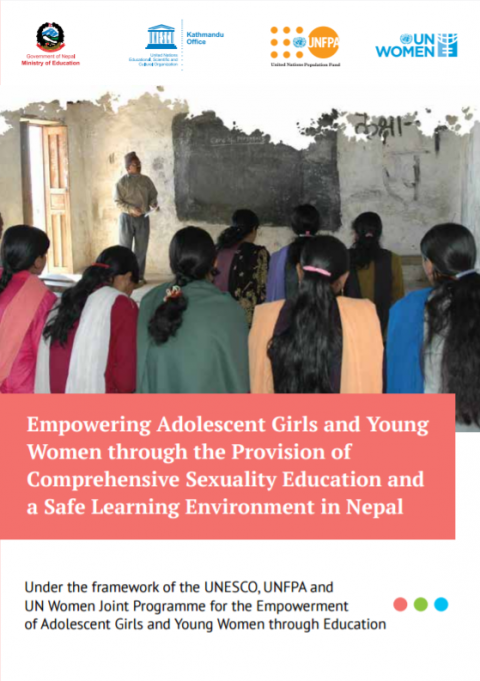 Empowering Adolescent Girls and Young Women through the Provision of Comprehensive Sexuality Education and a Safe Learning Environment in Nepal Year of publication: 2016 Corporate author: UNESCO Kathmandu | United Nations Entity for Gender Equality and the Empowerment of Women (UN Women) | United Nations Population Fund (UNFPA) There are many challenges for adolescent girls and young women in Nepal in terms of access, participation, and completion of good quality education. Child marriage and early pregnancy, gender-based violence, lack of knowledge or provision of proper hygiene facilities such as WASH (water, sanitation and hygiene) are factors preventing adolescent girls and young women from accessing education. This publication is a project plan for empowering adolescent girls and young women in Nepal.
 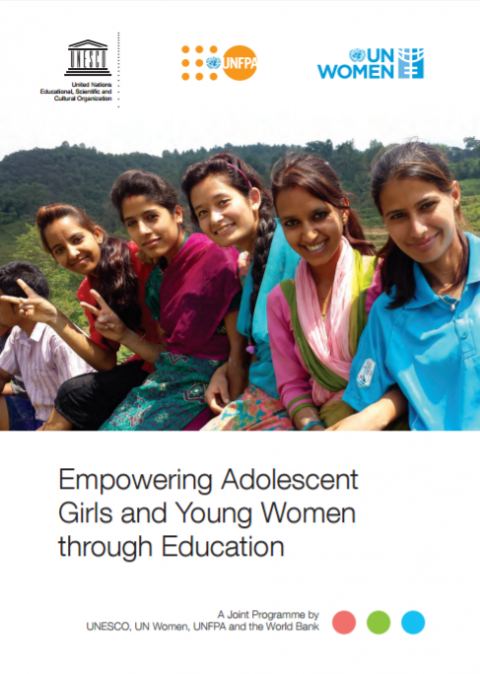 Empowering Adolescent Girls and Young Women through Education Year of publication: 2015 Corporate author: UNESCO
 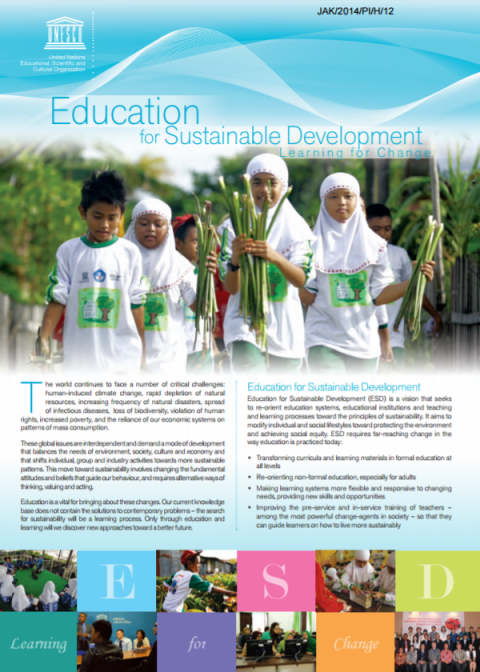 Education for Sustainable Development: Leaning for Change Year of publication: 2014 Corporate author: UNESCO Jakarta Education for Sustainable Development: Leaning for Change
 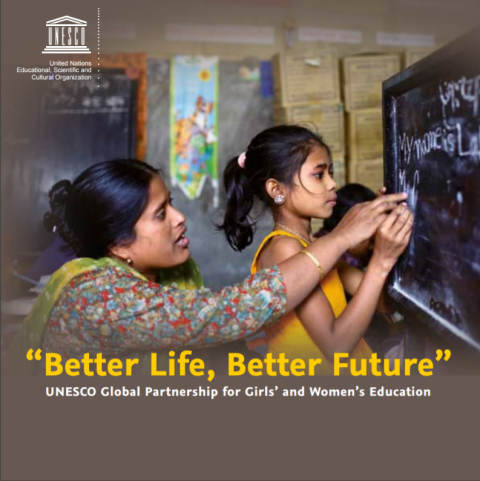 Better Life, Better Future: UNESCO Global Partnership for Girl's and Women's Education Year of publication: 2011 Corporate author: UNESCO “Better Life, Better Future”, UNESCO’s global partnership for girls’ and women’s education, addresses two main areas requiring increased attention – secondary education and adult literacy. It will seek to introduce programmes aimed at stemming the dropout of adolescent girls in the transition from primary to secondary education and in lower secondary schools, as well as focus on scaling up women’s literacy programmes through stronger advocacy and partnerships. As a first step, and in complement to other United Nations initiatives, UNESCO has recently concluded several dynamic public and private partnerships, which stand to benefit marginalized girls and women in Africa and Asia.
 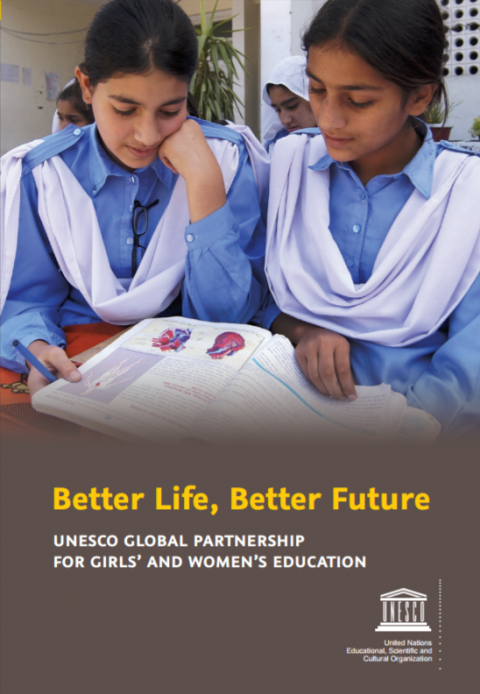 Better Life, Better Future: UNESCO Global Partnership for Girls' and Women's Education Year of publication: 2014 Corporate author: UNESCO Since its creation, UNESCO has been advocating for, promoting and defending the right to quality education for all, especially for girls and women. As fundamental human rights, gender equality and education stand at the core of UNESCO’s mandate. UNESCO launched the Global Partnership for Girls’ and Women’s Education in 2011 guided by the conviction that educating girls and women can break the cycle of poverty and foster greater social justice. The Partnership seeks to increase learning opportunities for adolescent girls and women and to find solutions to some of the biggest challenges and obstacles to their education. The Partnership addresses two main areas which require increased attention: secondary education and literacy.
  Better Life, Better Future: UNESCO Global Partnership for Girl's and Women's Education Year of publication: 2015 Corporate author: UNESCO Since its inception, UNESCO has been a strong advocate, promoter and defender of the right to quality education for all, especially for girls and women. Gender equality and education are fundamental human rights, which stand at the core of UNESCO’s mandate. UNESCO launched the Global Partnership for Girls’ and Women’s Education in 2011, guided by the conviction that by educating girls and women, we can break persistent cycles of poverty and in turn foster greater social justice. The Partnership aims to increase learning opportunities for adolescent girls and women and to find solutions to some of the biggest challenges and obstacles to their education. The partnership addresses two weakest links which are secondery education and literacy.
 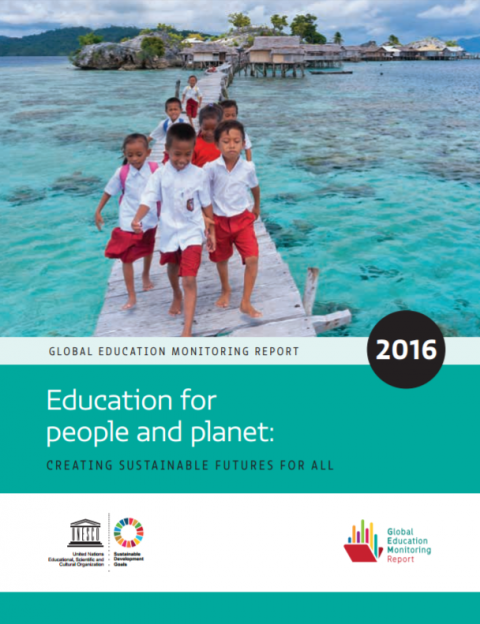 Education for People and Planet: Creating Sustainable Futures for All, Global Education Monitoring Report, 2016 Year of publication: 2016 Corporate author: UNESCO | Global Education Monitoring Report Team Education for People and Planet: Creating Sustainable Futures for All explores the complex relationship between education and the new 2030 Agenda for Sustainable Development, covering six fundamental pillars – Planet, Prosperity, People, Peace, Place and Partnerships. This report shows that education will not deliver its full potential unless participation rates increase dramatically and sustainable development guides education system reform. It also warns of the destructive impact that climate change, conflict, unsustainable consumption and the increasing gap between rich and poor have on education. A huge transformation is needed if we are to create sustainable futures for all.
 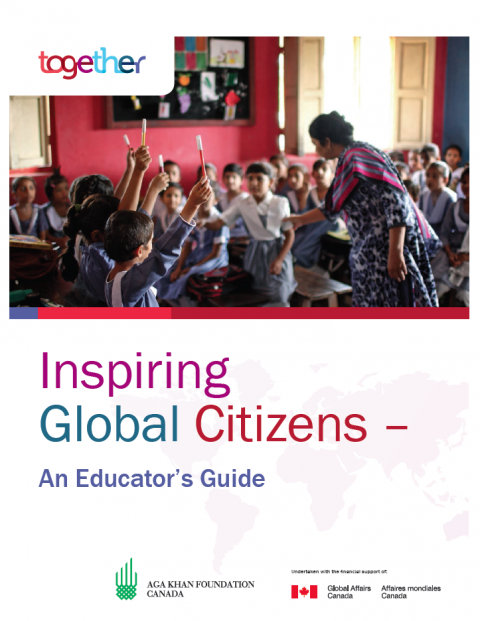 Inspiring Global Citizens - An Educator's Guide Year of publication: 2017 Corporate author: AGA Khan Foundation Canada This resource is intended for use by teachers of intermediate and secondary school grades to support education about global development and related themes such as global citizenship. The activities included in the resource are designed to assist students in increasing their understanding of the interconnectedness of the world, of the factors contributing to global inequalities, and of some effective and sustainable ways to help reduce global poverty. It is hoped that students will be inspired to take action to make their own contribution to improving lives everywhere.
  Learning with Intangible Heritage for a Sustainable Future: Guidelines for Educators in the Asia-Pacific Region Year of publication: 2015 Corporate author: UNESCO Bangkok The guide provides teacher educators and teachers with an understanding of the concept of intangible cultural heritage (ICH) and explains why ICH should be integrated into the curriculum in tandem with the principles and perspectives of Education for Sustainable Development (ESD). This guide explains how the strategic incorporation of ICH elements and ESD principles into the curriculum can enable learners to gain the knowledge and skills that are necessary for ensuring sustainable development in the future.