
Resources
Explore a wide range of valuable resources on GCED to deepen your understanding and enhance your research, advocacy, teaching, and learning.
8,376 Results found
 Gender-Based Violence in Education Year of publication: 2015 Author: Jenny Perkes This paper examines how policies and strategies to address school-related gender-based violence have evolved since 2000, when gender-based violence within education was largely invisible. It traces remarkable progress in research, policy and programmes, particularly since the mid-2000s when evidence around the globe exposed high levels of many forms of violence. However, there is still insufficient knowledge about what works to reduce violence, and weaknesses in processes of policy enactment which inhibit effective action. Through four country case studies, in South Africa, Brazil, India and Liberia, this paper explores how different forms of violence are being addressed in varying contexts. It concludes that more attention is needed to the space between national and local policy enactments, and to tackling at national, district, school and community levels the norms and inequalities at the heart of gender-based violence.
 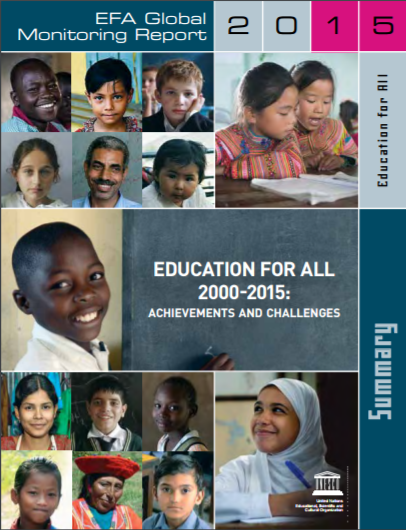 Education for All 2000-2015: Achievements and Challenges; EFA Global Monitoring Report, 2015; Summary Year of publication: 2015 Corporate author: UNESCO At the World Education Forum in Dakar, Senegal, in 2000, governments from 164 countries, together with representatives of regional groups, international organizations, donor agencies, non-government organizations (NGOs) and civil society, adopted a Framework for Action to deliver Education for All (EFA) commitments. The Dakar Framework comprised 6 goals and their associated targets to be achieved by 2015, and 12 strategies to which all stakeholders would contribute. The EFA Global Monitoring Report (GMR) has monitored progress on an almost annual basis towards the EFA goals and the two education-related Millennium Development Goals (MDGs). The 2015 GMR provides a complete assessment of progress since 2000 towards the target date for reaching the Dakar Framework’s goals. It takes stock of whether the world achieved the EFA goals and stakeholders upheld their commitments. It explains possible determinants of the pace of progress. Finally, it identifies key lessons for shaping the post-2015 global education agenda.
 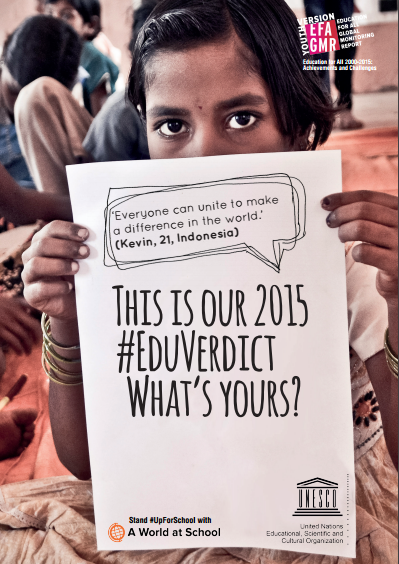 Education for All 2000-2015: Achievements and Challenges; Education for All Global Monitoring Report, 2015; Youth Version Year of publication: 2015 Corporate author: UNESCO This report highlights the progress and challenges of education that countries have faced over 15 years, brining together the voices of young people to show how Education for All (EFA) has affected their lives and hope for the future.
  UNESCO World Conference on Education for Sustainable Development: Conference Report by the General Rapporteur Year of publication: 2015 Author: Heila Lotz-Sisitka Under the banner of ‘Learning Today for a Sustainable Future’, the World Conference on Education for Sustainable Development (WCESD), hosted in Aichi-Nagoya, from 10–12 November 2014, marked and celebrated the end of the United Nations (UN) Decade of Education for Sustainable Development (DESD, 2005–2014). It also saw the launch of the Global Action Programme on Education for Sustainable Development and adoption of the Aichi-Nagoya Declaration. The DESD was established out of an agreement amongst Member States to strengthen the role of education in achieving sustainable development at the World Summit on Sustainable Development in 2002. Through the adoption of Resolution 57/254 in 2002, the UN General Assembly declared the DESD, to take place from 2005 to 2014, and tasked UNESCO as the lead agency. The WCESD, organized at the end of the DESD by UNESCO and the Government of Japan, provided an important opportunity to consolidate the outcomes of the DESD, and to frame the way forward for Education for Sustainable Development (ESD) at global level.
 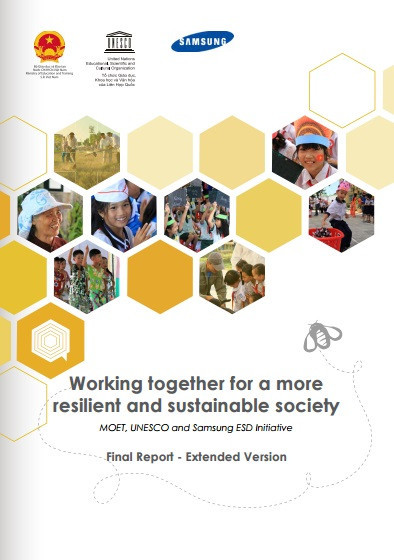 Working Together for a More Resilient and Sustainable Society: MOET, UNESCOand Samsung ESD Initiative; Final Report - Extended Version Year of publication: 2015 Corporate author: UNESCO Hanoi The overarching aim of the ESD Initiative is to support Viet Nam in shaping a more resilient and sustainable learning society. The strategy for the ESD Initiative was developed to establish enabling environments for students to better apply what they learn in school within their homes and communities, and to enhance the education of parents and the community through students. The strategy applies to various themes under ESD. In the case of the current implementation of the Initiative, the key areas are: climate change mitigation and adaptation, disaster risk reduction and biodiversity conservation and restoration, in line with the United Nations Decade of Education for Sustainable Development (UN DESD) and national needs and strategies.
 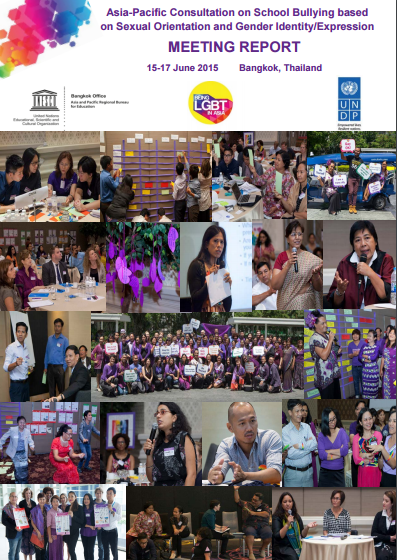 Asia-Pacific Consultation on School Bullying Based on Sexual Orientation and Gender Identity/Expression Year of publication: 2015 Corporate author: UNESCO Bangkok This report documents the presentations and discussions made during the Asia-Pacific Consultation on School Bullying based on Sexual Orientation and Gender Identity/Expression held from 15-17 June 2015 at the Pullman King Power Hotel in Bangkok, Thailand.
 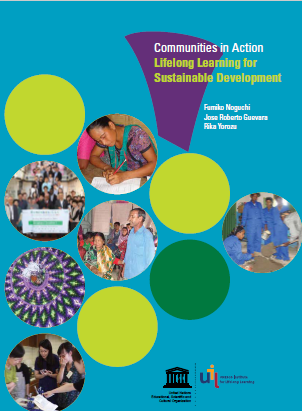 Communities in action: lifelong learning for sustainable Year of publication: 2015 Author: Fumiko Noguchi | Jose Roberto Guevara | Rika Yorozu Corporate author: UNESCO Institute for Lifelong Learning (UIL) This handbook identifies principles and policy mechanisms to advance community-based learning for sustainable development based on the commitments endorsed by the participants of the Kominkan-CLC International Conference on Education for Sustainable Development, which was in Okayama City, Japan, in October 2014. To inform policymakers and practitioners new to this field, the handbook clarifies the international vision and goals for sustainable development and Education for Sustainable Development, and identifies the potential contributions of community-based learning centres and organizations. It documents both policy and practice from different regions and concludes with a summary of principles and policy support mechanisms.
 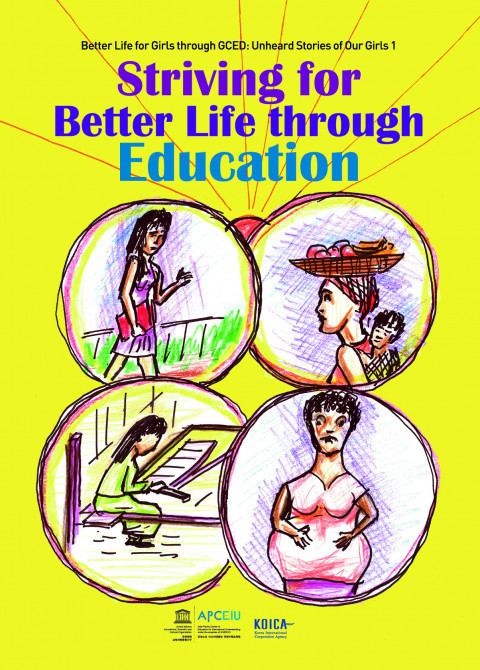 Better Life for Girls through GCED: Unheard Stories of Our Girls 1: Striving for Better Life through Education Year of publication: 2016 Corporate author: APCEIU 2016 UNESCO/KOICA Fellowship Programme Better Life for Girls through GCED: Unheard Stories of Our Girls The "Better Life for Girls through GCED: Unheard Stories of Our Girls" series depict stories of girls from different parts of the world. Coming from Africa and Asia, 25 educators have written stories about their girls during the programme to share with readers all over the world. As the title implies, these series are about real people living on the fringes of society especially girls in their neighbor having challenges on their way to access quality education.
 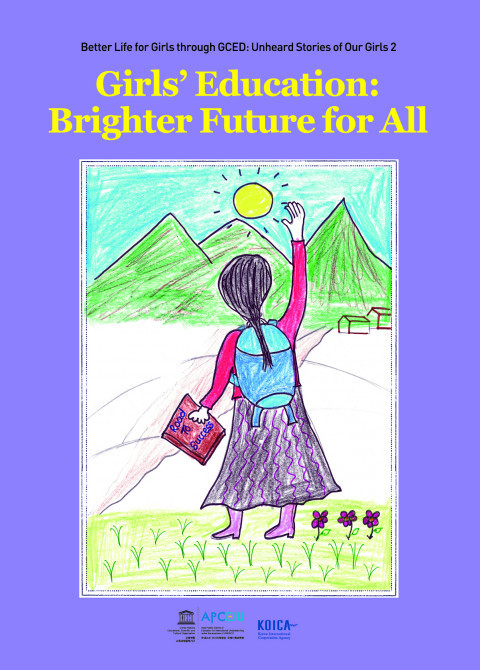 Better Life for Girls through GCED: Unheard Stories of Our Girls 2: Girl's Education: Brighter Future for All Year of publication: 2016 Corporate author: APCEIU The "Better Life for Girls through GCED: Unheard Stories of Our Girls" series depict stories of girls from different parts of the world. Coming from Africa and Asia, 25 educators have written stories about their girls during the programme to share with readers all over the world. As the title implies, these series are about real people living on the fringes of society especially girls in their neighbor having challenges on their way to access quality education.
 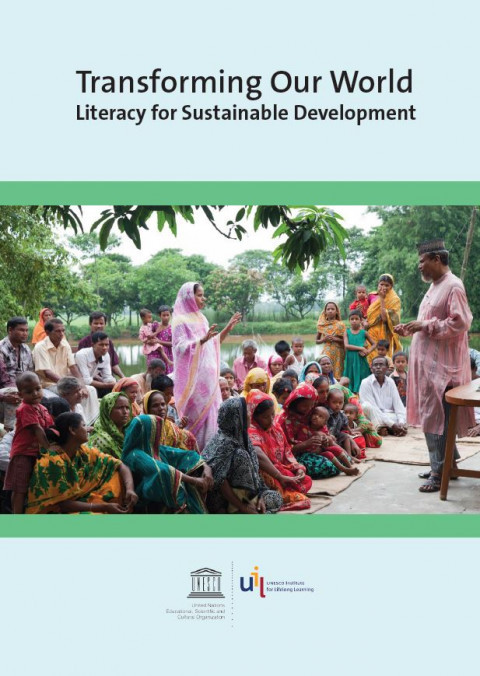 Transforming our world: literacy for sustainable development Year of publication: 2015 Author: Ulrike Hanemann | Cassandra Scarpino Corporate author: UNESCO Institute for Lifelong Learning (UIL) This compilation offers global examples of innovative and promising literacy and numeracy programmes that link the teaching and learning of literacy to sustainable development challenges such as health, social equality, economic empowerment and environmental sustainability. This publication is a timely contribution to the 2030 Agenda for Sustainable Development, which promotes the engagement of stakeholders to ‘ensure inclusive and equitable quality education and promote lifelong learning opportunities for all.’