
Resources
Explore a wide range of valuable resources on GCED to deepen your understanding and enhance your research, advocacy, teaching, and learning.
8,376 Results found
 Generation Z: Global Citizenship Survey Year of publication: 2017 Corporate author: Varkey Foundation The Varkey Foundation commissioned Populus to carry out research on a global scale into the attitudes of 15- to 21-year-olds on a variety of ethical, personal, community and political issues. We chose twenty countries to poll: Argentina, Australia, Brazil, Canada, China, France, Germany, India, Indonesia, Israel, Italy, Japan, New Zealand, Nigeria, Russia, South Africa, South Korea, Turkey, the UK and the US. We chose a range of countries that would give a geographic spread, include some of most populous nations, and would also include those that have particular political significance – as rising powers and/or countries that are important in global geopolitics and cultural influence.The first part of the survey asked about young people’s wellbeing, hopes and ambitions – from their relationships and future careers, to their physical and mental health.. The second part focused on their personal, community and religious values – from their attitudes towards abortion, same sex marriage and transgender rights, to the importance of religion in their lives and whether they feel equipped to contribute to their own community. Finally, it covered issues of global citizenship – attitudes towards migrants, the factors that make young people hopeful and fearful for the future, and their views on whether the world is becoming a better or worse place. This is the first time that there has been an international comparative study of the attitudes of young people on these matters. Not only have we asked them how they feel, what their attitudes are, and who influenced them: we have also reflected on what differences and similarities there may be in terms of their wellbeing, fears, hopes and views across the world.With this survey, we do not aim to document the events that loomed large in young people’s lives or the social forces that have shaped their emotions and opinions. That is a huge subject for expert analysis. Rather, we wanted to hold up a mirror to Generation Z and simply record the reflection that they give us – providing some illumination to help us all understand them better.
 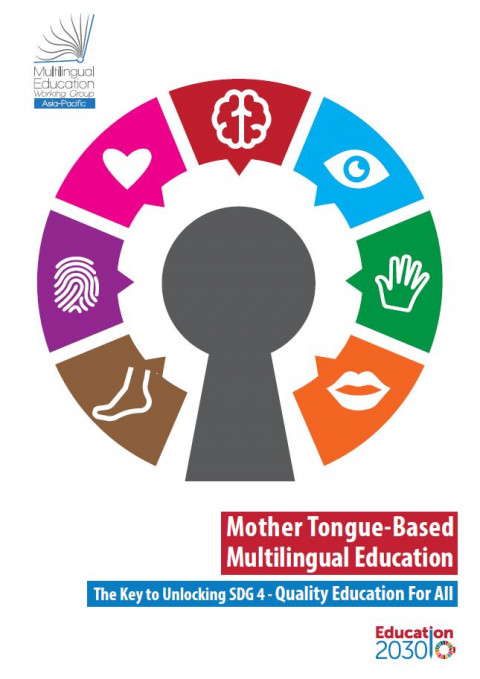 Mother Tongue-Based Multilingual Education: The Key to Unlocking SDG 4 - Quality Education for All Year of publication: 2017 Author: Matt Wisbey Corporate author: UNESCO Bangkok This brochure, designed as a bright and bold resource to be used with policy makers and other key stakeholders, explores the reasons why mother tongue-based multilingual education (MTB-MLE) is the key to quality lifelong learning opportunities for all. Linking the key elements of MTB-MLE with SDG4’s targets, it outlines the benefits for both individual learners and society as a whole.
  Unpacking Sustainable Development Goal 4 Education 2030: Guide Year of publication: 2017 Corporate author: UNESCO This guide, organized around a set of questions and answers to “unpack” SDG4, provides overall guidance for a deeper understanding of SDG4 within the 2030 Agenda for Sustainable Development, in order to support its effective implementation. The guide outlines the key features of SDG4-Education 2030 and the global commitments expressed in the SDG4 targets as articulated in the Incheon Declaration and the Education 2030 Framework for Action. The guide also examines the implications of translating these global commitments within, and through, national education development efforts. This guide supplements the UNESCO technical guidelines (2016) for Mainstreaming SDG4-Education 2030 into sector-wide policy and planning. It was developed by Sobhi Tawil, Margarete Sachs-Israel, Huong Le Thu, and Matthias Eck of the UNESCO Section of Partnerships, Cooperation and Research (PCR) within the Division for Education 2030 Support and Coordination.
  Historical efforts to implement the UNESCO 1974 Recommendation on Education in light of 3 SDGs Targets Year of publication: 2017 Corporate author: UNESCO This paper presents an analytical overview of historical efforts by Member States of the United Nations Educational, Scientific and Cultural Organization (UNESCO) to implement the 1974 Recommendation concerning education for international understanding, cooperation and peace education relating to human rights and fundamental freedoms. The author of the review was hired in April 2016 to undertake an analysis of Member States’ progress reports submitted for the fourth (2008) and fifth (2012) consultations on implementation of the 1974 Recommendation. The main purpose of the review was to provide a historical overview of efforts to achieve Sustainable Development Goal (SDG) Targets 4.7, 12.8 and 13.3 and their proposed measurement indicators, based on states’ historical reporting on the Recommendation. A total of 94 country reports were reviewed for the exercise: 37 from the 4th Consultation (2008); and 57 from the 5th Consultation (2012). The coding involved retrofitting the content of reportsto conceptsthat may have been developed at a later date for the Sustainable Development Agenda and coding for data that was not explicitly requested in the Consultations. Following the coding, a quantitative and qualitative analysis was undertaken and is presented in the following report.
  Reconceptualising global education from the grassroots: the lived experiences of practitioners Year of publication: 2015 Corporate author: DEEEP This research aims to conceptualise and reflect on DEEEP's understanding of Globalcitizenship Education(i.e., GE) in a way that is practice-led and rooted in practitioners’ experiences. We argue that the strategies practitioners use to negotiate the institutional and conceptual challenges of GE should be more systematically engaged with and central to our understanding of GE, and provide critical lessons for how practitioners can be supported, but also how we can understand the GE that results.
 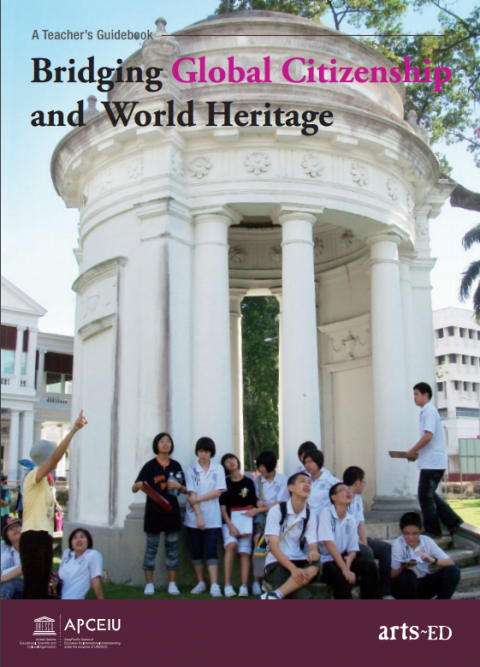 GCED Teacher's Guidebook Bridging Global Citizenship and World Heritage Year of publication: 2016 Corporate author: APCEIU APCEIU, in collaboration with Arts-ED Penang, a non-profit organisation for art and culture education, has published a Global Citizenship Education(GCED) Teacher’s Guidebook Bridging Global Citizenship and World Heritage. This guidebook was developed as a project of GCED Material Development on World Heritage, in order to promote awareness of cultural diversity as well as mutual understanding. This Teacher’s guidebook not only provides literature on both World Heritage in Malaysia and GCED but also gives case examples and lesson plans to provide teachers with practical assistance in designing and conducting GCED class utilizing World Heritage. <Contents>ForewordList of Figures and ImagesChapter 1. Introduction to the World Heritage Site of George Town and MelakaChapter 2. Global Citizenship Education: Empowering Citizens to Create a Better World TogetherChapter 3. How to Design Lessons Using Global Citizenship Education and Heritage ResourcesChapter 4. Case Examples and Lesson PlansReferences
 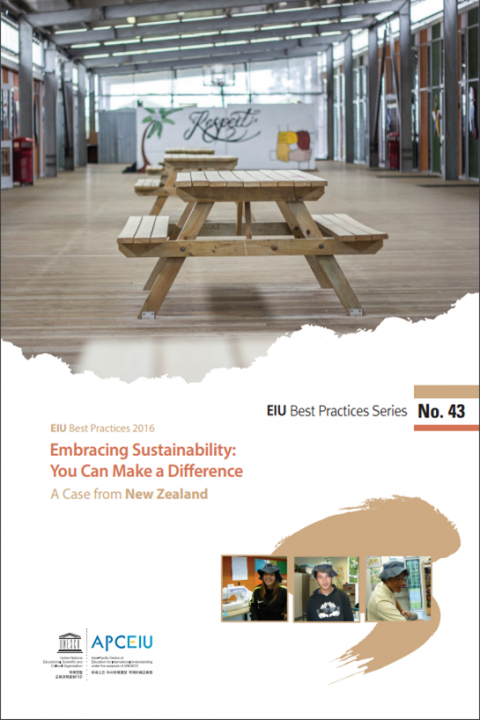 EIU Best Practices Series No. 43: Embracing Sustainability: You Can Make a Difference Year of publication: 2016 Corporate author: APCEIU This monograph is one of APCEIU's EIU Best Practices Series, which aims to encourage educators, scholars, and activists to implement and share local initiatives on EIU. The Series No. 43 introduces a programme called “Embracing Sustainability: You Can Make a Difference”, designed by a teacher in New Zealand to allow his students to think about sustainability from a global perspective. The programme has been successful in engaging disengaged youth by giving them a sense of self-worth and helping them to understand sustainability and see their place in the global society. The valuable insights provided in this case will also be able to inform those who intend to embed EIU/GCED principles in the existing curriculum.
 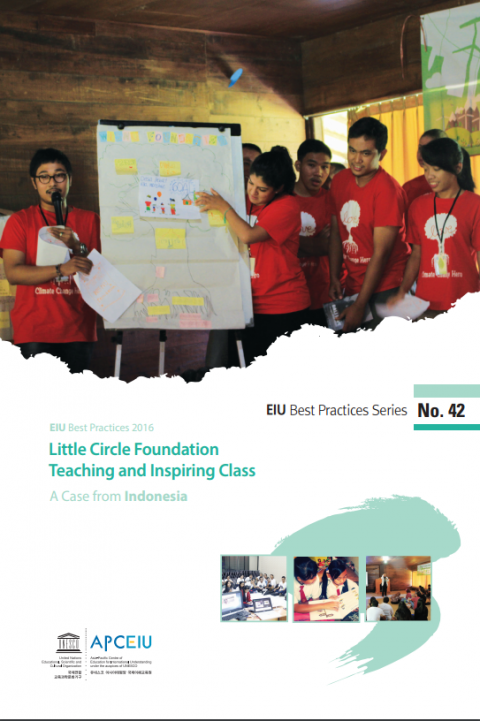 EIU Best Practices Series No. 42: Little Circle Foundation Teaching and Inspiring Class Year of publication: 2016 Corporate author: APCEIU This monograph is one of APCEIU's EIU Best Practices Series, which aims to encourage educators, scholars, and activists to implement and share local initiatives on EIU. The Series No. 42 introduces a programme called “Little Circle Foundation Teaching and Inspiring Class”, a great example of young people taking action to improve the quality of education in their community in Bali, Indonesia. The activities presented in this case are solely organized by youth for youth themselves. This proves that young people are not only recipients of education, but also active participants and providers of education.
 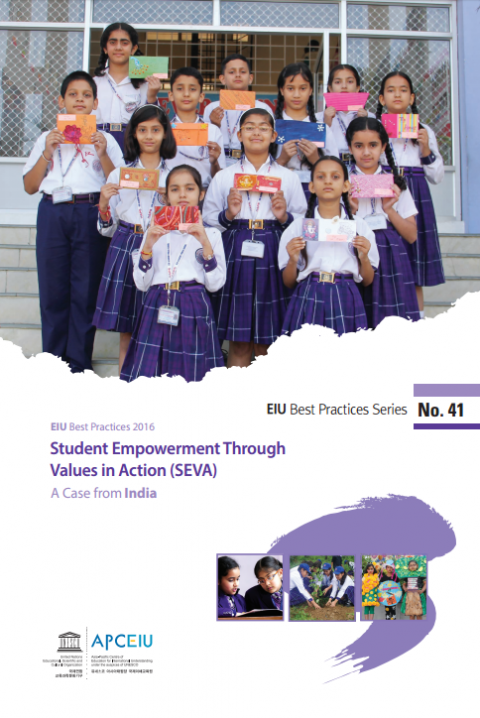 EIU Best Practices Series No. 41: Student Empowerment Through Values in Action (SEVA) Year of publication: 2016 Corporate author: APCEIU This monograph is one of APCEIU's EIU Best Practices Series, which aims to encourage educators, scholars, and activists to implement and share local initiatives on EIU. The Series No. 41 introduces a programme called “Student Empowerment through Values in Action (SEVA)" carried out by a school in India. The programme encouraged students to put the values of respect, responsibility, care, integrity, resilience and cyber-wellness in day to day actions. The programme has been successful in motivating the school staffs to enthusiastically participate in the programme as they witnessed the impact of the progarmme on the students. The programme sends out important messages to the school education system, where evaluation of success tends to be heavily based on academic performance.
  ESD Zoom Newsletters (January 2017) Year of publication: 2017 Corporate author: UNESCO ESD Zoom Newsletter Highlight- UNESCO opens nominations for UNESCO-Japan Prize on ESD 2017 International Events- Call for youth: Join online discussion to participate in UNESCO Week in Canada- Asia-Pacific Network for SDG4 launched at regional meeting on Education 2030- UNESCO ASPnet trains teachers to address climate change- ESD at heart of new Mediterranean Action Plan GAP Key Partners- GAP regional meeting: The role of cities in living sustainably- GAP key partner from Peru wins prestigious Rolex Award for Enterprise- Japan holds eighth National UNESCO ASPnet Conference- Video message by Okayama Youth- Winners of International Essay Contest for Young People awards- "Green Impact": The numbers speak for themselves