
Resources
Explore a wide range of valuable resources on GCED to deepen your understanding and enhance your research, advocacy, teaching, and learning.
8,376 Results found
 The role of experiential learning in Holocaust education The paper starts with a brief description and analysis of Holocaust education in Israel as a case of teaching history. The role of experiential learning is discussed, leading to the presentation of the "Journey to Poland" as a central element in teaching and learning about the Holocaust. Several evaluation studies of this journey are noted. Finally, the discussion offers some conclusions concerning the use of experiential learning in the teaching of history, its advantages, limitations and risks. (By the author) Switzerland and the Holocaust: teaching contested history This study is about a history textbook which introduces the new transnational master‐narrative of Holocaust memory into the classrooms of the German‐speaking part of Switzerland. The script of the book entails a replacement of the formerly dominant view of Switzerland as a neutral nation resisting evil in favour of an image that aligns Switzerland with other nations that accept the Holocaust as part of their national history, and combine their efforts to prevent such crimes in the future. However, this process cannot be seen as hegemonic or total since it is fragmented at various levels. On the level of state power, there is no uniform vision of the nation’s history. Therefore, the book needed to accommodate its critics to a certain extent. Furthermore, there are institutional rules of history education that restrict a direct transmission of knowledge and promote teaching youths to develop their own views. And then there are the teachers, who have their part in shaping history. (By the publisher) Genocide & The Shoah (The Holocaust) : Intellectual Tools for Education & Public Policy Decision The article reviews anti-Semitism from a multi-disciplinary perspective by focusing on the influence of American anti-Semitism on the German Nazis; exploring the endurance of anti-Semitism in Germany via its intellectual and scholastic elite; and exploring the political psychology of Hitlerism prior to the Second World War. The article then examines the problem that although anti-Semitism may be a necessary condition of genocide, it is not a sufficient one. This required the understanding of the jump from anti-Semitism, that is repressive and dominating, to the decision to exterminate a population of human beings completely. This also required a more carefully exploration of the specific features of the Nazi decision process as well as its framework of social control. With this background, the article focuses on developing the theoretical and methodological intellectual skills that have been developed in the context of the policy sciences in order to provide an approach to the challenges generated by the problems of mass murder and genocide, which would guide policy makers to more realistic, timely and effective interventions. The article then explores distinctive but interrelated intellectual tasks that are required for research to guide inquiry and policy making and which include a disciplined commitment to the clarification of the value goals implicated by the problems of mass murder and genocide. These intellectual tasks require a careful specification of the trends in past decisions that have sought, in some measure of efficacy, to respond to these problems. They would also require an understanding of the scientific conditions that have shaped the nature of these trends in order to be able to forecast about the prospect of genocide and mass murder, which could be understood as a tentative forecast of an optimistic and a pessimistic nature, and the possibility of constraining it. Finally, theory requires an element of creativity. That creativity would be expressed in terms of the provided interaction between human values and the art/aesthetic process, which is suggested as a tool for realizing the never again goal. The creative aspect of this would be the invention of strategies that might direct intervention of a trend in the direction of a more optimistic possible future. (By the author) Developing Holocaust Curricula: The Content Decision-Making Process The content decision-making process involved in developing Holocaust curricula is unusually complex and problematic. Educators must consider factors such as historical accuracy, selection of topics covered, potential teaching materials (such as textbooks and literary texts), and graphic materials (such as films and photographs) as they plan their Holocaust units. Judiciously considered decisions regarding these factors allow teachers to present accurate, appropriate and meaningful units on the subject, thus conveying the story of the Holocaust in ways that are pedagogically sound and historically viable. Accordingly, the author does not focus on the content to be included in a Holocaust unit but rather considers several factors important to selecting that content. (By the author) The Construction of the American Holocaust Curriculum Remembering the Holocaust has become a central part of American culture. The Holocaust has also become an important topic in the nation's schools. By the 1990s many states had adopted or mandated their own Holocaust curricula in addition to the dozens of organizations dedicated to Holocaust study and education in the United States. This rise in interest was accompanied by a public debate over how to represent the Holocaust properly in American life, making the Holocaust one of the most controversial historical topics of the late twentieth century. This study traced the construction of the Holocaust curriculum through historical case studies of five of the first Holocaust curricula taught in American classrooms, through which I present two major arguments. First, that Holocaust education was a grassroots movement engineered by school teachers ‒ many of whom were not Jewish. These teachers introduced the Holocaust as way to help students navigate the moral and ethical dilemmas of the time. Certain researchers have suggested that Jewish elites pushed the Holocaust into the American consciousness, or that this interest was initiated by events in popular culture. My research will complicate both these claims. My second argument is that the intense debate over how to represent the Holocaust in the curriculum has been misinterpreted as a cultural clash over different interpretations of the event ‒ the Jewish version vs. the "Americanized" one. This explanation is too simplistic. The controversy is better understood as a curricular debate over the teaching of history. For nearly a century, educational researchers, interest groups, and historians have argued over the role and purpose of history in the schools. Having entered into this debate, the topic of the Holocaust has made these issues more conspicuous to the general public. (By the author)
 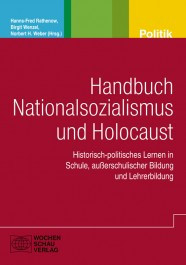 Handbuch Nationalsozialismus und Holocaust. Historisch-politisches Lernen in Schule, außerschulischer Bildung und Lehrerbildung. The educational field of National Socialism and the Holocaust is an indispensable part of historical-political learning in schools, non-formal education and teacher training. This manual gives new impetus to the theoretical discussion as well as to the practical educational work. Basic theoretical texts are complemented by methodological suggestions as well as by accounts based on personal experience and presentations of projects with national and international perspectives. The fact that today, more than sixty years after the events, adolescents have hardly any direct access to this phase of German and European history, and the question of how to deal with this challenge, are here of central importance. The contributions in the manual focus on the following themes: The fundamentals of National Socialism and the Holocaust as an educational field. School practices: Learning from classroom instruction. School practices: Learning from projects. Practices in teacher education. Practices in memorial sites and non-formal educational institutions. International approaches. (By the publisher) National Socialism and the Holocaust in West German school books The author differentiates five phases of representation of the Holocaust in West German history books and lessons. Attempts to deal with the subject in a serious and comprehensive way in some post-war school textbooks were repressed in the 1950s. The students' movement, intensive research work and increased political attention on right-wing tendencies brought a change in the 1960s. New didactic methods such as source work and regional historical approaches were adopted, intended to give pupils greater insight into the individual areas of dictatorship and enable them to form their own opinion of the activities at that time. In the meantime, National Socialism is usually the area of German 20th century history dealt with in the most detail. The increasing distance in time to the period in question, the dissolution of the Socialist bloc, reunification and the multicultural nature of school classes have produced new teaching conditions, which on the one hand create a greater distance from the subject but on the other hand call for comparison of genocide, war and exile in the present time or from the history of other peoples. (By the author)
 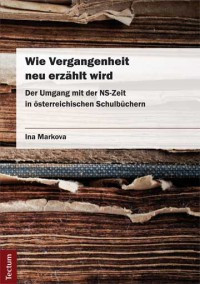 Wie Vergangenheit neu erzählt wird - Der Umgang mit der NS-Zeit in österreichischen Schulbüchern Which past should be remembered, and which is better forgotten? Ina Markova studies how the Nazi period is thematized or ignored in Austrian history textbooks. Especially the question about Austrian complicity in genocide and the war of annihilation was long ignored. Instead, positive – and thereby identity shaping – aspects of history were thematized. Ina Markova carefully analyses continuities and breaks, departures and "areas of silence", and pursues a number of larger questions: Which are the key images of Austrian memory? Do they fix authoritative perspectives on Austrian national identity? (By the publisher) Analysing the dominant discourses on the Holocaust in grade 9 South African history textbooks The Holocaust has become a focal point in many History classrooms in recent years as a direct result of linking the teaching of the Holocaust with Human Rights Education. Whilst there may be many studies on the Holocaust as a historical event, this study has analysed how the Holocaust has been embedded as a narrative in the Grade 9 GET South African History textbooks and which dominant discourses emerge from this. This research is phenomenological in nature and was situated within an interpretivist paradigm. I employed Narrative Inquiry and Fairclough's three dimensions of discourse as the analysis methodologies. The analysis was completed through an instrument in which the various aspects that aid in the construction of a narrative were interrogated. The study concluded that the Holocaust has a deeply-rooted link to education and the History curriculum in South Africa, as there has been a shift in ideological thinking emanating from western consciousness and finding a place in African consciousness due to the former's prevalence globally. The focus of the narrative of the Holocaust ‒as seen in the four selected Grade 9 GET History textbooks which constituted the sample for this study ‒ has shifted from a purely historical perspective to a perspective which is more social in nature. (By the author) The Holocaust in the textbooks and in the History and citizenship education program of Quebec This article analyzes the treatment of the Holocaust in Quebec's history textbooks, in view of the subject's potential and actual contribution to human rights education. Given that Quebec's curriculum includes citizenship education in its history programme, it could be argued that the inclusion of the Holocaust has particular relevance in this context, as it contributes to the study of both history and civics, and familiarizes Quebec's youth with representations of Quebec's Jewish community, which is primarily concentrated in Montreal. This article demonstrates that the textbooks' treatment of the Holocaust is often superficial and partial, and prevents Quebec's students from fully grasping the impact of this historical event on contemporary society. (By the publisher)