
Resources
Explore a wide range of valuable resources on GCED to deepen your understanding and enhance your research, advocacy, teaching, and learning.
8,376 Results found
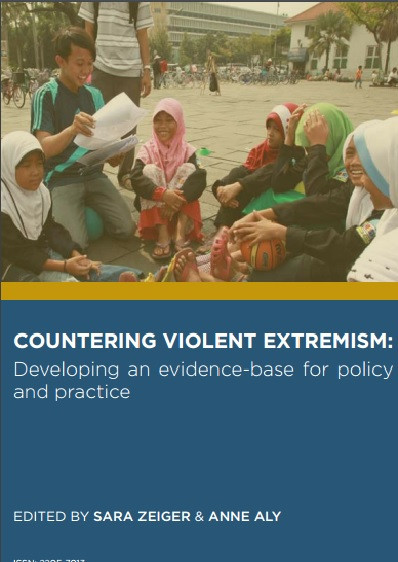 COUNTERING VIOLENT EXTREMISM: Developing an evidence-base for policy and practice Year of publication: 2015 Author: Sara Zeiger | Anne Aly Corporate author: Hedayah and Curtin University This volume reports on the range of papers presented at the Annual Countering Violent Extremism (CVE) Research Conference 2014 from 7-8 December 2014 in Abu Dhabi, United Arab Emirates. It presents two case studies on engaging with non-state actors within the community, namely families, community leaders and youth.
  Abu Dhabi Memorandum on Good Practices for Education and Countering Violent Extremism Year of publication: 2014 Author: Sara Zeiger Corporate author: Hedayah Foundation The contents of this brief are based on the discussions that occurred from 3 to 4 November 2014 at an expert workshop on Research Trends in Countering Violent Extremism hosted by Hedayah in Abu Dhabi, United Arab Emirates. The purpose of this two-day expert roundtable was to bring together researchers, policymakers and practitioners in a closed discussion of the current trends in CVE research. The goals at the meeting were to address the current research outcomes in countering violent extremism; determine the critical gaps in research on CVE; identify the new and emerging threats of violent extremism; and establish a recommended research agenda for Hedayah and CVE researchers in the coming two years.
  L'ABC de l'éducation à la citoyenneté mondiale Year of publication: 2016 Corporate author: UNESCO UNESO's FAQ on Global citizenship education
  The ABCs of Global Citizenship Education Year of publication: 2016 Corporate author: UNESCO UNESCO's FAQ flyers on GCED Securitisation, Counterterrorism and the Silencing of Dissent: The Educational Implications of Prevent Year of publication: 2016 Author: Aislinn O'Donnell Corporate author: Society for Educational Studies | Taylor & Francis This paper outlines some of the implications of counterterrorist legislation, including Prevent, for the pedagogical relationship and for educational institutions. The concept of ‘radicalization’, central to the Prevent Strategy, is one that is contested in the field of counterterrorism, yet educators are now expected to identify and refer students ‘at risk of radicalization’. Based on the experience of teaching IRA and INLA prisoners in the Republic of Ireland, the author outlines a set of philosophical and ethical principles that ought to underpin education. It is argued that education must not be subordinated to security and intelligence agendas on pragmatic, educational and ethical grounds. Engaging and Educating Women and Girls in the Prevention of Violent Conflict and Violent Extremism Year of publication: 2014 Author: Kathleen Kuehnast Corporate author: United States Institute of Peace (USIP) Dr. Kathleen Kuehnast, director of the Center for Gender and Peacebuilding at the U.S. Institute of Peace, testified on the importance of engaging and educating women and girls in conflict zones in order to prevent and mitigate violent conflict and violent extremism.
  Literacy and the Promotion of Citizenship: discourses and effective practices Year of publication: 2008 Corporate author: UNESCO Institute for Lifelong Learning (UIL) The UNESCO Institute for Lifelong Learning and its partners, the Agence Nationale de Lutte Contre L’Illettrisme (ANLCI) and the UNESCO French National Commission, organized a Regional Meeting on “Literacy and the Promotion of Citizenship: The Challenge of Learning” from 2-5 April 2005 in Lyon, France. Participants from 38 countries of what UNESCO considers to be the European Region (i.e. Europe, Canada, Israel and the United States of America) reviewed pertinent policies and shared good practices.By focusing on the theme of citizenship, the meeting sought to establish a link between literacy and the empowerment of citizens. This publication brings together the main presentations from that meeting, and as such documents the diversity of literacy-related thinking and practice in the region.
  Regional thematic consultation of Western European and North American States (Group I Countries) on Education in the Post-2015 Development Agenda, Paris, France, 5-6 December 2013: background paper Year of publication: 2013 Author: François Leclercq Corporate author: United Nations Children's Fund (UNICEF) This paper first describes ongoing trends affecting education systems in Western Europe and North America , as well as Turkey, and reflects on their policy implications. The paper then analyses current indicators of education in the region and mentions key existing strategies and policies. Finally, it reflects on the relevance of the emerging post-2015 agenda for the region.
  Série de guides youthXchange: biodiversité et modes de vie Year of publication: 2015 Corporate author: UNESCO | United Nations Environment Programme (UNEP) The YouthXchange Biodiversity and LifestylesGuidebook is designed to help young people familiarize themselves with the dimensions of global biological and cultural diversity, as well as help them to develop essential skills whileengaging with biodiversity.The guidebook aims to:• Explore the interactions between biodiversity and lifestyle choices by explaining the interrelatedness of food, consumption, culture and biodiversity conservation;• Help young people familiarize themselves with the dimensions of global biological and cultural diversity, as well as help them to develop essential skills while engaging with biodiversity; and• Help young people consider how they can preserve biodiversity though responsible lifestyle choices, engagement and action.
  YouthXchange: guide sur le changement climatique et les modes de vie Year of publication: 2015 Author: Adam Cade | Rob Bowden Corporate author: UNESCO | United Nations Environment Programme (UNEP) Climate Change and Lifestyles is the first in a series of guidebooks supporting the UNESCO/ UNEP YouthXchange (YXC) Initiative, which was created in 2001 to promote sustainable lifestyles among youth (15-24 years) through education, dialogue, awareness raising and capacity building. The series is being produced for young people and people working with youth, such as educators, teachers, trainers and youth leaders in both developed and developing countries. Almost half of the world’s population is under the age of 25, and nearly 90 per cent of them live in developing countries. Youth is a critical stakeholder in the global economy and will be the main actor and motor for change in the near future. Thus, the energy, motivation and creativity of youth are essential assets to stimulating change. Aims of the YXC Guidebook on Climate Change and Lifestyles:• Explore the links between lifestyles and climate change; • Help young people consider the actions they should take towards more sustainable lifestyles;• Support courses and actions that promote greater understanding of climate change and lifestyles among youth. The guidebook:• Considers the causes and effects of climate change and its human impacts and responses, while connecting them to lifestyle choices and the technical and social infrastructures of a society;• Provides scientific, political, economic, social, ethical and cultural perspectives on climate change;• Explains complex issues in accessible language supported by facts, graphics, images, examples and web links;• Develops the critical skills young people need to make personal choices to address the challenges of climate change.