
Resources
Explore a wide range of valuable resources on GCED to deepen your understanding and enhance your research, advocacy, teaching, and learning.
8,376 Results found
 Mémorial de la Shoah - Musée, Centre de documentation juive contemporaine The Shoah Memorial provides access to various resources on the Holocaust, mostly in French.
  United States Holocaust Memorial museum The website of the United States Holocaust Memorial Museum has extensive in-depth historical information about the Holocaust. It provides easy access to primary source documents, including photographs and maps that deal with the Holocaust. It also has broad information on genocide and mass atrocities.
  The layering of knowledge, memory, and understanding. Using Berlin’s ‘Places of Remembrance’ memorial to teach about the Holocaust Carson Phillips offers detailed and specific suggestions for teaching about the Berlin memorial described in Pnina Rosenberg’s essay (pp. 90–96), along with extended learning opportunities that feature contemporary encounters with, and the meaning of, that and two additional exhibits. “This educational unit,” he writes, “is designed to develop the critical thinking skills of students, to elucidate the complexities of the Holocaust, and to examine the range of human responses to it.” An invaluable aid for educators is the appendix with the text of decrees originally imposed between 1933 and 1945. (By the publisher) Menschenrechtsbildung in NS-Gedenkstätten. Neue pädagogische Überlegungen zum Lernen aus der Geschichte des Nationalsozialismus Learning from history means acting with historical awareness in both the present and future, making decisions and taking knowledge of the past into account and developing greater sensitivity for current processes in light of what has gone before. The contemporary relevance and subject relations are decisive prerequisites for learning about history. Without integrating the addressee's identity within the learning process, without any reference to facts of significance of subjective importance to the learner, all educational efforts will fail to bear fruit. This problem is more relevant than ever as far as historico-political education at memorial sites for Holocaust victims is concerned. The pedagogical approach to Holocaust memorial sites is currently facing an educational challenge in the light of the increasing chronological distance to the historical events and their multi-ethnic audience. Although a discussion of National Socialist history continues to constitute an important focus in both schools and the public domain, the results of empirical studies attest to significant gaps in knowledge. Furthermore, in an international comparison, German teenagers demonstrate considerably less interest in the National Socialist era than those from other countries. Instead of displaying an interest in this aspect of history, they react defensively and state that they are "sick and tired" of the topic. In the face of such developments, the question of the direction which the pedagogical approach to holocaust memorial sites will take in future arises. In order to integrate connections between past and present more deliberately, those involved in running Holocaust memorial sites are considering placing a stronger focus on human rights education. The fusion of both disciplines is designed to provoke more intense contemporary historical discussion and thus prompt a subjectively significant learning process. The present research project concentrates on the question of the extent to which this approach can be implemented and on the areas of tension which may arise in the practice of memorial site education as a result. Human rights education at holocaust memorial sites ‒ the concept sounds promising. The terms reflect precisely what one would expect of the historico-political education at Holocaust memorial sites offered by a free and democratic constitution: the opportunity to learn lessons for the present from past crimes. This research project seeks to close a gap. Its aim is to develop a comprehensive model of human rights education at Holocaust memorial sites, analyse areas of tension and potential and, finally provide suggestions for the further development of educational practice. In consequence, the research project is located firmly within practical research. In order to answer the question posed in an adequate manner, diverse qualitative methods were required. It follows that results obtained via participatory observation, expert interviews and group discussion processes form the basis of my deliberations. (By the author)
  Evaluating the Link between Conflict and Education Year of publication: 2005 Author: Lynn Davies Corporate author: SAGE Publishing This paper examines two areas of important evaluation: the impact of education on peace and the impact of education on conflict, and argues that they are not necessarily the same type of evaluation. Education, Poverty and Terrorism: Is There a Causal Connection? Year of publication: 2003 Author: Alan B. Krueger | Jitka Maleckova Corporate author: American Economic Association In the authors' view, any connection between poverty, education and terrorism is indirect, complicated and probably quite weak. Instead of viewing terrorism as a direct response to low market opportunities or ignorance, the article suggests it is more accurately viewed as a response to political conditions and long-standing feelings of indignity and frustration that have little to do with economics.
  Lessons Learned from Mental Health and Education: Identifying Best Practices for Addressing Violent Extremism Year of publication: 2015 Author: Stevan Weine | B. Heidi Ellis | Ron Haddad | Alisa B. Miller | Rebecca Lowenhaupt | Chloe Polutnik Corporate author: National Consortium for the Study of Terrorism and Responses to Terrorism (START) The overall purpose of this research was to identify assets from the mental health and education fields that could contribute to best practices for preventing and intervening against violent extremism. Specifically we aimed to address the following questions:1) What prior knowledge, programmes or interventions within the mental health and education fields could contribute to best practices and other strategies that could help stop violent extremism? 2) How can professionals from the mental health and education fields best become involved in stopping violent extremism?
  Terrorist Attacks on Educational Institutions Year of publication: 2014 Author: Erin Miller Corporate author: National Consortium for the Study of Terrorism and Responses to Terrorism (START) | Department of Homeland Security Science and Technology The report describes historical patterns of terrorist attacks targeting educations institutions dating back to 1970. Since that year, more than 3,400 terrorist attacks targeting educations institutions took place in 110 countries. These attacks comprised 2.7 percent of all terrorist attacks worldwide during this time period.
 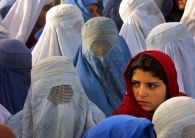 Women’s Education: Promoting Development, Countering Radicalism Year of publication: 2014 Author: Hedieh Mirahmadi Corporate author: World Organization for Resource Development and Education (WORDE) Increasing access to quality secular education can create better jobs for women and reduce some of the economic drivers of radicalization. Educated women can in turn play a pivotal role in inoculating their children and communities against the radical narratives used to recruit followers.
  PREVENT: creating “radicals” to strengthen anti-Muslim narratives Year of publication: 2015 Author: Asim Qureshi Corporate author: Critical Studies on Terrorism The use of de-radicalization narratives in schools, universities and hospitals has led to the criminalization of large sections of the various Muslim communities in the UK. Based on different experiences we hope to present a view of how an aggressive anti-Muslim narrative that is based on assumptions subverts the political expression/identity of individuals by turning them into potential threats. By understanding the everyday interactions with PREVENT, a picture can be formed of the way that a false presentation of narratives can lead to a person becoming an “extremist” or “terrorist”, while the truth may lie in a completely alternative place.