
Resources
Explore a wide range of valuable resources on GCED to deepen your understanding and enhance your research, advocacy, teaching, and learning.
8,376 Results found
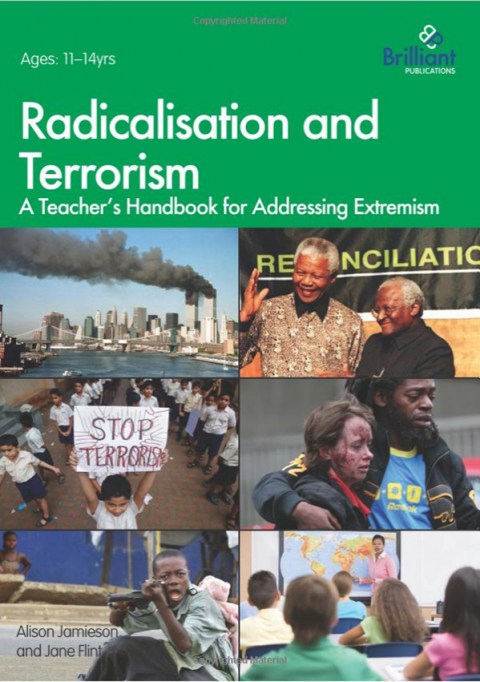 Radicalisation and Terrorism: A Teacher's Handbook for Addressing Extremism Year of publication: 2015 Author: Alison Jamieson | Janet Flint This practical handbook provides a reliable and objective resource to enable lower secondary school teachers to tackle the complex subjects of terrorism and radicalization with confidence. The text covers issues of citizenship, human rights and respect, civil and political engagement, the nature of identity and how we identify with others. It examines different forms of violence from bullying to the most recent examples of 21st century terrorism. Historical precedent is used to illustrate a variety of contexts in which political violence has occurred, from Assassins through Suffragettes to militancy in South Africa, Europe, the Middle East and Oceania.
  Talking about values in the classroom Year of publication: 2015 Author: Don Rowe Corporate author: Citizenship Foundation The publication introduces teachers to a method of working with stories that enable students to develop a range of skills in thinking and talking about moral issues. It aims to expand the pupils' vocabulary concerning moral, values and ethical questions and critical thinking tools.
  School Online Safety - Self review tool Year of publication: 2016 Corporate author: South West Grid for Learning Trust (SWGfL) The Self Review Tool is intended to help schools to review their current online safety policy and practice. It provides management information and stimulus that can influence the production or review of online safety policies and develop good practice and process for identifying strengths and weaknesses. It also focuses on opportunities for commitment and involvement from the whole school as well as a continuum for schools to discuss how they might move from a basic level provision for online safety to practice that is aspirational and innovative.
  Trust me Year of publication: 2016 Corporate author: Childnet International The main aim of this resource is to educate young people about inaccurate and pervasive information that they might come across online. This resource is intended to stimulate and facilitate discussions around online risk.Developed in partnership with the London Grid for Learning (LGfL) Safeguarding Board, the resource contains lesson plans for both primary and secondary level that aim to empower educators to discuss how to think critically around the areas of content, contact, and propaganda material that may seek to persuade or change their views.
  Educating Against Hate Year of publication: 2016 Corporate author: United Kingdom. Department of Education, United Kingdom. Home Office As children grow and become more independent, it is not unusual for them to take risks, explore new things and push boundaries. This can mean that they are particularly vulnerable to extremist groups, who may claim to offer answers, as well as identity and a strong social network. And because they know young people are vulnerable, extremist groups often target them using the internet and social media to spread their ideology. The purpose of this website is to provide practical advice and support to help all individuals with an interest in keeping children safe from the dangers of extremism.
  World's Largest Lesson Year of publication: 2016 Corporate author: United Nations Children's Fund (UNICEF) World's Largest Lesson (WLL) is an educational campagin that students participate from all around the world.With this campaign, students can understand SDGs, think about global problems and act for finding solutions. UNICEF provides teaching materials and guides to teachers for participatting World's Largest Lesson.
  Turning Students into Global Citizens Year of publication: 2016 Author: Fernando Reimers Prof. Fernando M. Remiers made the case for global citizenship education and shared his experiences through Ed Week.
  Girl Rising Year of publication: 2014 Corporate author: Girl Rising Suma's is one of Girl Rising's 9 remarkable stories. Though her brothers went to school, she was forced into bonded labor at age 6, like many other Nepali girls. Watch this chapter of Girl Rising to see how Suma gained her freedom and how she uses her education in a fight to free other girls. Written by Manjushree Thapa and voiced by Kerry Washington.
  Competences for Democratic Culture: Living together as equals in culturally diverse democratic societies Year of publication: 2016 Corporate author: Council of Europe This document is a product of a Council of Europe project which is taking place in four phases during 2014-17. The first phase has been devoted to the development of a conceptual model of the competences which citizens require to participate effectively in a culture of democracy. This document describes the model and the methods that were used to develop it. The document is aimed at readers who wish to understand the underlying assumptions and technical details of the model. Phase two of the project will be devoted to the development of descriptors (i.e. statements or descriptions of what a person is able to do if they have mastered the various competences that are specified by the model), phase three to ascertaining whether it is possible to assign the descriptors to levels of proficiency, and phase four to the production of supporting documentation. This documentation will be addressed to educational practitioners and policy makers, and will provide a less technical description of the current competence model. It will also explain how the model and the descriptors can be used to assist curriculum design, pedagogical design and the development of new forms of assessment (for use in either selfassessment or assessment by others). All of the materials that are produced by the project will eventually be incorporated into a Council of Europe reference framework of competences for democratic culture. Further information about the project is available from the project website: www.coe.int/competences
  Primary schools and Prevent Year of publication: 2008 Corporate author: United Kingdom. Department for Children, Schools and Families This resource pack has been created to reduce the likelihood of young people becoming radicalized and then engaging in any form of violent extremism. The aim of ‘Prevent’ is to stop people becoming or supporting terrorists and to do this by challenging ideologies, protecting vulnerable individuals and supporting institutions, such as schools. It is part of the National Counter Terrorism Strategy known as CONTEST.