
Resources
Explore a wide range of valuable resources on GCED to deepen your understanding and enhance your research, advocacy, teaching, and learning.
8,376 Results found
 Encountering Global Citizenship Education in Schools: Stories of School Teachers on GCED Year of publication: 2016 Corporate author: APCEIU Titled “Encountering Global Citizenship Education in Schools: Stories of School Teachers on GCED,” the book includes stories of 11 GCED Lead Teachers focusing on the practical implementation of GCED in real educational setting. Readers will be able to learn from the experiences of those teachers, who worked to implement GCED in the field of education. Moreover, this publication provides an opportunity for educators from small primary schools in rural areas to the high schools in big cities, to think about the implications associated with GCED and how GCED can be used for students from diverse backgrounds and various ages. The stories included in the book are as follows: • GCED Starts from the Horizontal Relationships • GCED Practices in Small Schools • Doing by Learning, Learning by Doing • To View Social Issues from the Children's Perspective • Living through Communication with the People of Earth • Meeting Global Citizens in Jeju • Beginning of GCED with Students and Teachers • Starting with a Slow Change : The Story of a Candle • GCED with the views of the Children • A Path to the Future, Walking with Teachers to GCED • GCED is to Search for Values in Daily Lives
  A Pedagogical Guide on Global Citizenship Education in Korean Context Year of publication: 2015 Corporate author: APCEIU APCEIU has published a pedagogical guide on Global Citizenship Education (GCED) for Korean readers, which is the Korean adaptation of the UNESCO pedagogical guide, GCED: Topics and Learning Objectives (a.k.a. TLOs).Following the recently launched Korean translation of the TLOs, this Korean adaptation contextualizes the TLOs in Korean education, aligns its terminologies with Korean curriculum, and provides further explanations for Korean readers. This guide was developed by professors in the field of teacher education, primary and secondary school teachers, and curriculum developers with special expertise in GCED/EIU.It is hoped that this guide will help Korean educators and key stakeholders better understand GCED as a new pedagogy and also reflect on traditional teaching-learning experiences in various respects.
  A Comparative Study on Global Citizenship Education between Korea and ASEAN Year of publication: 2015 Corporate author: Korea Institute for Curriculum and Evaluation (KICE) This research is the second-year study for a three-year project (2013-2015) focused on the global citizenship education of ASEAN (Association of Southeast Asian Nations). In the first-year study (2013), the current global citizenship education presented in the social studies curriculum of each country was analyzed based on literature research, and the global citizenship of students from each country was examined through surveys. Based on the analysis of the current global citizenship education of Korea and ASEAN overall and the characteristics of global citizenship of students from each country, this study is designed to make an in-depth analysis of global citizenship education and to seek direction for the joint global citizenship education programs between Korea and ASEAN to be employed in the third-year research.The students from the two countries, Indonesia and Thailand, among the 10 ASEAN countries are selected as participants because these two countries also participated in the previous international comparison study. The purposes of this study are as follows; (1) comparing the current global citizenship education of the national-level curriculum of Korea, Indonesia, and Thailand, (2) finding the similarities and differences by analysing the characteristics of global citizenship education of Korean, Indonesian, and Thai students, and (3) proposing the direction and themes of global citizenship education which will be mutually applied in Korea and ASEAN countries based on the research results.To conduct this study, various methods including literature study, interviews through visits to local schools, conferences for specialists, and international seminars were used. First, the meaning and goals of global citizenship education were established by reviewing literature and the concepts of ‘Humanity’, ‘Global Identity’, and ‘Global Participation’, which are the three sub-indices for global citizenship extracted from the first-year study, were used. Based on this framework, interview protocols for students, teachers, and policy makers were composed.The research team visited Indonesia and Thailand, carried out semi-structured interviews with students, teachers, and policy makers of national-level curriculum and classroom observations, and collected data related to global citizenship education. In addition, by conducting an international seminar with policy makers of curriculum of each country’s Ministry of Education and UNESCO specialists, we aimed to seek direction for joint global citizenship education in Korea and ASEAN and to reinforce educational cooperation.The major findings of this research can be suggested according to the research purposes in the following way.First, in the analysis of the national-level curriculum made for the comparison of current global citizenship education of Korea, Indonesia, and Thailand, the curriculum of each country is found to include elements of global citizenship education. However, countries show discrepancies in their actualization of curriculum, and citizenship education is still centered on national citizenship rather than global citizenship. Therefore, a more systematic attempt is needed for the advancement of citizenship education from nation-centered to globally oriented.Second, the findings from the interviews with students of each country carried out to define the characteristics of global citizenship of Korean, Indonesian, and Thai students indicate that while students’ responses showed a number of similarities in general, differences were found in specific answers as well. High school students provided more logical answers with greater depth compared to middle school students, and their responses differed based on their cultural contexts and experiences rather than their gender or religion. Therefore, while taking an approach which considers the level of students’ cognitive development as well as the cultural distinctiveness of each country, a way to expand opportunities for specific activities and experiences rather than an abstract way of teaching should be considered.Third, based on the analysis results, the directions and themes for global citizenship education to be jointly applied in Korea and ASEAN countries are proposed as follows: (1) The curriculum for global citizenship education should be focused on reinforcing the competency of citizens to participate in communities rather than that of individuals to ensure international competitiveness. (2) It is necessary to educate students to confront various conflicts and solve them by themselves rather than teaching them the abstract answers to the conflicts. (3) Global citizenship education should move beyond knowledge-based education and aim to lead bring changes in students’ behavior thereby empowering them to settle global issues. (4) For the actual implementation of curriculum, the cultural distinctiveness of each country and the differences by groups should be considered. (5) It is important to help students spread their interest to diverse countries beyond Western countries or ‘developed countries’.With these points in consideration, the objective of global citizenship education to be jointly promoted in Korea and ASEAN is suggested as the following: “Citizens are cultivated to form their identity as Asians based on their interest and knowledge of Asia and to participate in settling global issues. Through this, their qualities to participate in issues concerning all humanity are eventually cultivated.” The specific themes may include understanding Asia and ASEAN, social justice and equality, diversity, globalization and interdependence, conflict and peace, as well as sustainable development and environment. To improve effectiveness of joint global citizenship education of Korea and ASEAN and to reinforce educational cooperation, we made the following three suggestions.First, the standardization of global citizenship education across the nation is required. Having defined global citizenship education as the cultivation of the qualities of citizens based on the perception of human rights (Humanity) and with the identity as a global citizen (Global Identity) who can participate in settling the issues of global society (Participation), global citizenship education will yield the greatest efficiency when carried out together by all beyond national boundaries. Therefore, it is suggested that research for developing and expanding the joint curriculum by regions be supported and close cooperation be formed between policy makers of national curriculum and officials of International Training and Cooperation.Second, the reinforcement of global citizenship education through teacher training is required. For the effective implementation of joint global citizenship education in each country through the standardization of global citizenship education, the cultural diversity and distinctiveness of each country should be reflected. For these reasons, various practical bottom-up strategies are needed. Teacher training is a mandatory prerequisite for global citizenship education that is appropriate for the situations and contexts of each country. Therefore, it is suggested that researchers find out how to reinforce global citizenship education in teacher training based on solid research.Third, global citizenship education should be expanded by the exchange of human resources. As confirmed in this study, the exchange itself can bring a positive influence on the cultivation of global citizenship, and the sharing of the strategies for global citizenship education in each country can contribute to the development of a model for better global citizenship education. Therefore, it is suggested that the research for the joint promotion of project-based global citizenship education and the opportunities for mutual exchange of students and teachers between Korea and ASEAN countries should be expanded.
  Resolution 2178 (2014) Adopted by the Security Council at Its 7272nd Meeting, on 24 September 2014 Year of publication: 2014 Corporate author: United Nations Security Council This resolution expanded the counter-terrorism framework by imposing obligations on member states to respond to the threat of foreign terrorist fighters. Through the resolution, the Council condemned violent extremism and decided that Member States shall, consistent with international law, prevent the "recruiting, organizing, transporting or equipping of individuals who travel to a State other than their States of residence or nationality for the purpose of the preperation, planning of, of participation in terrorist acts." Expressing concern over the establishment of international terrorist networks, the Council underscored the "particular and urgent need" to prevent the travel and support for foreign terrorist fighters associated with the Islamic State and the Levant (ISIL), Al-Nusra Front (ANL) and other affiliates or splinter groups of Al-Qaida. In that context, the Council, through the resolution, decided that all States shall ensure that their legal systems provide for the prosecution, as serious criminal offences, of travel for terrorism or related training, as well as the financing or facilitation of such activities. Member States, it also decided, shall prevent entry or transit through their territories of any individual about whom that state had credible information of their terrorist-related intentions, without prejudice to transit necessary for the furtherance of judicial processes. It called on States to require airlines to provide passenger lists for that purpose. Outlining further measures for international cooperation to counter international terrorism and prevent the growth of violent extremism, it expressed readiness to designate additional individuals for sanctions listings, and directed the United Nations counter-terrorism subsidiary bodies to devote special focus to foreign terrorist fighters, assessing the threat they posed and reporting on principal gaps in Member States' abilities to suppress their travel.
 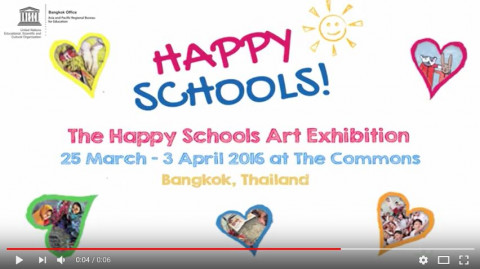 Happy Schools Art E-Exhibition Year of publication: 2016 Corporate author: UNESCO Bangkok Happy Schools Art E-Exhibition What does a Happy School look like to you? A happy learner is more likely to be a thriving one – better able to solve problems and apply critical thinking skills, more self-confident and likelier to form and foster positive relationships with others. Happy learners require Happy Schools, those that ensure the holistic development and well-being of students and the wider school community. In today’s rapidly changing world, we are faced with increasing mobility, life stress, competition, information overload, inequalities and environmental concerns. As these symptoms of ‘unhappiness’ begin to emerge, the Happy Schools Project calls for the need for education systems to reposition the school as more than a service for educational instruction, but rather, an environment which allows for social and emotional growth and development for learners to contribute to a more peaceful, just and equitable world. As part of UNESCO Bangkok’s Happy Schools Project, the Happy Schools team hosted an art contest in early 2016 in an effort to capture actions, moments and ideas that are promoting happiness in schools. All residents of the Asia-Pacific region were invited to submit images of any kind (photos, drawings, cartoons, paintings, graphics, and posters) along with a caption/description that captures the concept of Happy Schools. Thirty winners were selected from the pool of entries for the Happy Schools Art Exhibition and Report Launch (of the Happy Schools: A Framework for Learner Well-being in the Asia-Pacific report. The artwork will be on display for the Happy Schools Art Exhibition from 25 March to 3 April, 2016 at The Commons in Bangkok, Thailand, and available to view here as an e-exhibition.
 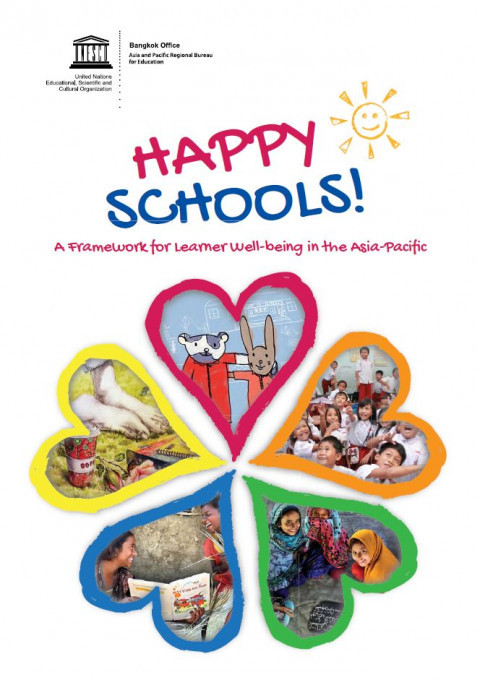 Happy Schools!: A Framework for Learner Well-being in the Asia-Pacific Year of publication: 2016 Corporate author: UNESCO Bangkok The Happy Schools Project was launched in June 2014 in the aim of promoting learner well-being and holistic development. It follows on the findings of UNESCO Bangkok’s research on ‘Learning to Live Together’, which examined the ways in which education systems can promote peace through education in the Asia-Pacific region. While the concept of ‘Learning to Live Together’ is often reflected at policy level, there is little evidence as to how it is implemented in practice. Therefore, the Happy Schools Project aims to identify and recognize proven practices at school level that integrate this concept.
 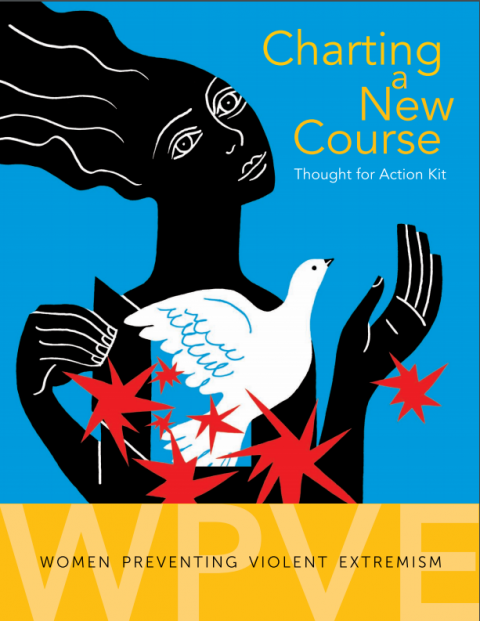 Women Preventing Violent Extremism Thought for Action Kit Year of publication: 2015 Corporate author: United States Institute of Peace (USIP) United Nations Security Council Resolution (UNSCR) 1325 (2000) was groundbreaking in that it provided strong support for greater attention to the role of women in international peace and security. It acknowledges the inordinate impact of violent conflict on women and recognizes that women’s empowerment and gender equality are critical to international peace and security. The UN Security Council fully recognizes the critical link between the Women, Peace and Security agenda as laid out in UNSCR 1325 and the role women could and should play in preventing violent extremism. This document has three sections. The first section examines the question of gender and why it is important to consider both men and women, and the dynamics of gender roles in society when addressing violent extremism. The second section deals specifically with women and the underlying forces of extremist violence. It invites thinking about women as actors in preventative efforts as well as perpetrators of terrorist acts. Finally, the third section raises issues related to the various ways in which to engage communities, including members of the security sector. Each section opens with a brief introductory background, followed by short essays by some of the leading experts in this field. Each section also includes practical exercises that may prove useful for training and further dialogue. Education for All (EFA) in Latin America and the Caribbean: Assessment of Progress and Post-2015 Challenges, 30-31 October 2014, Lima, Peru: Lima Statement Year of publication: 2014 Corporate author: UNESCO The Ministers of Education of Latin America and the Carribean (LAC), high-level government officials, UN agencies, representatives of civil society organizations and development partners, gathered at th meeting on "Education for All (EFA) in Latin America and the Carribean: Assessment of progress and post-2015 challenges", in Lima, Peru, from 30 to 31 October 2014. Having deliberated on progress towards EFA in the region, the Muscat Agreement adopted at the Global EFA Meeting (GEM) in Muscat, Oman, 12-14 May 2014, and the outcome document of the UN General Assembly Open Working Group for Sustainable Development Goals, and having examined the unfinished EFA tasks in the region, as well as the challenges and priorities that will configure the post-2015 education agenda for the region, the Lima Statement was adopted. [Video] Whole School Approach to Global Citizenship Year of publication: 2011 Corporate author: Education Scotland Global citizenship brings together education for citizenship, international education and sustainable development education and recognises the common outcomes and principles of these three areas. All curriculum areas can contribute to developing the skills, attributes and knowledge that will create active global citizens.
 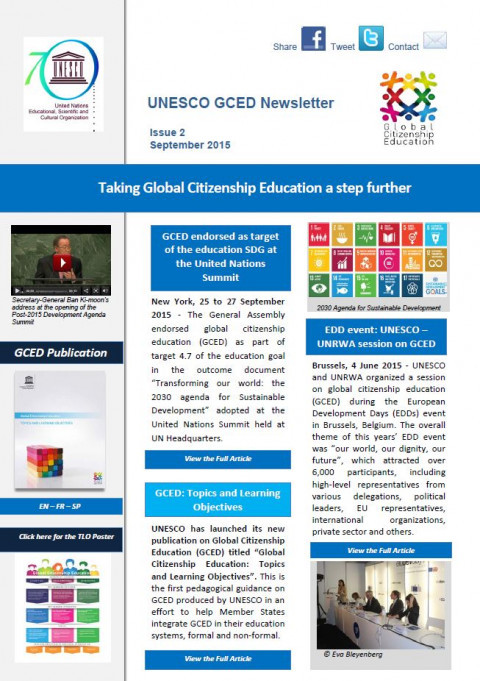 UNESCO GCED eNewsletter Issue 2 Year of publication: 2015 Corporate author: UNESCO Featuring:Taking Global Citizenship Education a step furtherGCED endorsed as target of the education SDG at the United Nations SummitGCED: Topics and Learning ObjectivesEDD event: UNESCO-UNRWA session on GCEDCapacity-building workshops-providing assistance for GCED implementationGCED for West African countries – building on peace and human rights educationTool for writing textbooks free of prejudiceOrientation and Capacity Building on GCED for Latin American and Caribbean countriesKey tweetsUpcoming events