
Ressources
Explorez une large gamme de ressources sur le GCED afin d’approfondir votre compréhension et de renforcer vos activités de recherche, de plaidoyer, d’enseignement et d’apprentissage.
1,477 résultats trouvés
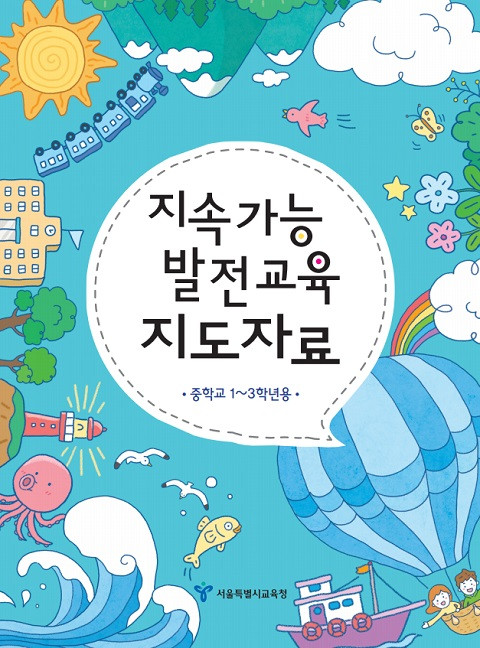 지속가능발전교육 지도자료: 중학교 1~3학년용 Année de publication: 2020 Auteur: 박성은 | 박에스더 | 승현아 | 은정매 | 이수종 | 전명재 | 정은경 Auteur institutionnel: 서울특별시교육청 본 자료는 중학생의 지속가능발전과 생태환경에 대한 인식을 제고하기 위해 학교 생태전환교육에 활용할 수 있다.
 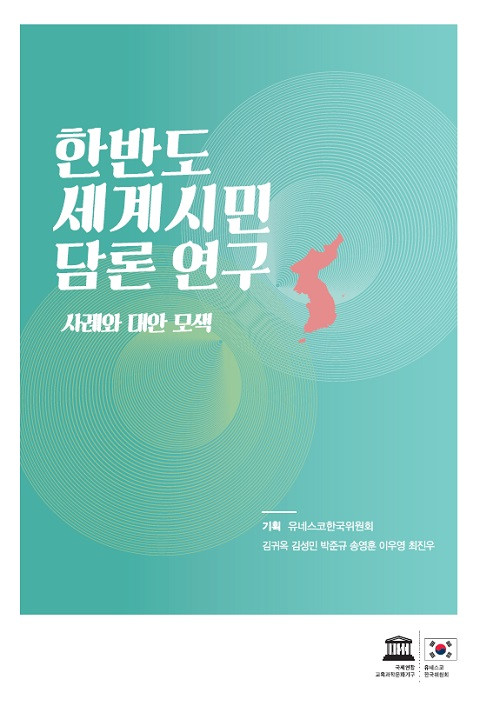 한반도 세계시민 담론 연구: 사례와 대안 모색 Année de publication: 2020 Auteur: 김귀옥 | 김성민 | 박준규 | 송영훈 | 이우영 | 최진우 Auteur institutionnel: 유네스코한국위원회 2019년에 이어 발간한 '한반도 세계시민 담론' 연구는 분단이라는 특수한 상황 속에서 점차 다문화사회로 변해가는 한국사회의 현실을 직시하면서 그 과정에서 세계시민을 어떻게 맥락화할지에 대한 구체적인 사례를 제시한다. 더불어, 세계시민으로서 확장된 정체성과 성숙한 시민 의식을 만들어 나가기 위한 연구와 제언을 담고 있다.
 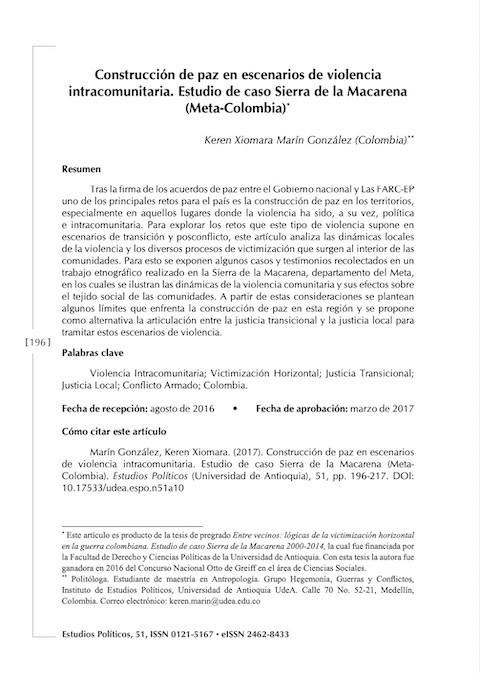 Peacebuilding In Scenes of Violence Intracommunity: Sierra de la Macarena Case Study (Meta-Colombia) Année de publication: 2017 Auteur: Keren Xiomara Marín Gonzales Auteur institutionnel: Universidad de Antioquia After the signing of the peace accords between the national government and the FARC-EP one of the main challenges for the country is the construction of peace in the territories, especially in those places where violence has been political and intracommunitarian To explore the challenges that this type of violence poses in transition and post-conflict scenarios, this article analyzes local dynamics violence and the various victimization processes that arise within the communities. For this, some cases and testimonies collected in a ethnographic work carried out in the Sierra de la Macarena, department of Meta, Colombia, in which the dynamics of community violence and its effects on the social fabric of the communities. Based on these considerations, some limits that peacebuilding faces in this region and it is proposed as an alternative, the articulation between transitional justice and local justice to deal with these scenarios of violence. Construcción de paz en escenarios de violencia intracomunitaria: Estudio de caso Sierra de la Macarena (Meta-Colombia) Année de publication: 2017 Auteur: Keren Xiomara Marín Gonzales Auteur institutionnel: Universidad de Antioquia Tras la firma de los acuerdos de paz entre el Gobierno nacional y Las FARC-EP uno de los principales retos para el país es la construcción de paz en los territorios, especialmente en aquellos lugares donde la violencia ha sido, a su vez, política e intracomunitaria. Para explorar los retos que este tipo de violencia supone en escenarios de transición y posconflicto, este artículo analiza las dinámicas locales de la violencia y los diversos procesos de victimización que surgen al interior de las comunidades. Para esto se exponen algunos casos y testimonios recolectados en un trabajo etnográfico realizado en la Sierra de la Macarena, departamento del Meta, en los cuales se ilustran las dinámicas de la violencia comunitaria y sus efectos sobre el tejido social de las comunidades. A partir de estas consideraciones se plantean algunos límites que enfrenta la construcción de paz en esta región y se propone como alternativa la articulación entre la justicia transicional y la justicia local para tramitar estos escenarios de violencia.
 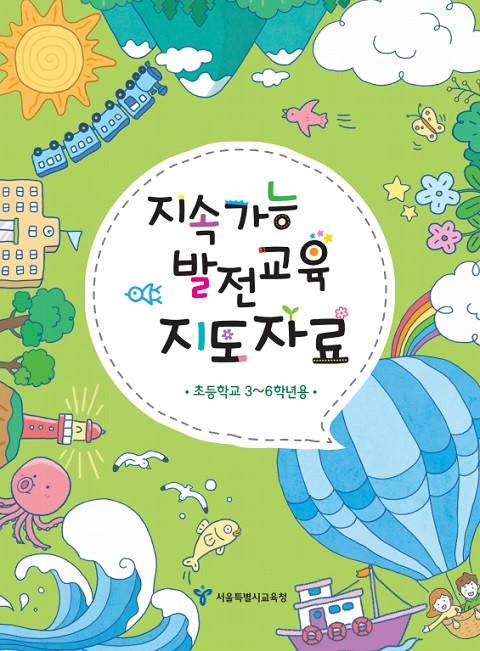 지속가능발전교육 지도자료: 초등학교 3~6학년용 Année de publication: 2020 Auteur: 고은미 | 김수양 | 박덕현 | 박혜림 | 이성희 | 이정미 Auteur institutionnel: 서울특별시교육청 본 자료는 초등학교 3학년~6학년의 지속가능발전과 생태환경에 대한 인식을 제고하기 위해 학교 생태전환교육에 활용할 수 있다.
 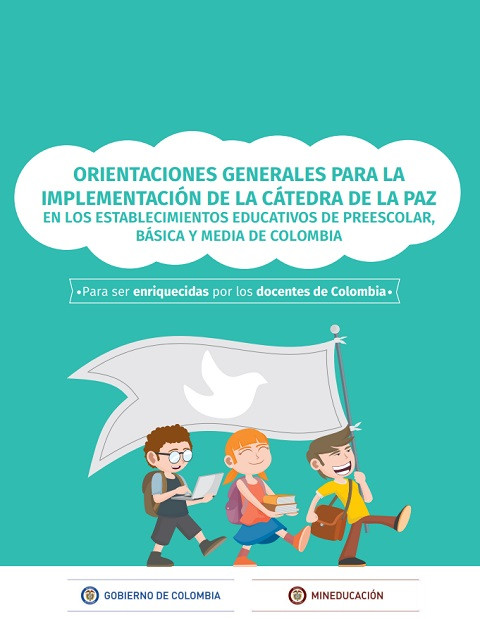 General Guidelines for the Implementation of the Peace Class in Preschool, Elementary and Middle School in Colombia Année de publication: 2016 Auteur: Enrique Chaux | Ana María Velásquez Auteur institutionnel: Colombia. Ministerio de Educación Nacional This document presents the general guidelines for educational communities in Colombia to carry out their peace education projects within the framework of the Peace Law. Orientaciones generales para la implementación de la cátedra de la paz: En los establecimientos educativos de preescolar, básica y media de colombia Année de publication: 2016 Auteur: Enrique Chaux | Ana María Velásquez Auteur institutionnel: Colombia. Ministerio de Educación Nacional En este documento se presentan las orientaciones generales para que las comunidades educativas de Colombia puedan llevar a cabo sus proyectos de educación para la paz en el marco de la cátedra para la paz.
  평화를 향한 유네스코의 역할 Année de publication: 2019 Auteur: 강인욱 | 김성해 | 김지현 | 성지은 | 유성상 | 조동준 | 최동주 | 한경구 Auteur institutionnel: 유네스코한국위원회 평화를 위한 유네스코의 국제적인 지적 협력 활동은 교육과 문화 분야에서는 상당한 가시적 성과를 거두었다. 이 과정에서 문제점도 발견되고 한계도 드러나고 정치화되었다는 비판도 받았지만, 교육과 문화의 영역에서 유네스코는 국제적 협력과 활동의 방향을 설정하거나 논의를 주도하고 이끌어가는 모습을 보이고 있다.유네스코가 평화를 위한 기구이면서도 평화와 관련하여 폭넓고 다양하며 깊이 있는 새로운 연구와 실천을 적극적으로 주도하지 못한 것은, 냉전이라는 국제정치적 요인을 감안하더라도 매우 안타까운 일이다. 유네스코는 평화를 위하여 만들어진 국제기구이면서도 전후에 평화와 관련된 학술적 논의와 이론의 발전을 주도하지 못했다. ‘평화의 문화’ 개념이 처음 언급된 것은 1989년 코트디브아르에서였고, 1997년이 되어서야 유네스코가 ‘Toward a Culture of Peace Program 을 시작하였으며, 유엔총회가 2000 년을 ‘평화의 문화의 해로 선언했다.유네스코의 이러한 상황은 한국이 보다 적극적인 역할을 할 기회를 제공한다. 한국은 과거 와 같이 기회가 있을 때마다 국위를 선양하는 수준의 상황추수적(狀況追隨的) 대응에 매몰되거나, 좁은 시야로 단기적 국익을 추구하는 소극적인 입장을 탈피할 필요가 있다. 오히려 대국적 견지에서 세계 평화와 인류의 행복이라는 지구 공동체(Global Community) 전체의 이익을 중시하고, 이틀 장기적 국가이익과 동일시하며, 이에 상응하는 재정 부담을 감수함으로써 세계시민권력(Global Citizenship Power)을 추구하면서 국제적 지위의 향상과 도덕적 지도력을 증대 시킬 수 있을 것이다.
  10 questions pour mieux comprendre la peine de mort pour les personnes LGBTQIA+ Année de publication: 2022 Auteur: Céline Martin Auteur institutionnel: Ensemble contre la Peine de Mort (ECPM) Ensemble Contre la Peine de Mort (ECPM) présente dans ce rapport l’état de la peine de mort dans le monde pour les LGBTQUIA+. Le rapport interroge les liens entre le genre, l’orientation sexuelle et la peine de mort pour explorer les discriminations subies par les personnes faisant partie de minorités sexuelles sous un angle juridique.Ce dossier permet au grand public d’analyser les législations complexes des pays appliquant la peine de mort suite à des relations sexuelles consenties entre personnes de même sexe, qui revêtent des particularités historiques, religieuses ou fondées sur la moralité imposée par le gouvernement au pouvoir. Ensemble Contre la Peine de Mort (ECPM) presents in this report the state of the death penalty worldwide for LGBTQIA+ people. The report questions the links between gender, sexual orientation and the death penalty, exploring the discrimination suffered by people belonging to sexual minorities from a legal angle.This publication enables the general public to analyze the complex legislation of countries applying the death penalty for consented sexual relations between people of the same sex, which take on historical, religious or morality-based particularities imposed by the government in power.
  Discrimination, Mobbing and Equality Auteur institutionnel: Amnesty International. Swiss Section These 7 education sheets(Stereotypes and Discrimination, Occupational Inequalities, Discrimination in Job Searching, Let’s Talk about Mobbing!, Conflict or Mobbing?, Declaration against Mobbing at School, Freedom from Discrimination) cover the themes of discrimination, equality and mobbing(conflictual relations in the workplace, both between colleagues and between superiors and subordinates), in relation to article 2 of the Universal Declaration of Human Rights.