
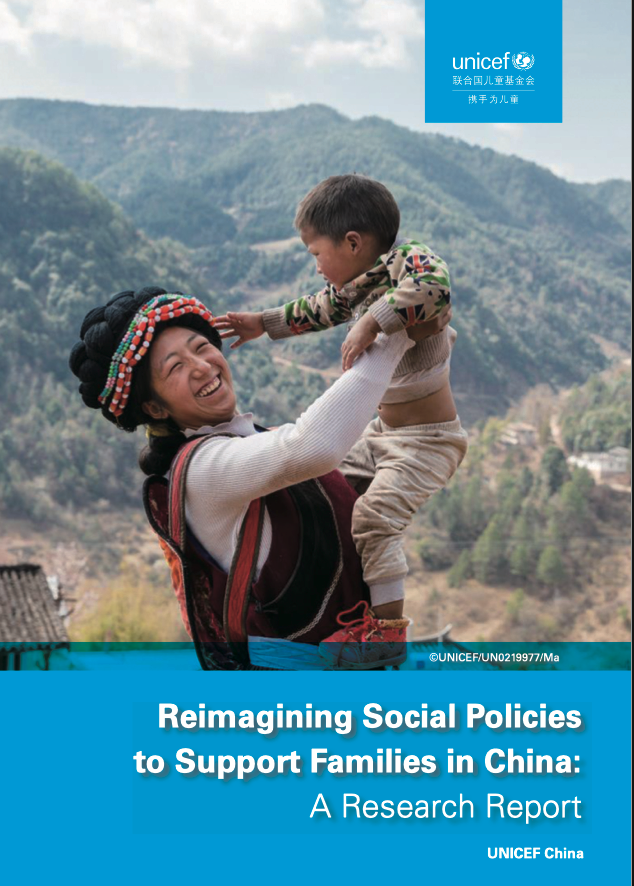
Reimagining Social Policies to Support Families in China: A Research Report
There have been significant changes in the population and society in China over recent decades. The birth rate has declined, and the population has aged. The average family size shrank from 3.1 people in 2010 to 2.8 in 2022[i], and the one-child policy has been reversed. Urbanization, rural-urban migration and the growth of the informal sector have changed how people live and work. Gender inequality persists, with women frequently facing discrimination and barriers to employment. All these changes have implications for family policy – statutory policies and government-led programmes that aim to improve conditions for adult family members, particularly those caring for children up to the age of 18.
A new report, ‘Reimaging Social Policies to Support Families in China’ by UNICEF synthesizes the context and challenges of family policies in China and reviews over 180 evaluations of family policies worldwide. The report highlights case studies of policies that could be adapted and incorporated into family policy in China, and it identifies implications for designing and implementing innovative policy.
 Addressing Violent Pasts through Education: A Policy Guide
  The Representation of Jews, Judaism and Antisemitism in School Textbooks and Curricula in Europe
  Strategies to Counter Antisemitism: A Handbook for Educators
 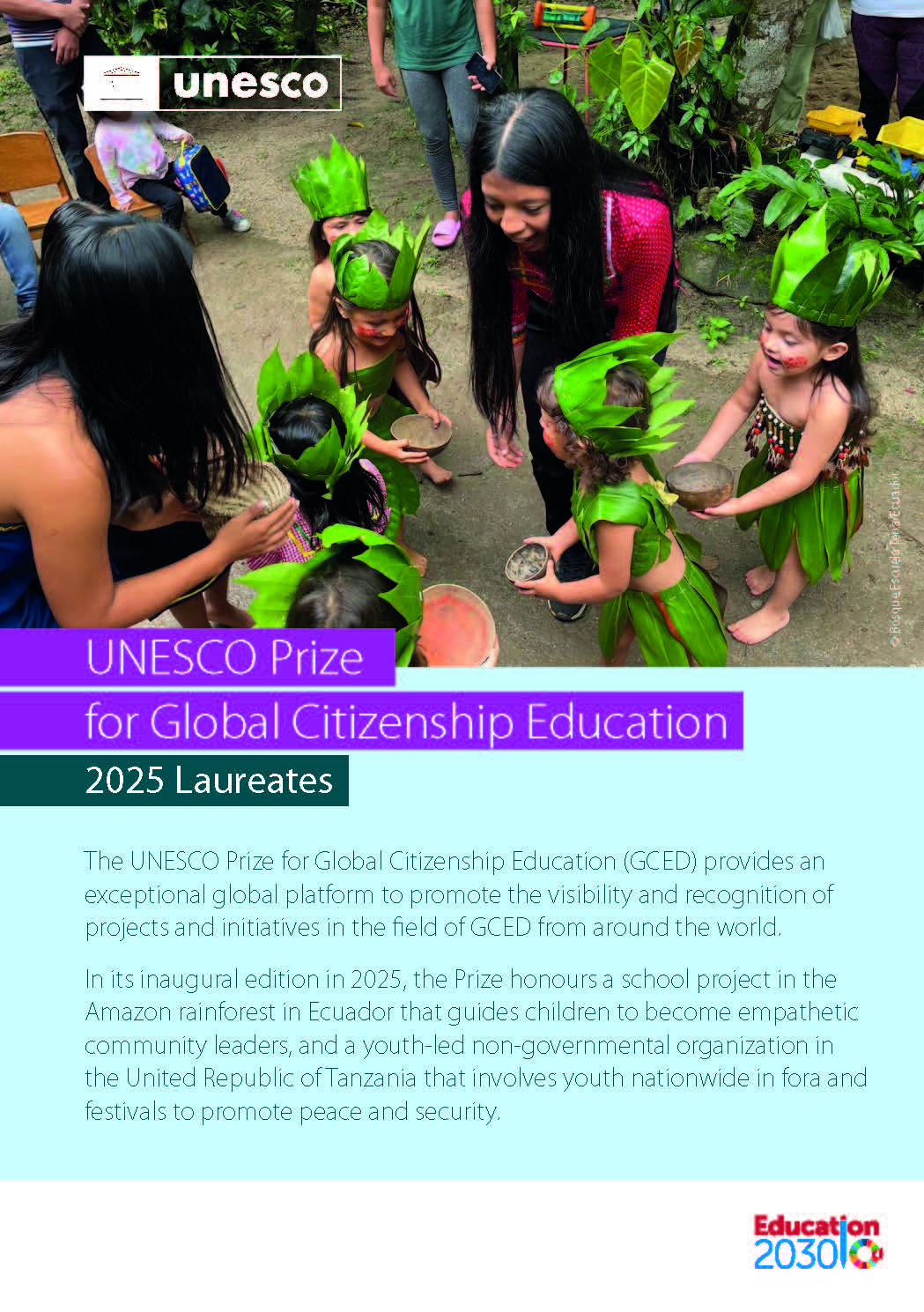 UNESCO Prize for Global Citizenship Education 2025 Laureates