
© INEE and the Alliance 2021
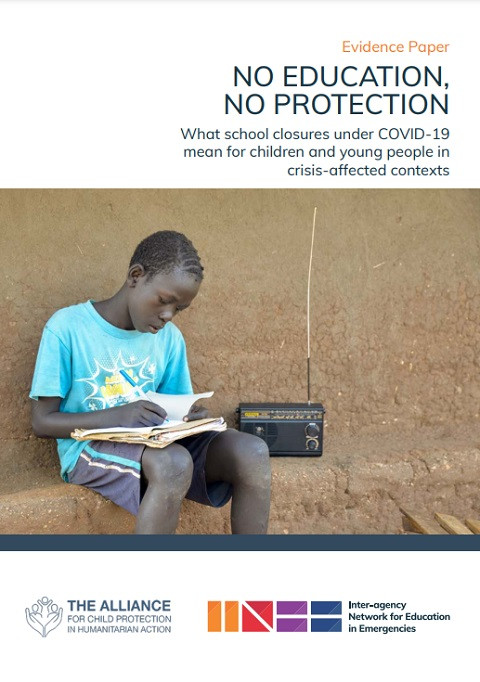
No Education, No Protection: What School Closures Under COVID-19 Mean for Children and Young People in Crisis-Affected Contexts
- Корпоративный автор
- Inter-agency Network for Education in Emergencies (INEE)Alliance for Child Protection in Humanitarian
- Колляция
- 69 p. (eng)
- Язык ресурса
- АнглийскийПортугальский
- Год публикации
- 2021
- Тема
- Гражданственность / Гражданство / ДемократияРазнообразие / Культурная грамотность / ИнклюзивностьПрава человекаГлобализация и социальная справедливость / Международное взаимопониманиеУстойчивое развитие / Устойчивость
- Тип ресурса
- Исследовательские работы / журнальные статьи
- Уровень образования
- Раннее детское развитие, уход и образованиеНачальное образованиеСреднее образование
- Регион
- АфрикаАрабские государстваАзия и Тихоокеанский регионЛатинская Америка и Карибский бассейнГлобальный
- Место публикации
- New York
Drawing from research and experience on previous infectious disease outbreaks and an emergent body of work from the current COVID-19 pandemic, this report highlights the primarily negative effects resulting from the combination of sudden school closures and restricted access to and availability of services, social networks, and other protective facilities for children and young people living in crisis-affected contexts. The consequences of school closures on education and child protection can be categorized into three principal areas:
1. Loss of learning and impediments to providing inclusive, equitable, quality education
2. Negative impact on child well-being and healthy development
3. Amplified child protection risks and harms experienced by children and young people
Связанные ресурсы
-
 Report on Digital Transformation in Higher Education in South Asia
 -
 Voices Against Violence: Middle Years
 -
 Study on the Historical Impact of the 1974 Recommendation concerning Education for International Understanding, Cooperation and Peace and Education relating to Human Rights and Fundamental Freedoms
 -
 IIEP-UNESCO 12th Medium-Term Strategy: 2026–2029