
News
Follow the newest trends and news in GCED.
1,676 Results found
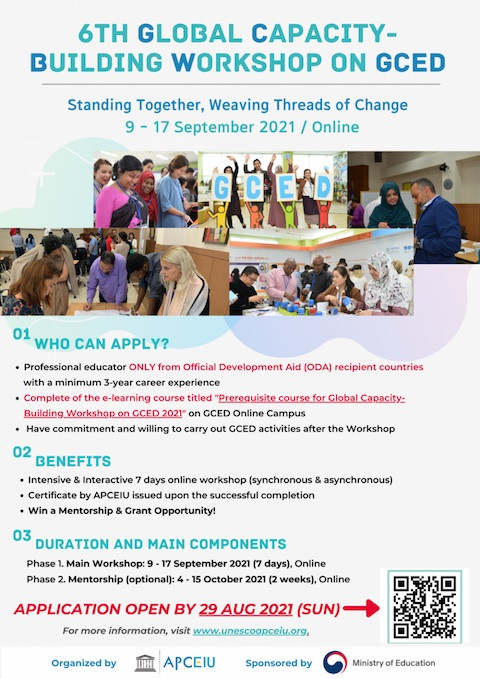 [Call for Application] 6th Global Capacity-Building Workshop on GCED 15 August 2021 APCEIU invites dedicated educators from Official Development Aid (ODA) recipient countries to its Global Capacity-Building Workshop on GCED. This Workshop will offer online-based intensive training opportunities to participants, helping them to learn about key aspects and competences of global citizenship as well as to introduce innovative ways of teaching and paradigm shift, which are posed by Covid-19. Please see the attached concept note for more information. Prerequisite Course for 6th Global Capacity-Building Workshop on GCED Online Application : https://forms.gle/err896q6CXrizQYx9 Application Period : 10 - 29 August 2021 URL:http://www.unescoapceiu.org/post/4231
 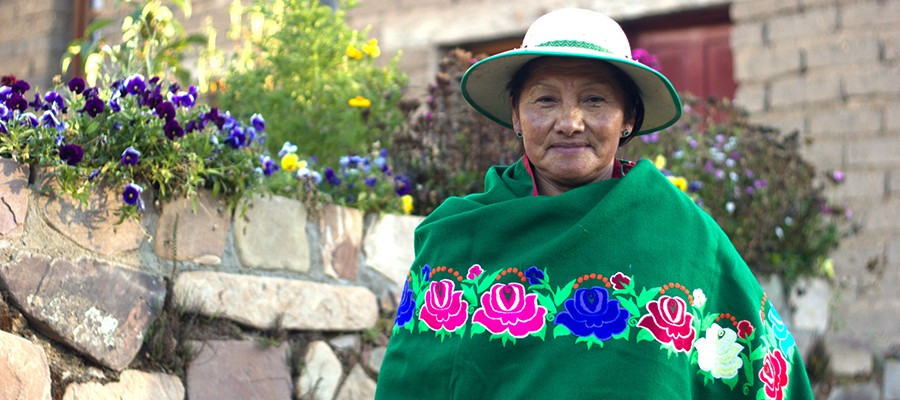 Día Internacional de los Pueblos Indígenas: una celebración inclusiva 14 August 2021 Approximately 45 million indigenous people live in Latin America and the Caribbean, accounting for 8 per cent of the population, but they speak over 500 indigenous languages and are stewards of some of the most biodiverse territories of the planet. For many indigenous peoples, cultural heritage, language, indigenous knowledge of the environment and knowing how to live well are all connected. “The Kolla people are an example of this. “For them, the hummingbird has a profound spiritual meaning that connects the people with well-being and decision-making for the future. The hummingbird must be protected and cared for. In other words, the hummingbird represents the link between the importance of knowing, respecting and caring for the environment and community-based development and being connected to Pachamama (mother earth)” asserted Serena Heckler, UNESCO’s regional programme specialist for Ecological and Earth Sciences for Latin America and the Caribbean. Marked every year on 9 August, the International Day of the World’s Indigenous Peoples is an opportunity to celebrate these communities and their knowledge. This year’s theme focuses on building a new social contract with indigenous peoples – one that is anchored in human rights and respect for their worldviews, indigenous concepts of development and good governance. UNESCO Montevideo works with indigenous peoples of Latin America and the Caribbean to amplify their voices and to increase indigenous peoples’ inclusion and participation in decision-making. In the context of the COVID-19, UNESCO worked with the Fund for the Development of the Indigenous Peoples of Latin America and the Caribbean (FILAC) to publish a policy brief on indigenous community protocols as tools for self-governance and community health during the pandemic. To amplify indigenous peoples’ voices in governance and decision-making in issues related to the environment and climate change, UNESCO is supporting working groups for social inclusion and participation in UNESCO sites. Through its Local and Indigenous Knowledge Systems (LINKS) Programme, it is supporting a series of workshops with indigenous peoples in Argentina to increase involvement of indigenous knowledge holders with international environmental assessments and processes, including the Convention on Biodiversity. It will also host a capacity-building webinar on indigenous knowledge-based fire management in the face of climate change. As vehicles for indigenous knowledge about sustainable development and living well, indigenous languages are vital elements of indigenous identity. UNESCO is proud to serve as Secretariat of the International Year of Indigenous Languages 2019 and the upcoming International Decade of Indigenous Languages. More information: Director General’s Statement United Nations International Day of the World’s Indigenous Peoples URL:https://en.unesco.org/news/international-day-worlds-indigenous-peoples-inclusive-celebration
 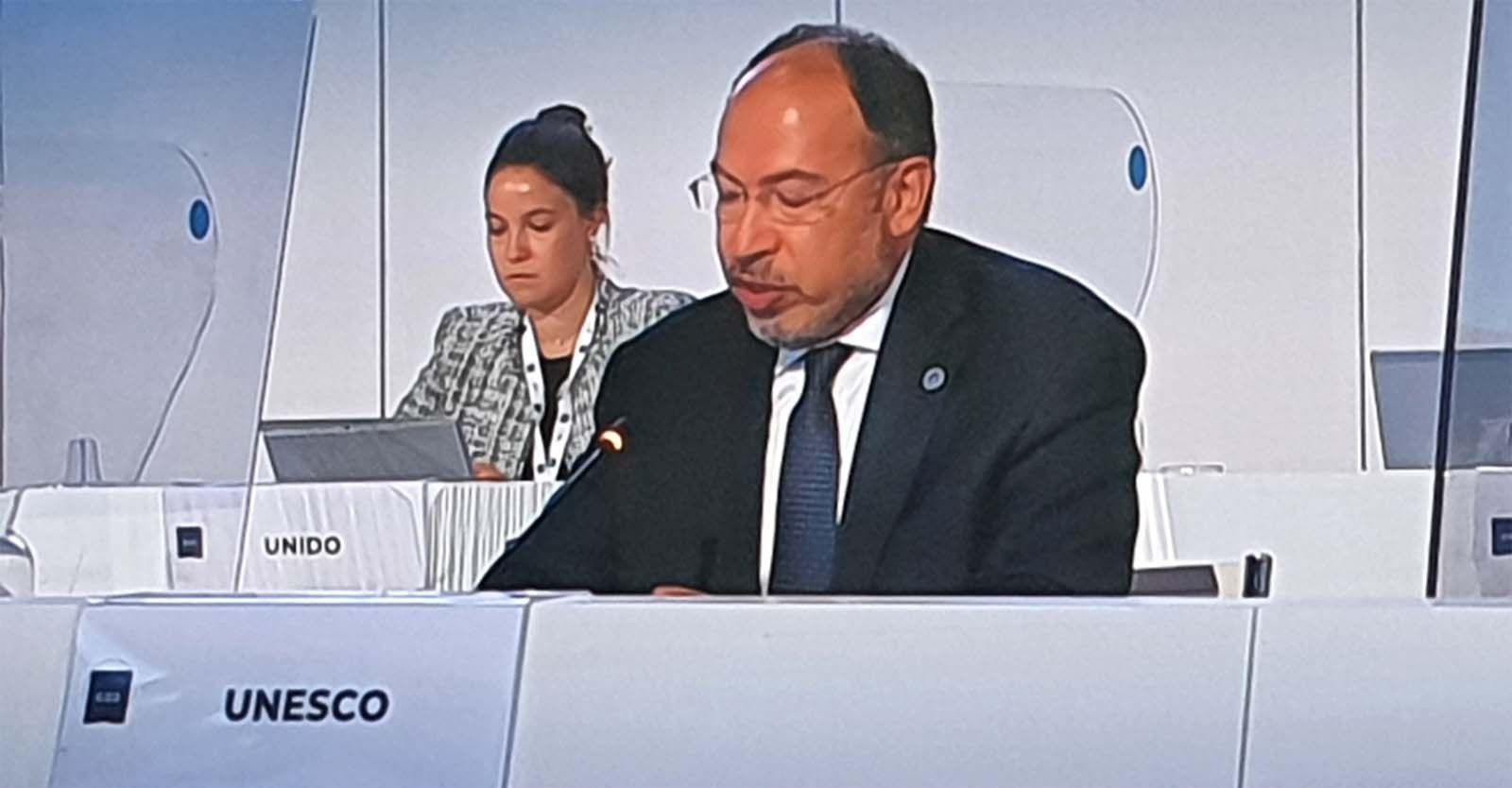 UNESCO dialogues with the G20 meeting of digital ministers 14 August 2021 To build a better future, we need to raise our level of ambition and digital co-operation. This is especially important for new technologies such as Artificial Intelligence (AI), quantum computing, blockchain, Internet of Things, among others. This was the message of a high-level UNESCO delegation to the meeting of the G20 countries digital ministers in Trieste, Italy last week. The G20 is a forum of the world’s major economies, covering 60 percent of the global population and 80% of GDP. Led by Tawfik Jelassi, Assistant Director-General for Communication & Information, the UNESCO team included Gabriela Ramos, Assistant Director-General for Social and Human Sciences. In his remarks, ADG Jelassi – himself a former minister of ICT - pointed to the lessons of the Covid-19 pandemic. “Digitalization offered many of us a lifeline during the COVID-19 pandemic. However, some digital divides were highlighted, such as the unequal access to connectivity; the unequal access to reliable information and knowledge; and the unequal capacities and competencies to create value through digital technology.” -- Tawfik Jelassi, UNESCO Assistant Director-General for Communication and Information The ADG explained how UNESCO is stepping up its actions to reduce, if not eliminate, these three divides based upon the framework for digital development agreed by UNESCO Member States. The framework, he said, consists of the ROAM principles: Human Rights, Openness, Accessibility, and Multi-stakeholder governance. The ADG invited ministers to make use of the Internet Universality Indicators for assessing national digital ecosystems and guide policy decisions. He further highlighted the tools of the “ICT Competency Framework for Teachers”, and the Organization’s new curriculum on Media and Information Literacy. The G20 Ministers were also invited by Mr Jelassi to join UNESCO’s “global consultations to improve the transparency of social media platforms, around the ways they share the information they receive, including through algorithms.” Turning to the subject of AI, the ADG noted that UNESCO had just concluded an AI needs assessment of 32 countries in Africa and would soon offer to 23,000 judicial operators in 150 countries a training on AI and the rule of law. “Also, we will soon deploy AI capacity-building platforms for youth and policymakers,” he added. Gabriela Ramos, Assistant Director-General for Social and Human Sciences, who leads UNESCO’s work on the Ethics of AI, shared with the G20 ministers the potential of UNESCO’s draft Recommendation on the Ethics of Artificial Intelligence. “G20 countries, along with all UNESCO’s membership, delivered an ambitious global standard on AI Ethics,” she said of the process which will culminate at the General Conference of UNESCO in November. “The Recommendation is a compass for international consensus on the 'what' as well as the 'how' of ethical governance of AI to protect and advance human rights, human dignity, inclusion, and non-discrimination,” she stated. The UNESCO delegation held various bilateral discussions with present delegations present, including those from Saudi Arabia, Argentina, Rwanda, Turkey, Italy, Brazil, and OECD. URL:https://en.unesco.org/news/unesco-dialogues-g20-meeting-digital-ministers
 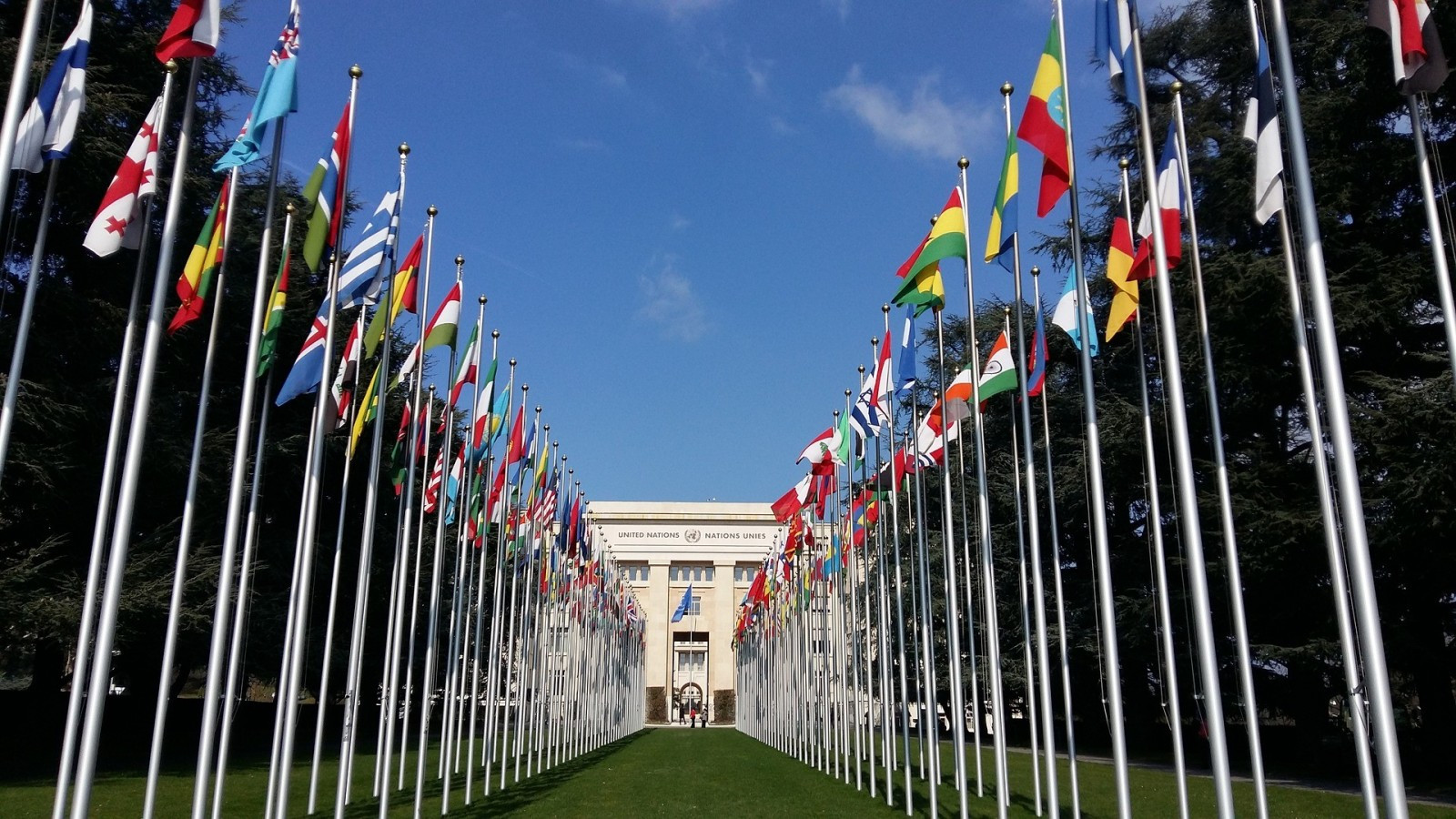 Launch event for Mainstreaming climate change and environment in Europe and Central Asia: a Technical Guidance 13 August 2021 The United Nations Inter-Agency Issue-Based Coalition (IBC) on Environment and Climate Change for Europe and Central Asia is an interagency coalition that supports UN Country Teams on environment and climate change in the region. The IBC developed guidance forto strengthening, mainstreaming and integrate integrating environment and climate change within the UN Sustainable Development Cooperation Frameworks (UNSDCFs) and UN Common Country Analysis (CCAs). Upon the request of Resident Coordinators (RCs) in Europe and Central Asia, the IBC conducted a gap analysis and developed new technical guidance on how to mainstream and integrate environment and climate change in sustainable development processes with the support of the UN’s Development Cooperation Office (DCO). The “Guidance on Integrating the Environment and Climate Change in Processes for United Nations Sustainable Development Cooperation Frameworks(link is external)” is truly an IBC-wide product, as all member agencies participated actively in its development, providing inputs and comments to the drafts. The Guidance was officially launched on 1 July 2021 with the main goal of supporting the RCs and UNCTs in integrating climate change, environment regulations and assessment in the UN programming cycle. The mainstreaming guidance provides insights on how to increase awareness, assess climate change risks and challenges through internationally used approaches and focuses on opportunities through the identification of good practices. The Guidance is structured in a way that key issues are highlighted and illustrated through specific country cases; the annexes provide examples of different approaches and tools, and illustrate the links among environment, climate change and development priorities. Prior to drafting the Guidance, a gap analysis was conducted in order to investigate whether UN Common Country Assessments (CCAs) have already integrated environment and climate change and to what extent. The gap analysis found a homogenous coverage of the topic in the 13 CCAs reviewed, and uncovered the need for additional environmental governance guidance, especially in transboundary contexts. Overall, the gap analysis showed that environmental issues are well covered in the monitoring, implementation and evaluation phases of environmental policies, but that the environment is less present as a crosscutting theme when other topics are covered. To address this shortfall, the Guidance recommends that environment and climate change to be treated as a cross-cutting element within non-environmental working groups. The launch event provided an occasion for IBC members, together with RCs and UNCTs, to discuss and collect ideas on how the IBC can support UN activities at the country level, tailoring this guidance and developing training opportunities that correspond to country needs. During the launch, the IBC discussed with RCs the idea of testing the efficacy of the guidance in specific pilot countries. The Guidance could serve as the entry point for the discussion on environmental and climate change with other coalitions, and boost the collaboration with IBCs in other geographic regions. According to Ana Luiza M. Thompson-Flores, Director of UNESCO Regional Bureau for Science and Culture in Europe, co-chair of the launch event for “Mainstreaming climate change and environment in Europe and Central Asia: a Technical Guidance”: ‘this Guidance is an excellent example of fruitful collaboration among different UN member agencies and a demonstration of the work of the IBC on Environment and Climate Change: demand-driven, timely and practical.” She added, ”It should be remembered that environmental issues ranging from biodiversity loss, air pollution and climate change are now one of the highest priorities of the UN Agenda considering the scale and severity of their upcoming impacts.” To determine the way forward for this important output, the webinar participants participated in a survey to assess their opinion on 3 diverse aspects of the guidance use. From the discussion, it emerged that the guidance will be extremely useful, notably in the CCA preparation and that specific trainings are welcomed by the RCs and UNCTs. Participants highlighted the importance that any training or guidance be tailored to subregions. The IBC on Environment and Climate Change is currently working on developing such training materials and modules in fall. Links: UN system in Europe and Central Asia strengthens the integration of the environment and climate change in country-level support Promoting measures to green the post-pandemic recovery New Issue-based Coalition on Environment and Climate Change in Europe and Central Asia Websites: Issue-based Coalition on Environment and Climate Change IBC on Environment & Climate Change (overview) Documents - Launch of Guidance on Integrating the Environment and Climate Change in Processes for UNSDCFs Mainstreaming guidance Gap Analysis Programme URL:https://en.unesco.org/news/launch-event-mainstreaming-climate-change-and-environment-europe-and-central-asia-technical
 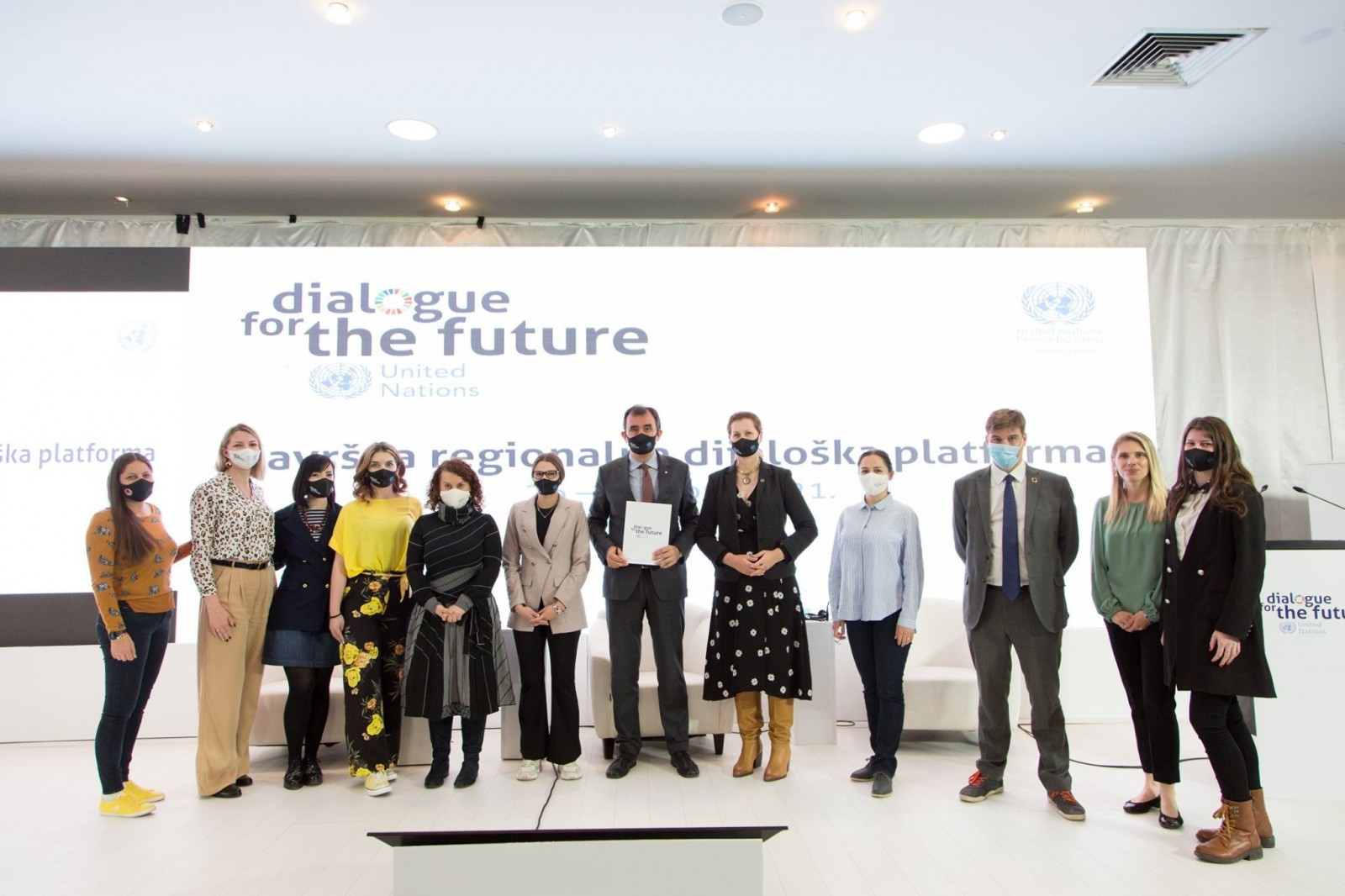 ‘Dialogue for the Future’ regional initiative highlights the importance of intercultural dialogue and social cohesion 12 August 2021 The results of the joint regional initiative "Dialogue for the Future: Improving Dialogue and Social Cohesion in and between Bosnia and Herzegovina, Montenegro and the Republic of Serbia" were showcased in April in a two-day Regional Dialogue Platform event, convened simultaneously in Sarajevo, Belgrade and Podgorica. The programme has been implemented over 2 years in Serbia, Bosnia and Herzegovina and Montenegro with the support of the 3 UN agencies - UNESCO, UNICEF and UNDP - and funding from the UN Peacebuilding Fund. The event summarised the results of the two-year regional programme and indicated possible directions for further development. It gathered a multitude of participants from various backgrounds such as those from the government institutions within the 3 countries, as well as representatives of numerous programmes – citizens, NGOs, youth, youth associations, educational institutions, as well as the media. The regional dialogue platform presented a perfect opportunity to exchange experiences and lessons learned through cross-border cooperation, carried out through 19 dialogue platforms, 19 cross-border projects that have facilitated 43 partnerships, 40 local projects of adolescents and youth in 33 municipalities, with a reach of more than 5,000 direct beneficiaries. “Your region has been characterised by a diverse history, ranging from conflict to peace, but it is in your hands to create the region’s journey going forward. This is both a great responsibility but also an opportunity, and the United Nations stands ready to support you with this mission.”, stressed Jayathma Wickramanayake, the UN Secretary-General’s Envoy on Youth. "As we look to recover better together from COVID-19 by strengthening peace, mutual understanding and trust, youth must not just be a target of action but a central part of the plan and decision-making.” “In this time of global crisis, we see how important it is to maintain social ties. Trust in people and institutions, respect for social rules, civic participation and volunteerism and solidarity were instrumental in responding to the pandemic.”, underlined Ingrid Macdonald, UN Resident Coordinator in Bosnia and Herzegovina. “Inclusive and resilient institutions are essential to sustainable development and peaceful societies. Building social cohesion strengthens the resilience of states and societies as they change and adapt to the challenges of the 21st century. I am pleased to know that, through this Joint Programme, we have played a role in achieving this." During the closing session, Sinisa Sesum, Head of the Antenna in Sarajevo of the UNESCO Regional Bureau for Science and Culture in Europe, recalled the very beginnings of the Dialogue for the Future (DFF) project back in 2012 and what had been learned since. He commented, “There are many definitions of social cohesion, but after 10 years we can fairly say that social cohesion is a continual dialogue and an endless interaction. And, this project has proven that only through dialogue we can move towards a better future.” Referring to the UNESCO’s mandate, Sinisa Sesum emphasised that any World Heritage site to be inscribed on the UNESCO World Heritage List must be of outstanding universal value. “Likewise, youth, education, cultural diversity, empathy, connectedness, solidarity, intergenerational solidarity, all these are of an outstanding universal value – the value of dialogue and social cohesion we promoted in the last 28 months”, he added. “I am truly proud to have the opportunity to participate in this project and jointly contribute to underlining the importance of social cohesion and even more the importance of the intercultural dialogue among people. This dialogue mustn’t stop.” Recalling the interesting statement of one of the project participants who highlighted that regardless of speaking different languages all participants understood each other. Sinisa Sesum noted, “Young people from 3 participating countries, understand each other very well, as having similar or even same problems and challenges. Therefore, we have a moral obligation, as the UN, to continue such initiatives and strengthen the connection among youth within the region.” He stressed the significance of cultural diversity and its richness especially in this region, “It is our responsibility to further promote and strengthen cultural diversity, because the cultural diversity is not an anomaly but value of every society and every country – and we must do the utmost to protect it because that is the only way forward.” Since the Programme’s launch in January 2019, 1,230 adolescents and young people have been trained in socioemotional skills, advocacy, leadership, teamwork, mobile journalism, public policy processes, media and information literacy. 221 girls and women have been empowered for social activism through educational seminars on leadership, gender equality, social cohesion. 490 teachers and librarians were trained to teach media and information literacy and civic education. 108 journalists and editors have had lectures on media and information literacy, objectivity and fair reporting. In addition to the capacity building of teachers, librarians and media professionals, UNESCO supported the implementation of 7 cross-border projects: Territory of Culture, Art of Democracy – Theatre as Dialogue, Intercultural Dialogue-Dialogue for the Future, Story of Diversity-Living Library, Interculturalism in Education, The Art of Understanding, and Education for the Sustainable Development of UNESCO Heritage. Darin Ramic Mazalovic, student at the Gymnasium SSST in Sarajevo, a participant in the Interculturalism in Education project acknowledged, “Through this workshop we addressed one universal problem through art form. This was an excellent opportunity to network with another school, to meet new friends and colleagues, and to be guided by some of the best mentors I have ever met. Several friends recommended my joining the project, seeing it as a great opportunity to volunteer and also to learn something new that we can apply throughout our lives and schooling.” The joint regional programme “Dialogue for the Future: Promoting Dialogue and Social Cohesion in and between Bosnia and Herzegovina, Montenegro and the Republic of Serbia” is implemented by UNESCO, UNICEF and UNDP, and funded by the UN Peacebuilding Fund (UN PBF). Links: Final regional dialogue platform Regional ‘Dialogue for the Future’ shows critical importance of social cohesion Videos: DFF: Fostering Dialogue and Social Cohesion in and between B&H, Montenegro, Republic of Serbia Address by Jayathma Wickramanayake, the Secretary-General's Envoy on Youth URL:https://en.unesco.org/news/dialogue-future-regional-initiative-highlights-importance-intercultural-dialogue-and-social
 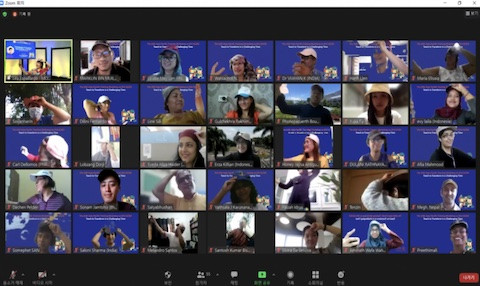 Educators from the Asia-Pacific gathered to Become Agents of Transformation in a Challenging Time 12 August 2021 The 20th Asia-Pacific Training Workshop on EIU/GCED(APTW) was held virtually from 5-16 July this year, with the participation of 50 passionate educators from 28 UNESCO member states in the Asia-Pacific region. Under this year’s specific theme of the Workshop, “teach to transform in a challenging time”, the Workshop offered various training sessions, including a self-paced online course, interactive live lectures, webinars, and small group discussions. The sessions dealt with the thematic issues of GCED and ongoing social/educational issues in the context of Covid-19, reminding of participants of their roles and responsibilities as educators and as global citizens in the very challenging time. During the 1st week of the workshop, participants took part in an e-learning course on GCED via GCED Online Campus with the sessions on media influence and critical literacy, gender equality, human rights, and transformative education in line with global citizenship and Sustainable Development Goals (SDGs). While studying, participants have shared their own reflection and insights with the peer participants through small group discussions. During the 2nd week of the workshop, participants took part in live lectures, webinars, and discussions via various digital platforms. International experts in the field of EIU/GCED, including Dr. SoonYong Pak, Dr. Swee-Hin Toh, Mr Jefferson Plantilla, Dr. Haelim Cho, Ms LeaEspallardo and Mr Dylan Wray joined the Workshop as speaker and facilitator, providing lectures on the glocal issues around pandemic and transformative pedagogical approaches for GCED while engaging dialogues with the participants. Also, policies and practices on GCED in Korea have been introduced, providing applicable strategies and tips and soliciting approaches with the participants in their respective communities. The 2-week journey on GCED has brought lots to think over, reflect on, and eventually, act on for the key educators across the Asia-Pacific as global citizens. Ms Louise May Lim, a participant of the 20th APTW Said, “Despite of the complex problems that we face in this time of pandemic, the 50 strong participants of this APCEIU’s flagship training-workshop took the courage to see the silver linings. Now we have clearer, and more critical understanding of GCED in this challenging time and its role in achieving the SDGs. As educators who are courageously taking on the roles to envision and work to live in a more compassionate, kind, just, and peaceful world, this 20th APTW is equally a humbling and empowering opportunity for all of us. In learning, re-learning, unlearning, and rethinking the essential themes in teaching, practicing, promoting as well as protecting glocal justice, human rights, women’s rights, and creative pedagogies in the GCED perspective, made us realized our sense of belongingness to a broader community and common humanity. As APTW Alumni Batch 2021, we persevere not to lose our creativity since it comes in harmony with transformative and critical education. We need critical and creative solutions to confront our complex problems that is when learning becomes effective, and relevant. Now, it is about time to share to our local communities what we learned here. Just like the Hobbits of the Shire, who travelled all over middle earth, we became richer, and stronger in every sense of the word” APCEIU will continue to support their endeavors in paving new and innovative ways for promoting global citizenship in their own communities and regions by offering continued learning and networking opportunities. As part of this, a one-month mentorship and grant programme will be provided to those who wish to implement GCED projects, where the participants could receive guidance and advices from the GCED experts in carrying out their own GCED initiatives with the seed funds from APCEIU. It is expected that various GCED actions will be taken by the participants, which will, in turn, bring impact to their communities and beyond. URL:http://www.unescoapceiu.org/post/4221
  UNESCO partners with UN Women on a black women, men and youth social justice and development programme 9 August 2021 UNESCO has embarked on a partnership with UN Women to strengthen women-and youth owned businesses in the cultural and creative industries in the Caribbean sub-region, Latin America and Africa. The programme will also highlight Afro descendant women’s role and contribution to sustainable development through cultural exchanges, knowledge sharing and movement-building. The announcement of this initiative came as part of activities to launch UN Women’s new Global Black Women Programme where Miss Universe 2019 Zozibini Tunzi moderated a panel discussion of black women creatives, entitled ‘"Ain't I a Woman? Black Women, Creativity and Development”. It was sponsored by UN Women MCO-Caribbean, in collaboration with NYU Africa House, UNESCO, and the EU-funded UNESCO-Transcultura Programme. Representative UN Women MCO Caribbean Tonni Brodber explained the goal of the new project: “We will contribute to enhancing the economic empowerment and resilience of women-and youth owned cultural and creative MSMEs through strengthened networks and opportunities for employability and entrepreneurship in Latin America, the Caribbean and Africa; through strengthened digital transformation, financial management and basic and advanced digital technologies skills for women in the cultural and creative industries (including art, design, music, film, beauty) with particular focus on marginalized and economically disempowered groups.” "At UN Women and UNESCO, we felt the need to be even more intentional and imaginative about our work to recognise and promote justice and development. We developed a project with the goal being, that Afro-descendent and ethnic minority women, men and youth are empowered through greater voice and agency, and resilient livelihoods to live free from violence and discrimination." -- Tonni Brodber, Representative UN Women MCO Caribbean "This partnership programme aims to harness the potential of culture and creativity to empower youth, women and men to transcend borders and build communities across the Caribbean, the African Continent and the entire African diaspora." -- Saadia Sanchez-Vegas, Director and Representative of the UNESCO Cluster Office for the Caribbean Panellist, South African Carol Bouwer, Founder of Mbokodo Awards for Women in the Arts stressed that the world has not yet begun to understand that black women are a larger part of society whose creativity should be seen as creativity within the broader conversation of art, heritage and culture. "Historically, we do not look at the intersection between art and the environment, the economy, society and the cultural diversity that carries communities together… Black people in particular, not just black women, we constantly have to apologize each time we come into spaces where we choose to talk about building each other. I am hoping that this healing space, this space of beauty and vibrant art will remind us that we have to be seen, we have to be able to celebrate ourselves and we have to be able to say to the world acknowledge me." -- Carol Bouwer, Founder of Mbokodo Awards for Women in the Arts Sierre Leone and Canadian filmmaker, Ngardy Conteh said there is a huge gap in opportunities for black women to thrive. "We don’t want to just to survive, we want to thrive. We have the creativity, and our creativity can only blossom when we have the space and the resources to do so. There needs to be an increase in opportunities." -- Ngardy Conteh, filmmaker UN Women also hosted "A Force for Change"(link is external), a global art exhibition and online auction in New York City, featuring 26 women artists of African descent. Fifty percent of the proceeds will go to the artists, while the other fifty percent will support implementation of the UN Women’s Afro-descendant Women’s Programme. About UNESCO's Transcultura Programme UNESCO and the European Union promote Transcultura: Integrating Cuba, the Caribbean and the European Union through Culture and Creativity. The programme seeks to deepen cultural and economic integration between Cuba, the Caribbean and the European Union through harnessing the creative spirit and the cultural diversity of the Caribbean region with the aim of building bridges between people and cultures from different linguistic areas. The Programme is implemented with financial support of the European Union. Learn more about the programme here. Contact:Catherina SchönhammerPublic Information/Media Contactc.schonhammer@unesco.org URL:https://en.unesco.org/news/unesco-partners-women-black-women-men-and-youth-social-justice-and-development-programme
 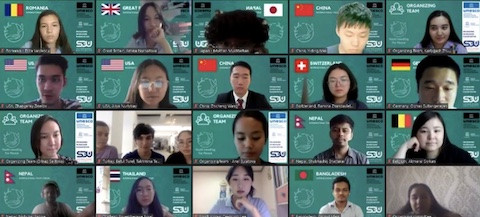 International Youth Forum "Youth Leading for Peace” 8 August 2021 On 30-31 July, 2021 the Kazakhstan National Federation of Сlubs for UNESCO with the support of the UNESCO Cluster Office in Almaty organized an International Youth Forum “Youth Leading for Peace”, dedicated to the International Year of Peace and Trust, the International Day of Action against Nuclear Tests, as well as to the 30th Anniversary of Kazakhstan's independence and the 30th Anniversary of the closure of the Semipalatinsk nuclear Test site. The forum covered 140 delegates represented by schoolchildren and students from Russia, China, Pakistan, Uzbekistan, Nepal, the Philippines, Bangladesh, Mongolia, South Korea, Romania, Tajikistan, Kyrgyzstan, Turkey, Ukraine, Belarus and Kazakhstan. Each team had the opportunity to present the strategy in the nuclear industry of their countries and took part in the practical stage of the forum to solve a hypothetical case. Participants developed solutions for the case based on international law and international documents in the field of conflict management and made their proposals from the positions of the economic, social, environmental and military committees.The forum was given a high level by experts-speakers of the theoretical part from Vienna, the Czech Republic, Russia and Kazakhstan, who shared their knowledge about the nuclear policy of different countries and international organizations in this area. The final stage of the event was the adoption of the resolution by all the delegates of the International Youth Forum “Youth Leading for Peace”, which included strategies for solving the problems of a hypothetical case.At the end, a competent jury selected 16 winning countries in such categories as “The Best video report” and “The most active delegation”.The Forum participants noted the high level of organization of the Forum and the importance of creating such platforms where young people can express their opinions on important topics, exchange knowledge and create a community of a new generation committed to the ideas of peace and tolerance. “First of all, thank you very much for organizing this event. The forum really helped to improve my analytical and communication skills. I learned a lot of interesting and useful things about nuclear weapons and energy from experts and delegates from other countries. Thank you!" - Nischal Bania, Nepal. “It was a really interesting experience that I will remember for a long time. Since it was an international conference, I met delegations from different countries. So many different people – so many different opinions. I had some expectations from this conference, and I can say with confidence that they were fulfilled. Thank you very much for creating such a wonderful opportunity for international youth”- Lee Taekyong, South Korea. You can watch the full video recordings of the forum via this link. URL:http://en.unesco.kz/international-youth-forum-youth-leading-for-peace
  Transforming education will require innovation, not just money 8 August 2021 By Alina Lipcan, Director of Impact and Innovation at the Global Schools Forum (GSF) and Modupe Adefeso-Olateju, Managing Director of Nigeria’s TEP Centre and an adviser to GSF’s Learning Labs Programme. This week’s Global Education Summit is an important moment as governments, foundations and others commit funds to support systems to recover from the educational consequences of COVID-19 and tackle the wider learning crisis. But whilst the amount of funding pledged is important, so too will be ensuring that funds are spent effectively, and that spending results in improvements to learning outcomes. In our view, a key part of that will be investing in supporting education systems to innovate. Supporting innovation is not just beneficial in the short term but can also increase resilience to future crises. Over the last year, in response to the pandemic, we’ve seen governments and educational organisations across the world problem-solve, experiment, iterate, and partner for scale. The result has been new, cost-effective models to equitably and sustainably deliver education, benefiting children across the world. In Uganda, Rwanda, and Kenya, Educate! conducted skills training with young people via SMS and conference call. Rising on Air partnered with governments in Liberia and Sierra Leone, among others, to deliver radio lessons. In Botswana, Young 1ovepartnered with district-level and national-level officials to adapt the Teaching at the Right Level curriculum for the pandemic. The benefits of supporting innovation are very high. Michael Kremer estimates that USAID’s early investments as part of the Development Innovations Venture generated a 5:1 ratio of social benefits to costs. That is, the benefits of supporting successful innovations far outweighed the costs of investing in failed innovations.We need to build on these advances and create an ecosystem which enables this resourcefulness to continue, ensuring that future crises cannot catch us unprepared. This means: More funding to de-risk innovation Despite the benefits, education innovations are underfunded overall, and are often ignored by international aid funds. The use of Official Development Assistance (ODA) for innovation is less significant than other sources of funding such as philanthropic and domestic government funding, or donations from individuals and communities. In 2017 only 11% of education innovations were funded by international aid dollars. More ODA for innovation could help amplify the benefits of existing private and domestic investments in the space and further align them with governments’ education sector goals. It could also catalyse new blended finance initiatives, multiplying the private capital invested in this space. Embedding routes to scale from the outset Globally, education innovations are more likely to originate in the non-state sector than in government. According to Brookings, 62% of innovations in the education space were initiated by NGOs, 26% by private sector companies, and only 12% by governments. Yet governments remain a key route to scale for many innovations. Without government as a trusted partner, it is nearly impossible for education innovations to achieve scale and amplify their impact. Innovators should therefore look to partner with governments to: Assess an innovation’s alignment with national education sector plans; Fund and direct international aid resources to innovation – with smaller bets for the earlier stages, and larger bets on innovations with more evidence; Incorporate a clear plan for creating and using evidence about the innovation’s effectiveness; Evaluate initial cost-effectiveness evidence, and plan for adaptation and iteration; Select the best models through which an innovation can be scaled up; Embed the innovation into public systems. This requires that innovators are aware of political agendas, build partnerships, cultivate champions, and communicate about evidence. It may also require that innovators are willing to give up their ‘brands’ as these innovations are institutionalised in government systems. Strong communities of practice using evidence on what works and what doesn’t. Innovations don’t tend to spread in education because, in part, education innovators do not often publicly share their own data about what has worked and what hasn’t, and why. Addressing this issue requires strong and active communities of practice which (i) support innovators and governments to be more evidence-driven, (ii) share evidence of successes and failure openly and in digestible formats, and (iii) encourage quick and deep learning through regular engagements and peer-learning. We strongly encourage the global education community to build on existing initiatives to support innovation to expand, deepen and sustain the impact of effective education innovations. This includes supporting knowledge exchange, evidence building, and innovative finance. At Global Schools Forum, we have long acted as a thriving community of practice for promising education innovations. With the support of Jacobs’ Foundation, we are looking forward to expanding our role as we launch a new Learning Labs initiative this autumn, which will fund and support our community to unlock and test innovations across our network. We very much look forward to sharing what works, what doesn’t and why more widely in due course. URL:https://gemreportunesco.wordpress.com/2021/07/29/transforming-education-will-require-innovation-not-just-money/
 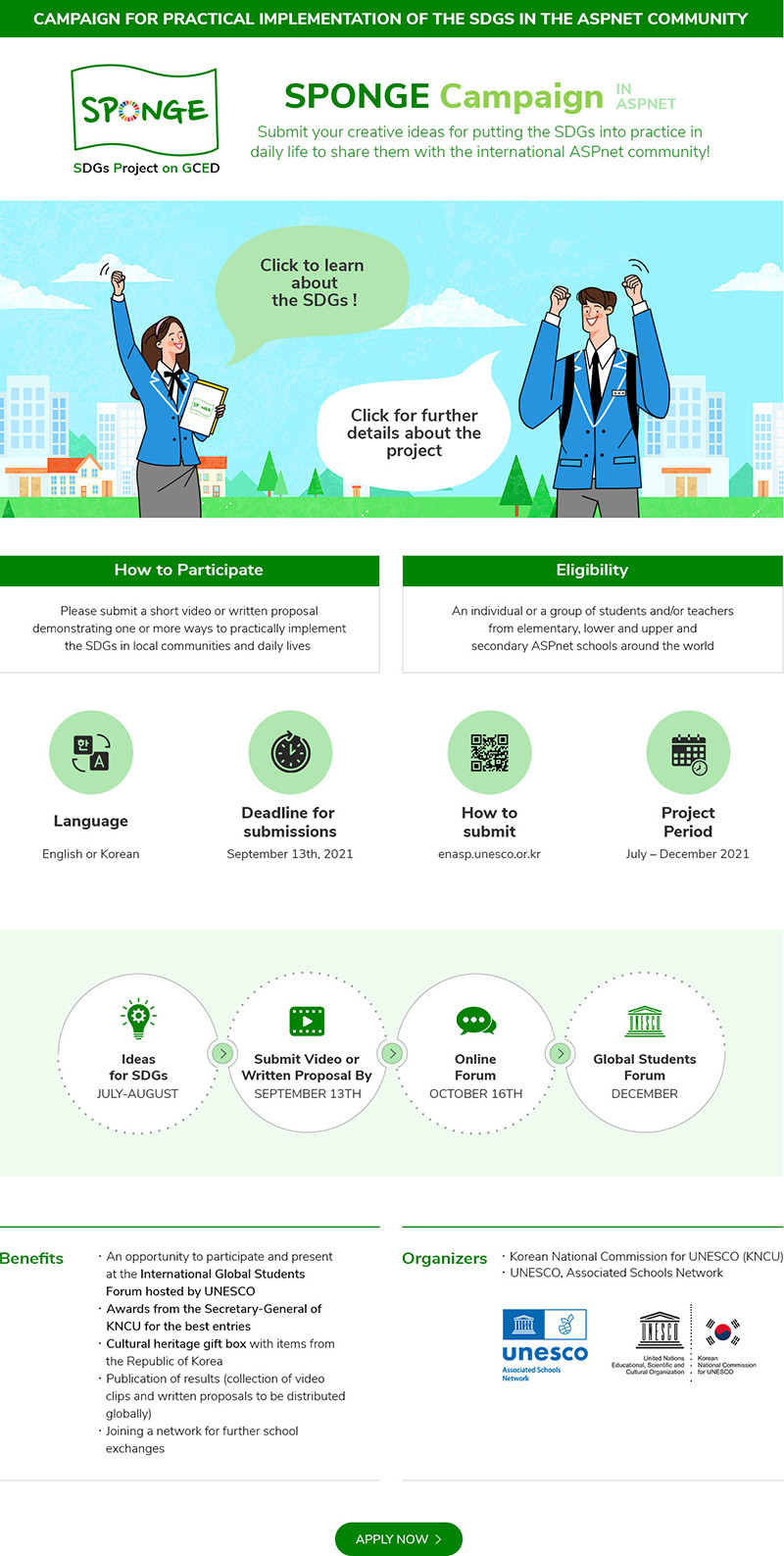 SPONGE Campaign (SDGs Project On Global Citizenship Education) 7 August 2021 1. Introduction and Objectives Global Citizenship Education (GCED), which builds on the work of peace and human rights education, is a strategic area of UNESCO’s Education Sector and one of the core values to be disseminated by the UNESCO Associated Schools Network (ASPnet). GCED is not only a clearly stated target (target 4.7) in the Sustainable Development Goals (SDGs), it also relates to the intersectional areas of the SDGs. UNESCO, Associated Schools Network, the Korean National Commission for UNESCO (KNCU) and the Ministry of Education of the Republic of Korea (MOE) believe that putting the SDGs into practice at school level, notably in the ASPnet community, is key to the successful promotion of GCED and the eventual achievement of the SDGs, empowering students and teachers to become active promoters of more peaceful, tolerant, inclusive, secure and sustainable societies. “SDGs Project on Global Citizenship Education” (“SPONGE Campaign” for short)’s primary aim is to collect good practices relating to implementation of the SDGs in local communities around the world, in the form of short videos and written proposals containing creative ideas for practices that aim to identify and solve local issues relating to the SDGs. By identifying problems relevant to one or more of the 17 SDGs in their neighborhood and coming up with creative ideas to solve such issues, students and teachers can gain in-depth knowledge of GCED and the SDGs and build a localized or contextualized understanding of how they can be applied in their daily lives. The Campaign will also contribute to building a strong network of international ASPnet schools by promoting understanding and friendship, and will facilitate the sharing of experiences and ideas through an online forum on GCED in October, and the international Global Students Forum hosted by UNESCO in December, 2021. Participants with the most creative ideas will be given an award by the Secretary-General of KNCU, along with a chance to participate in international forums. The results of the campaign will be disseminated to the international ASPnet community. 2. Objectives Sharing good practices and knowledge in the field of “global citizenship and the local implementation of the SDGs” in the international ASPnet community Exploring how global citizenship and the SDGs are used in schools and local communities to create sustainable communities Interdisciplinary engagement of teachers and students in activities to promote the SDGs Discussion and sharing among ASPnet schools of good practices to spread the values of global citizenship by implementing the SDGs at local level 3. Submission: Submission page on enasp.unesco.or.kr/ website 4. Deadline: September 13th, 2021 (midnight, UTC) 5. Participation and Commitments No registration or participation fee Attendance and active participation in the Online Forum Completion of individual and team assignments related to the topics Promotion of campaign activity and knowledge gained from the campaign in teaching & learning community URL:https://www.unesco.or.kr/news/notice/view/1594/