
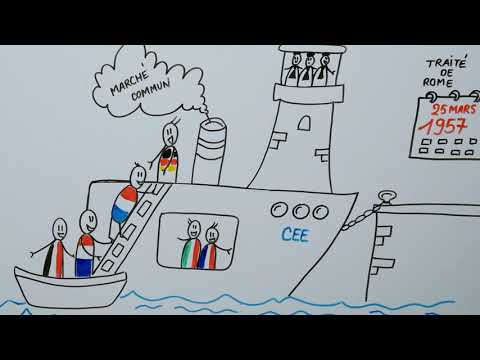
European Citizenship
- Corporate Author
- Laboratoire d'innovation pédagogique sur l'Europe (LIPE)
- Collation
- 5:18 (5min 18sec)
- Resource Language
- French
- Year of publication
- 2020
- Topic
- Civic / Citizenship / DemocracyHuman rightsGlobalisation and social justice / International understanding
- Resource Type
- International normative instruments / policy and advocacy documentsMultimedia materials
- Level of education
- Primary educationSecondary education
- Region
- Europe and North America
- Place of publication
- Nantes
The participation of the peoples in European construction has always been questioned since the 1970s, when the Member States wanted to relaunch the process of political unification. The election of the European Parliament by universal suffrage is a first step. Citizens' Europe, initiated in 1975 and relaunched in 1985, should make it possible to bring the peoples of the Community closer together, but remains symbolic and without much practical significance. The States are waiting for the Maastricht Treaty to establish true European citizenship within the framework of political Union. Secondary citizenship limited to a few rights, its scope remains limited and its political effectiveness questionable.
Related Resources
-
 IIEP-UNESCO 12th Medium-Term Strategy: 2026–2029
 -
 Advancing Intergenerational Learning: Identifying Challenges and Opportunities for Older Adults; Integrated Case Study Report
 -
 Digital Empowerment for Lifelong Learning and Transformative Andragogy (DELTA) for Adult Educators: Introduction to the DELTA Framework and Resources
 -
 Bridging the Grey Digital Divide: Enhancing ICT Learning for Older Adults; Research Report