
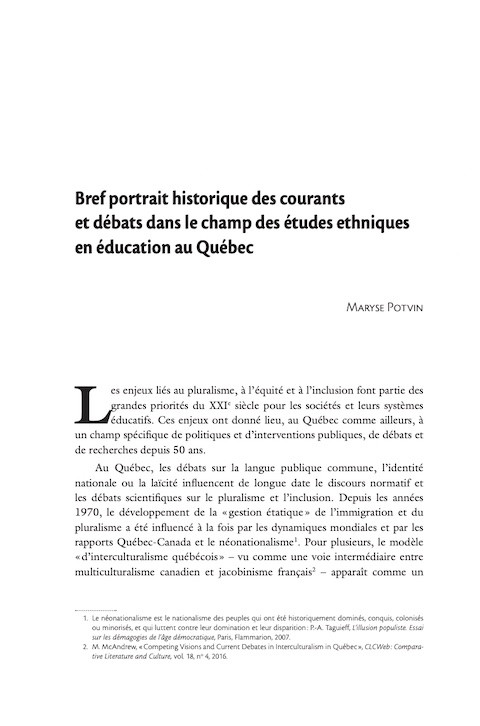
A Brief History of Currents and Debates in the Field of Ethnic Studies in Education in the Quebec Society (Cahiers de recherche sociologique; no. 64)
- Author
- Maryse Potvin
- Corporate Author
- Athéna éditions
- ISBN
- ISSN 0831-1048 (print); ISSN 1923-5771 (digital)
- Collation
- p. 97-127
- Resource Language
- French
- Year of publication
- 2018
- Topic
- Civic / Citizenship / DemocracyDiversity / Cultural literacy / InclusivenessHuman rightsGlobalisation and social justice / International understanding
- Resource Type
- Research papers / journal articles
- Level of education
- Primary educationSecondary education
- Region
- Europe and North America
- Place of publication
- Balma
The issues of pluralism, equity and inclusion are among the top priorities of the 21st century for education systems. These issues have given rise, in Quebec as elsewhere, to a specific field of public policies and interventions, debates and research for 50 years. This article traces the relatively "successive" appearance of currents - multicultural or intercultural, anti-racist, civic and rights-based, inclusive, still present in the sociology of education today - and shows how they marked (and predominated in) the normative discourses and the field of ethnic studies in education in Quebec during three different periods : the years 1970-1980, 1990-2000, 2010 to the present day. This article outlines the main "currents of ideas" and debates in this field of education during these three periods, and situates these debates in their links, both with the main social issues or significant events in the Quebec context and with the evolution of public policies in this field.
Related Resources
-
 IIEP-UNESCO 12th Medium-Term Strategy: 2026–2029
 -
 Youth Lens on the Silk Roads: Best Photos from the International Silk Roads Photo Contest; 6th Edition
 -
 Advancing Intergenerational Learning: Identifying Challenges and Opportunities for Older Adults; Integrated Case Study Report
 -
 Digital Empowerment for Lifelong Learning and Transformative Andragogy (DELTA) for Adult Educators: Introduction to the DELTA Framework and Resources