
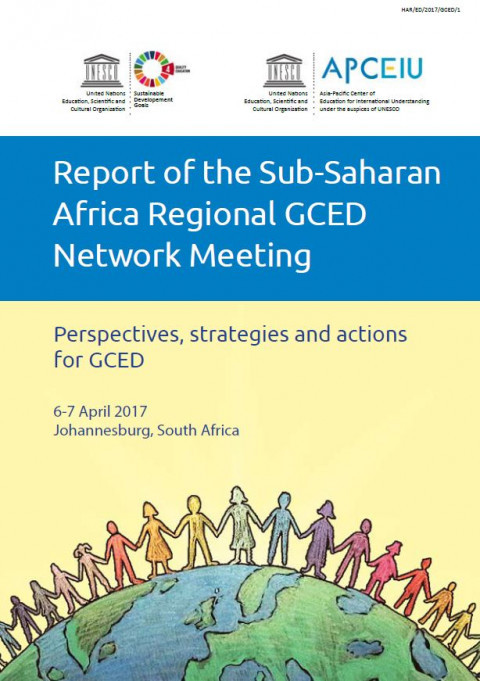
Report of the Sub-Saharan Africa Regional GCED Network Meeting: Perspectives, Strategies and Actions for GCED
- Corporate Author
- UNESCO HarareAPCEIU
- Collation
- 26 p.
- Resource Language
- English
- Year of publication
- 2017
- Topic
- Civic / Citizenship / DemocracyDiversity / Cultural literacy / InclusivenessHuman rightsPeace / Culture of peacePreventing violent extremism and genocideSustainable development / Sustainability
- Resource Type
- International normative instruments / policy and advocacy documentsConference and programme reports
- Level of education
- Primary educationSecondary educationHigher educationLifelong learningTechnical and vocational education and trainingNon-formal education
- Region
- Africa
- Place of publication
- Harare
An increasingly globalized world has raised questions about what constitutes meaningful citizenship as well as about its global dimensions. Global Citizenship Education (GCED) aims to empower learners to assume active roles to face and resolve global challenges and to become proactive contributors to a more peaceful, tolerant, inclusive and secure world.
Education is the most important tool for equipping young people, our future generation of leaders, with the knowledge, skills and attitudes to tackle prejudice and hostility, and to build more peaceful, tolerant and equitable societies. While there are different understandings and manifestations of GCED in different countries, GCED in its various forms is fast becoming an important and necessary component of education systems in sub-Saharan Africa and across the world.
The commitment of actors around the world to promoting GCED has contributed highly to the development of GCED, including raising awareness and catalysing action. Furthermore, this has led to the incorporation of GCED in the Sustainable Development Goals (SDGs) through Target 4.7, which captures the clear call for an education that addresses the needs of the twenty-first century, empowering learners to act towards a more peaceful, just, inclusive and sustainable world.
GCED reflects the aim of education to go beyond just access and ‘ensure inclusive and equitable quality education and promote lifelong opportunities for all’ in the next fifteen years.
UNESCO Regional Office for Southern Africa (ROSA) and the Asia-Pacific Centre of Education for International Understanding (APCEIU) invited partners across Africa for the 2017 Sub-Saharan Africa GCED Regional Network Meeting on 6–7 April 2017 in Johannesburg. The meeting was designed to jumpstart the formation of the Africa Regional GCED Network, map different GCED programmes in the region, and explore areas of possible collaboration in light of solidifying regional action on GCED.
Related Resources
-
 IIEP-UNESCO 12th Medium-Term Strategy: 2026–2029
 -
 Youth Lens on the Silk Roads: Best Photos from the International Silk Roads Photo Contest; 6th Edition
 -
 Advancing Intergenerational Learning: Identifying Challenges and Opportunities for Older Adults; Integrated Case Study Report
 -
 Digital Empowerment for Lifelong Learning and Transformative Andragogy (DELTA) for Adult Educators: Introduction to the DELTA Framework and Resources