
© APCEIU 2020
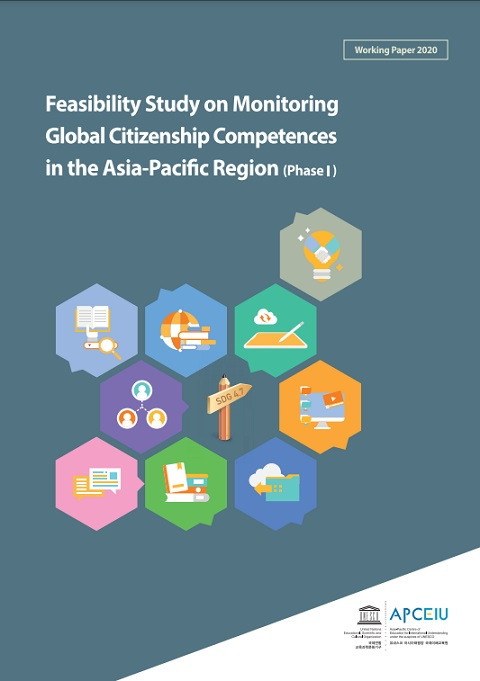
Feasibility Study on Monitoring Global Citizenship Competences in the Asia-Pacific Region (Phase I)
- Author
- Aaron Benavot
- Corporate Author
- APCEIU
- Collation
- 95 p.
- Resource Language
- English
- Year of publication
- 2020
- Topic
- Civic / Citizenship / DemocracyDiversity / Cultural literacy / InclusivenessSustainable development / Sustainability
- Resource Type
- Conference and programme reports
- Level of education
- Primary educationSecondary educationHigher educationLifelong learning
- Region
- Asia and the Pacific
- Place of publication
- Seoul
In accordance with SDG 4.7, countries are promoting GCED and other aspects of Target 4.7. It is necessary to measure learner levels and progress in global citizenship competencies to assess the extent to which learners are acquiring knowledge, attitudes, and skills related to global citizenship.
This report is organized into three substantive sections. Section II discusses existing definitions and conceptualization of GCED and GCC drawing on different sources. Section III describes which Asia-Pacific countries are included in this feasibility study and how relevant policy and curriculum documents are identified and analyzed. This section also discusses some common and share features of GCED that emerge from an analysis of country documents. Section IV briefly reviews existing measurement approaches of GCED or related concepts and then proposes a Measurement Framework of GCC for possible use in the A-P region. Section V of the report provides some forward-looking suggestions.
Related Resources
-
 IIEP-UNESCO 12th Medium-Term Strategy: 2026–2029
 -
 Youth Lens on the Silk Roads: Best Photos from the International Silk Roads Photo Contest; 6th Edition
 -
 Advancing Intergenerational Learning: Identifying Challenges and Opportunities for Older Adults; Integrated Case Study Report
 -
 Digital Empowerment for Lifelong Learning and Transformative Andragogy (DELTA) for Adult Educators: Introduction to the DELTA Framework and Resources