
Resources
Explore a wide range of valuable resources on GCED to deepen your understanding and enhance your research, advocacy, teaching, and learning.
8,360 Results found
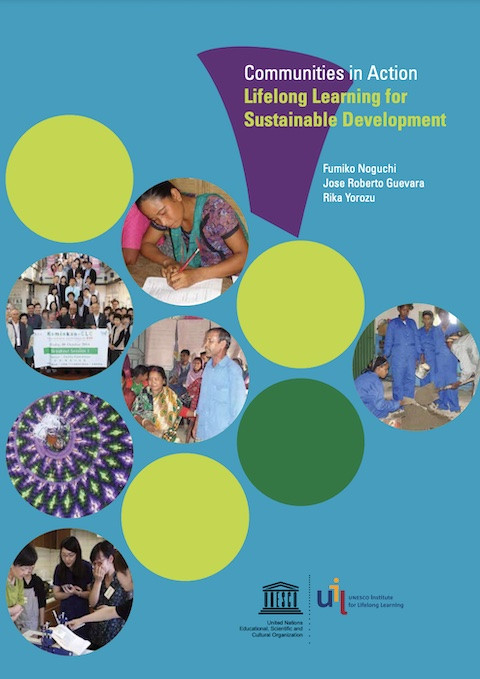 Communities in Action: Lifelong Learning for Sustainable Development Year of publication: 2015 Author: Fumiko Noguchi | Jose Roberto Guevara | Rika Yorozu Corporate author: UNESCO Institute for Lifelong Learning (UIL) This handbook identifies principles and policy mechanisms to advance communitybased learning for sustainable development, based on the commitments endorsed by the participants of the Kominkan-CLC International Conference on Education for Sustainable Development, which was held in Okayama City, Japan, in October 2014. To inform policymakers and practitioners new to this field, the handbook clarifies the international vision and goals for sustainable development and Education for Sustainable Development (ESD), and identifies the potential contributions of community-based learning centres and organizations. It documents both policy and practice from different regions and concludes with a summary of principles and policy support mechanisms.
  Knowledge-Driven Actions: Transforming Higher Education for Global Sustainability; Independent Expert Group on the Universities and the 2030 Agenda Year of publication: 2022 Author: Adrian Parr | Agnes Binagwaho | Andy Stirling | Anna Davies | Cheikh Mbow | Dag Olav Hessen | Helena Bonciani Nader | Jamil Salmi | Melody Brown Burkins | Seeram Ramakrishna | Sol Serrano | Sylvia Schmelkes | Tong Shijun | Tristan McCowan Corporate author: UNESCO With 2030 less than a decade away, it is paramount to think critically and act urgently if we are to achieve the Sustainable Development Goals.Higher education institutions are uniquely positioned to contribute to the social, economic and environmental transformations that are required to tackle the world’s most pressing issues.This report thoroughly discusses the role of higher education institutions in contributing to the 2030 Agenda, through a focus on three interrelated themes: the need to move towards inter- and transdisciplinary modes of producing and circulating knowledge; the imperative of becoming open institutions, fostering epistemic dialogue and integrating diverse ways of knowing; and the demand for a stronger presence in society through proactive engagement and partnering with other societal actors. The report directs attention to the systemic barriers that have inhibited transformations in these three areas so far, and provides advice and examples on how to achieve this. The report calls on higher education leaders and actors to push for transformations within their institutions, using the report’s recommendations to critically reflect and act on their role for achieving the 2030 Agenda.
  Citizenship Education for Democratic and Sustainable Communities Year of publication: 2021 Author: Dimitris Deligiannis | Kleoniki Tsiougou | Vicky Goutha | Antonis Moutselos | Ted Fleming Corporate author: UNESCO Institute for Lifelong Learning (UIL) | City of Larissa (Greece) | City of Yeonsu-Gu (Republic of Korea) This publication aims to make readers aware of the importance of citizenship education (CE) in local communities within the framework of lifelong learning. It supports cities and citizens in advancing their work on this critical aspect of formal and non-formal education, and in striving for progress in the provision of CE for youth and adult learners. It is mainly based on information from the 2020 survey of cluster members, as well as on case studies and inputs from the conference, ‘Strengthening citizenship education at local level’, which was held virtually on 12 and 13 November 2020.
 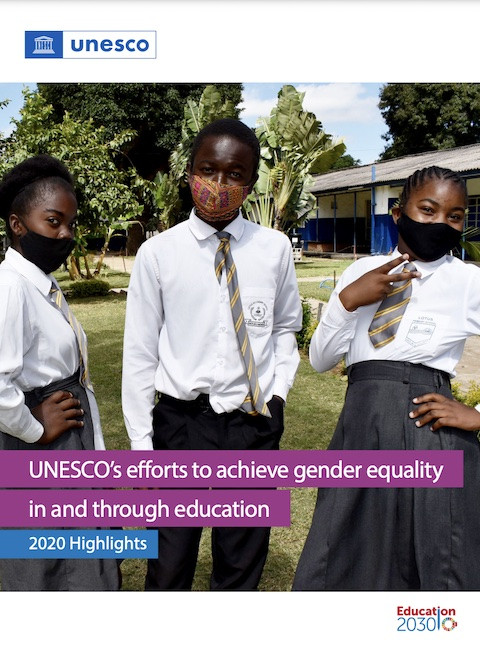 UNESCO’s Efforts to Achieve Gender Equality in and Through Education: 2020 Highlights Year of publication: 2022 Corporate author: UNESCO This report presents highlights of UNESCO’s work in 2020 to advance gender equality in and through education.UNESCO's work in this area is guided by the UNESCO strategy for gender equality in and through education 2019–2025, and supported by Her Education, Our Future, which was launched in parallel with the strategy, to leverage political and financial commitments, cooperation and joint action for girls’ and women’s education.
 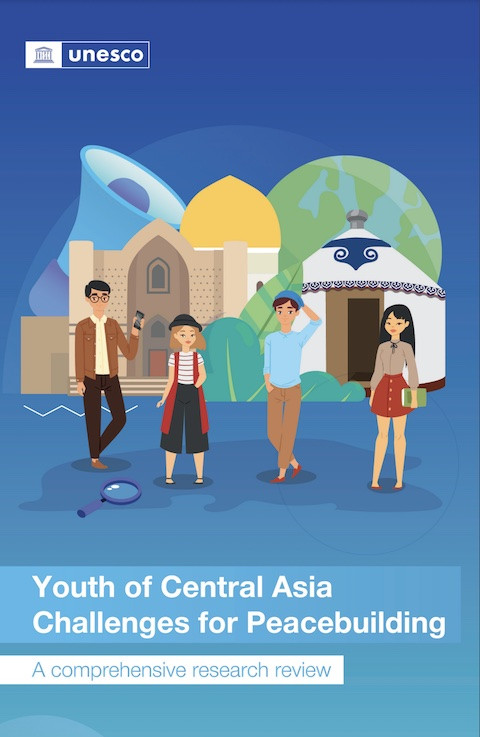 Youth of Central Asia, Challenges for Peacebuilding: A Comprehensive Research Review Year of publication: 2021 Author: Laura Yerekesheva Corporate author: UNESCO The estimations are that by 2030, the world will be home to 1.3 billion young people. This speaks about the importance of the youth for development in various parts of the globe, particularly in developing countries which constitute 90% of the global youth population. From comprehensive holistic perspective peace, peacebuilding and dialogue embrace all aspects and dimensions of life – inter-generational, social, economic, political, ethnic, religious, civic, ideological, cultural, and natural. The youth related issues are directly linked with the SDGs agenda. Central Asian states are also on the list of developing countries, with an increasing demographic share of the youth in the general population, meaning that the countries of the region are “young.” As of 2020, the total population of the four countries of Central Asia (Kazakhstan, Kyrgyzstan, Tajikistan and Uzbekistan) was 68.46 million, of which youth comprised 16.55 million or 24,1%. What Challenges for Peacebuilding the Youth of Central Asia Face? This highlights the urgency required for elaborating and implementing special policies on youth development. For Central Asia, the peace and peacebuilding agenda is the development agenda, and vice versa, as neither is possible without the other, and these in turn are intrinsically linked with youth-related issues. This report provides a detailed overview of the existing challenges to the youth of the 4 countries of the region – Kazakhstan, Kyrgyzstan Tajikistan, Uzbekistan – structured around three main themes of peacebuilding: (1) an education and learning environment; (2) economic and social participation; and (3) civic engagement. Governments, international organizations, professionals and policymakers in the youth, peacebuilding and development sectors, academia and NGOs are invited to join forces to accelerate the achievement of youth development for a more just, sustainable and peaceful future.
 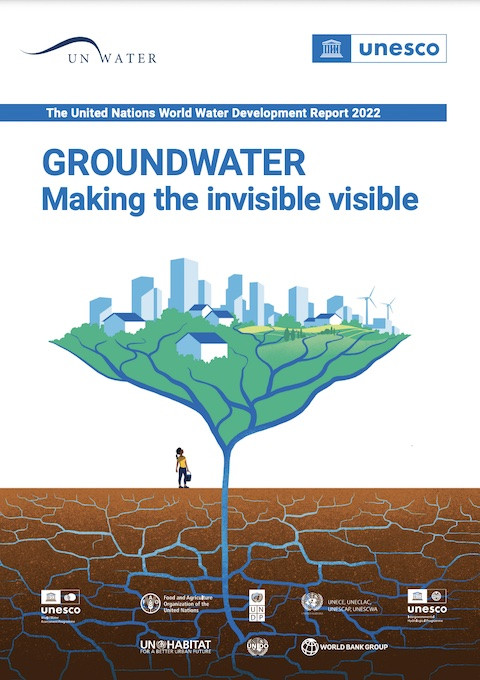 The United Nations World Water Development Report 2022: Groundwater; Making the Invisible Visible Year of publication: 2022 Corporate author: UNESCO The 2022 edition of the United Nations World Water Development Report, titled “Groundwater: Making the invisible visible”, describes the challenges and opportunities associated with the development, management and governance of groundwater across the world. The report addresses groundwater-related issues from the perspective of the three main water use sectors (agriculture, human settlements and industry), as well as its interactions with ecosystems and its relation with climate change. It highlights different regional perspectives and presents a number of response options concerning data and information, policy and planning, management and governance, as well as financing.The United Nations World Water Development Report is UN-Water’s flagship report on water and sanitation issues, focusing on a different theme each year. The report is published by UNESCO, on behalf of UN-Water and its production is coordinated by the UNESCO World Water Assessment Programme. The report gives insight on main trends concerning the state, use and management of freshwater and sanitation, based on work done by the Members and Partners of UN-Water. Launched in conjunction with World Water Day, the report provides decision-makers with knowledge and tools to formulate and implement sustainable water policies. It also offers best practices and in-depth analyses to stimulate ideas and actions for better stewardship in the water sector and beyond.
  Creating Change: Advocacy Toolkit for Education in Emergencies Year of publication: 2021 Author: Eleanor Gall Corporate author: Inter-agency Network for Education in Emergencies (INEE) The INEE Advocacy Toolkit aims to make it easier and faster for INEE members to find the tools they need to strengthen their vital work. It pulls together resources from across the education, humanitarian, and development sectors and presents them as clear, concise lists. The resources listed have been selected in response to a survey of INEE members’ needs, and in acknowledgement of the diverse emergency contexts in which INEE members work. While this resource is aimed primarily at INEE members working at a national level, we hope it will be helpful to any organization or individual who advocates for—or wants to advocate for —EiE at a local, regional, or global level. It is by no means an exhaustive list, but it does provide extensive options, ideas, and inspiration for impactful, sustainable, advocacy that can help to ensure a quality, safe, andrelevant education for all who live in emergency and crisis contexts.
 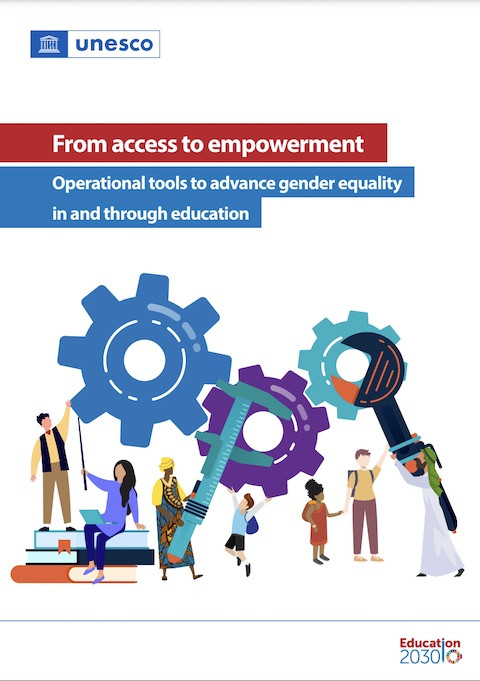 From Access to Empowerment: Operational Tools to Advance Gender Equality in and Through Education Year of publication: 2021 Corporate author: UNESCO This toolkit has been developed to strengthen individual and institutional capacity to integrate gender equality into education programmes in an effective manner. It has been prepared for all UNESCO Education Sector staff, including those at Headquarters, in Field/Regional/Cluster Offices and in Institutes as well as for implementing partners. This toolkit provides orientation and operational tools to meaningfully integrate gender into all education programmes. The first part provides a short introduction to key concepts on gender equality in and through education and an overview on how gender equality in education links to UNESCO’s vision and internationally agreed objectives. The second part provides practical guidance on how to mainstream gender equality into an education programme, how to design gender-transformative programmes and finally, how to monitor and evaluate gender results in education programmes.
  2021 Study on the Monitoring Framework of GCED in South Korea Year of publication: 2021 Author: Hwanbo Park | Daehoon Jho | Kyunghee Park | Sungho Park | Jeongmin Eom Corporate author: APCEIU The purpose of this study is to establish a feasible monitoring system for the implementation of Global Citizenship Education (GCED) in South Korea that can both align itself with the global indicator (SDG 4.7.1) and reflect the domestic context and feasibility. To this end, the study continues to examine the extent to which GCED is mainstreamed in education policies in Korea by utilizing the monitoring tool developed by the aforementioned 2020 study. In so doing, it aims to build sustaining and robust data in the area of GCED policies with the consistent monitoring tool developed. Second, the study explores enabling aspects as well as gaps between policies or programmes and how GCED is implemented on the ground by schools and teachers. Through this analysis, the study draws implications for further refining of the developed monitoring system. Third, the study surveys and analyzes existing monitoring tools developed by other fields and the data accumulated through those existing tools to assess learners' knowledge acquisition, values, skills and attitudes relevant to global citizenship competences, In so doing, it explores possibilities and makes recommendations for effectively monitoring learners’ competences by utilizing and modifying existing tools as well as developing new ones.
  Global Education Monitoring Report 2021/2: Non-state Actors in Education; Who Chooses? Who Loses? Year of publication: 2021 Corporate author: UNESCO Non-state actors’ role extends beyond provision of schooling to interventions at various education levels and influence spheres. Alongside its review of progress towards SDG 4, including emerging evidence on the COVID-19 pandemic’s impact, the 2021/2 Global Education Monitoring Report urges governments to see all institutions, students and teachers as part of a single system. Standards, information, incentives and accountability should help governments protect, respect and fulfill the right to education of all, without turning their eyes away from privilege or exploitation. Publicly funded education does not have to be publicly provided but disparity in education processes, student outcomes and teacher working conditions must be addressed. Efficiency and innovation, rather than being commercial secrets, should be diffused and practiced by all. To that end, transparency and integrity in the public education policy process need to be maintained to block vested interests. The report’s rallying call – Who chooses? Who loses? – invites policymakers to question relationships with non-state actors in terms of fundamental choices: between equity and freedom of choice; between encouraging initiative and setting standards; between groups of varying means and needs; between immediate commitments under SDG 4 and those to be progressively realized (e.g. post-secondary education); and between education and other social sectors.