
Resources
Explore a wide range of valuable resources on GCED to deepen your understanding and enhance your research, advocacy, teaching, and learning.
8,361 Results found
 Summary of the World Report on Disability Year of publication: 2011 Corporate author: World Health Organization (WHO) | World Bank The World Health Organization and the World Bank jointly produced this global report on disability, in order to present the evidence needed to develop innovative policies and programs capable of improving the lives of people with disabilities, and to facilitate the implementation of the United Nations Convention on the Rights of Persons with Disabilities that was activated in May of 2008. The World Report provides a definition of disability as an umbrella term that includes under its umbrella various forms of organ impairment/dysfunction, limited activity, and participation limitations. The term disability also refers to the negative features of the interaction between individuals with a health condition (such as cerebral palsy, Down syndrome, or depression), and between personal and environmental factors (such as negative attitudes, lack of access to transportation and public buildings, and limited social support).It then presents suggestions for steps that can be taken by all concerned parties - including governments, civil society organizations, and organizations of persons with disabilities - in order to create enabling environments, develop rehabilitation and support services, ensure adequate social protection, launch comprehensive policies and programs, and activate new standards and legislation List, for the benefit of people with disabilities and society at large. People with disabilities should be the centerpiece of these endeavours. It also sheds light on the various obstacles and barriers faced by persons with disabilities - obstacles related to the attitudes and trends they encounter, and physical and financial obstacles - all of which are easy to deal with and address. It provides recommendations for action at the local, national and international levels, and is thus an invaluable tool.
  Attitudes Towards Customs and Traditions as Social Phenomena in Jordanian Society Year of publication: 2016 Author: Maryam Al-Khalidi Corporate author: Al-Azhar University The current study aimed to identify the attitudes towards customs and traditions related to weddings and weddings as social phenomena in the Jordanian society. The study sample included (200) members of the Jordanian community from the year 2015. The results indicated that the degree of attitudes towards customs and traditions (the habits of weddings and parties).
  Poverty Causes and Effects: Tareq Neighborhood as a Model Year of publication: 2017 Author: Khawla Chareeb Faraj Corporate author: University of Babylon The phenomenon of poverty is one of the most important social and economic phenomena that has become the thinking of many economists and politicians, and some local and international institutions, such as the World Bank and the United Nations, has become one of the most important topics on the agenda of the United Nations conferences to attract the attention of the world, The third is the seriousness of this phenomenon, the need to limit its effects, and the attempt to eliminate it, through the followers of economic and social policies, commensurate with the capabilities and possibilities of these countries, and despite the global attention to the problem of poverty, but it continues to spread widely in most The countries of the world and there are still differences around the concept of poverty, methods of measurement, and the means to eliminate it and the reasons that lead to it, and this research aims to identify the different concepts of poverty and the poor.
 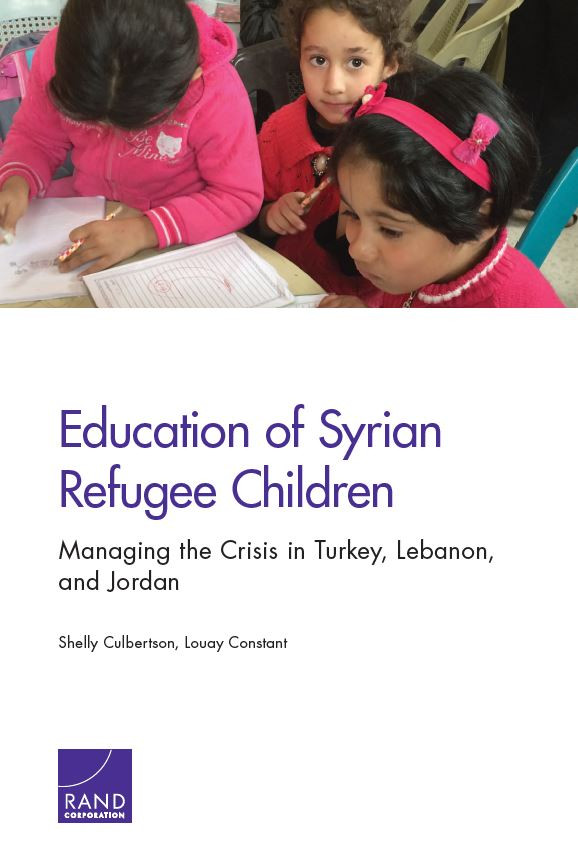 Education of Syrian Refugee Children: Managing the Crisis in Turkey, Lebanon, and Jordan Year of publication: 2015 Author: Shelly Culbertson | Louay Constant Corporate author: RAND Corporation With four million Syrian refugees as of September 2015, there is urgent need to develop both short-term and long-term approaches to providing education for the children of this population. This report reviews Syrian refugee education for children in the three neighboring countries with the largest population of refugees — Turkey, Lebanon, and Jordan — and analyzes four areas: access, management, society, and quality. Policy implications include prioritizing the urgent need to increase access to education among refugees; transitioning from a short-term humanitarian response to a longer-term development response; investing in both government capacity to provide education and in formal, quality alternatives to the public school systems; improving data in support of decisionmaking; developing a deliberative strategy about how to integrate or separate Syrian and host-country children in schools to promote social cohesion; limiting child labor and enabling education by creating employment policies for adults; and implementing particular steps to improve quality of education for both refugees and citizens.
  Discrimination on the Basis of Sex.. Is the Woman Always the Victim? Year of publication: 2017 Corporate author: DW TV After many years of silence, famous actresses and models broke the barrier of fear and revealed the violations of the famous producer Harvey Weinstein against them. This scandal prompted hundreds of thousands of women to publish their painful stories in social networks. Where does gender discrimination begin? And how widespread is this phenomenon in reality? Is the woman always the victim? These questions are discussed in this program.
  The Problem of Sectarian Pluralism and National Unity in Islamic Countries: A Study of the Malaysian Case Year of publication: 2015 Author: Ben Omar Adel Corporate author: University Mohamed Lamine Debaghine - Setif2 This research paper addresses the causes of conflicts, the internal dangers that threaten national unity in Islamic countries, by highlighting the impact of sectarian conflicts in the collapse and disintegration of states. The paper also studies the dimensions of the phenomenon and the policies taken to manage it. The paper also seeks to reveal the best practices and the experience of the organs of political systems in Islamic countries in managing sectarian pluralism. It ends with a discussion of the Malaysian case.
  The Effectiveness of a Proposed Program Based on Service Learning for Teaching Contemporary Issues to Students of the History Division in the Faculties of Education in Developing Their Cognitive Achievement and Social Responsibility Year of publication: 2016 Author: Salwa Ammar | Yahya Sulaiman | Mahmoud Ahmed | Salah Juma Corporate author: Fayoum University This study seeks to evaluate the effectiveness of a service-based learning program for teaching contemporary issues to students of the history department. It examines the impact of this program on the development of cognitive achievement and social responsibility. The study begins with a description of the foundations and components of the training program.
 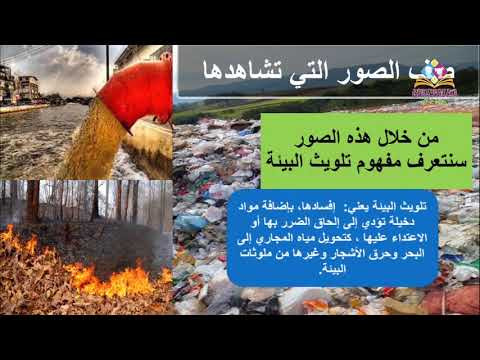 The Prohibition of Environmental Pollution Year of publication: 2020 Corporate author: Smart Students Schools The video is an explanation of the lesson "Prohibition of Environmental Pollution" for the fifth grade. In which the teacher provided an explanation for the students about the concept of the environment and examples of its pollution. The teacher also shows the position of the Islamic religion on environmental pollution. Finally, the teacher reviews some solutions to preserve the environment and also reviews the efforts of the Sultanate of Oman in preserving the environment.
  ESCWA Water Development Report 8: The Water-related Sustainable Development Goals in the Arab Region Year of publication: 2019 Corporate author: UN. Economic and Social Commission for Western Asia (UN. ESCWA) Water-related SDGs have a central role in achieving the 2030 Agenda for Sustainable Development and its interlinked Sustainable Development Goals (SDGs) and targets. While the dedicated goal on water (SDG6) aims to ensure availability and the sustainable management of water and sanitation for all, pursing this goal supports the achievement many other goals. Regional monitoring and reporting of the water-related SDGs thus supports a better understanding of water across the sustainable development agenda and provides insights on the progress and challenges facing the Arab region as it aims to achieve the SDGs and associated national targets under conditions of water scarcity and increasing water stress. This eighth issue of the Water Development Report of the Economic and Social Commission for Western Asia (ESCWA) examines the water-related SDGs from the perspective of water security and scarcity in the Arab region. It identifies ways to assess and address present and projected water scarcity at the regional and national levels for various climate change scenarios. It reviews regional and national water strategies and action plans coherency with global water-related goals and targets. The study analyses how the water-related SDG targets and indicators can guide the development of policy measures to tackle water challenges in the Arab region. Proposed policy interventions include measures to conserve and protect water resources and generate additional nonconventional water resources. Selected policy options are quantified and analysed for two climate scenarios for the future period 2030-2050 in view of informing sustainable planning and appropriate decision support systems to optimize and rationalize water use. The report also provides insights on institutional mechanisms in place for monitoring and implementing water-related SDGs at various scales.
  The National Strategy, Action Programme and Integrated Financing Strategy to Combat Desertification in the Occupied Palestinian Territory Year of publication: 2012 Corporate author: Environment Quality Authority The attached file contains the policy to combat desertification in the Palestinian territories. The Environment Quality Authority as the national focal point for the Convention to Combat Desertification has formulated the strategy, the National Action Program / Integrated Financing Strategy to combat desertification and mitigate the effects of drought. This document was based on the above-mentioned policies and within the framework of the objectives of the global agreement to combat desertification with the participation and cooperation of stakeholders, including governmental institutions, non-governmental institutions, universities, the private sector and the public sector.