
Resources
Explore a wide range of valuable resources on GCED to deepen your understanding and enhance your research, advocacy, teaching, and learning.
8,365 Results found
 Guide on Human Rights Education Curriculum Development Year of publication: 2021 Author: Cecilia Decara | Carol Rask | Felisa Tibbitts Corporate author: Danish Institute for Human Rights This document aims to bring conceptual clarity on human rights education and curriculum development and provide concrete suggestions on how to build human rights curricula ft for 21st century human rights challenges, while contributing to the realisation of the SDG goals and targets set by the international community.
  Environmental Science Course Year of publication: 2021 Author: Ula Madwer | Sakher Ajouz | Ali Alsahyouni Corporate author: University of Hama This document provides an explanation of the initial practical session in the environment science course. The practical part of the environment science course contains a set of practical exercises. It includes the following objectives: Familiarize students with the tools and equipment of the environmental laboratory Determine the types and sources of environmental pollution Air quality standards and measurement units Measurement of carbon dioxide concentration
  Literary Economic Unit Year of publication: 2021 Corporate author: Luqman Education This video presents one of the geography lessons in the third secondary grade of in the Syrian Republic. The video focuses on the challenges people face in achieving sustainable development. It explains the 17 goals of the sustainable development goals.
  UNDP Support for the Implementation of Sustainable Development Goal 6: Sustainable Management of Water and Sanitation Year of publication: 2016 Corporate author: United Nations Development Programme (UNDP) This document provides a summary report on UNDP support for the implementation of SDG 6. The report focuses specifically on the sustainable management of water and sanitation services. This report is a micro-reference to these efforts in the field of water and sanitation services.
 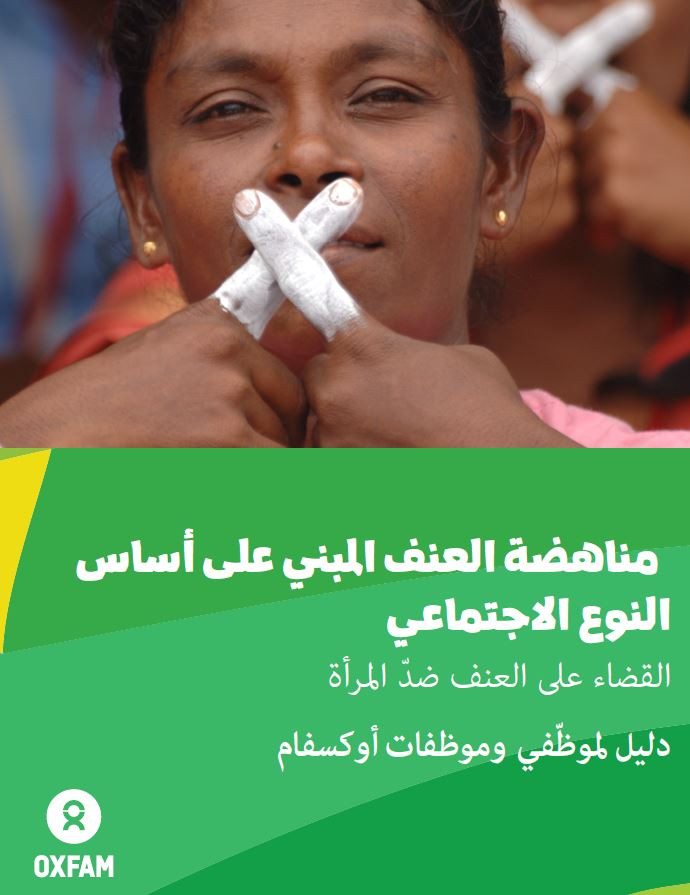 Combating Gender-Based Violence: Ending Violence Against Women Year of publication: 2012 Corporate author: Oxfam GB This file is a practical guide produced by Oxfam for its employees to combat gender-based violence, specifically violence against women. Oxfam works to eliminate violence against women because it is a violation of human rights and a major obstacle to human development. In order to achieve an effective intervention, violence against women must be defined and its root causes understood.
  The Role of Kuwaiti Satellite Channels in Promotion of Citizenship among Kuwaiti Youth Year of publication: 2012 Author: Hassan Al Gharbi Corporate author: Middle East University The focus of the problem that the research dealt with was on the following question: Have public and private Kuwaiti satellite channels contributed to enhancing the concept of citizenship among young Kuwaitis? The researcher adopted a definition of the concept of citizenship among the multiple definitions of this concept, which was tainted by some uncertainty and disagreement. Citizenship in this study "is the awareness of belonging to a geographical area of a specific political and social goals and shared one common culture and political system."
  Fourth Lecture: Corporate Social Responsibility Year of publication: 2021 Author: Hassan Al Gharbi Corporate author: King Faisal University A PowerPoint file in which the lecturer reviews the concept of corporate social responsibility. This lecture is part of the Business Ethics course at King Faisal University.
 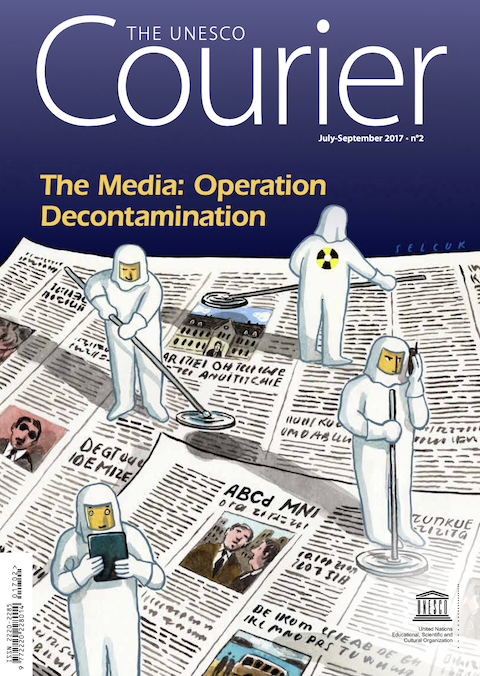 The Media: Operation Decontamination (The UNESCO Courier no. 2; July-September 2017) Year of publication: 2017 Corporate author: UNESCO The plurality of enlightened opinions is a prerequisite of the democratic development of our societies. The quality of the information disseminated by the media – traditional or new – is decisive when it comes to shaping public opinion. This is why UNESCO puts special emphasis on education about media and information, which it considers a fundamental skill for citizens in the twenty-first century.Freedom of expression and the free movement of ideas by words and images are among the constitutive principles of UNESCO and at the core of the 2030 Agenda for Sustainable Development. UNESCO supports the work of dedicated journalists and activists who defend fundamental freedoms, like the journalist Dawit Isaak, winner of the 2017 UNESCO/ Guillermo Cano World Press Freedom Prize, whose story appears in this issue of the UNESCO Courier.Over the last decade, more than 800 journalists have been victims of crimes aimed at muzzling freedom of expression. Only one murder out of ten ended with a conviction. This impunity is unacceptable and further fuels the spiral of violence in the future. This is why UNESCO is committed to putting an end to these crimes against the press, on all continents, as an indispensable condition for peaceful societies that are all the more robust for being better informed.In this “post-truth” era, the role of UNESCO is more important than ever, and this issue of the Courier is a wonderful opportunity to renew our founding commitment to support information and communication to build peace in the minds of men and women.
 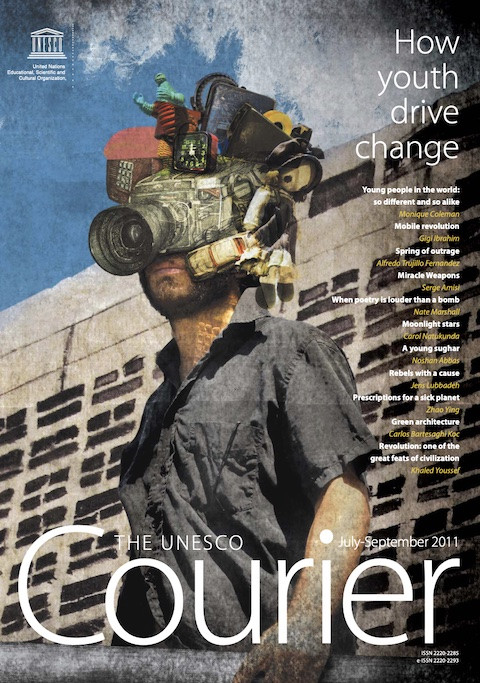 How Youth Drive Change (The UNESCO Courier no. 3; July-September 2011) Year of publication: 2011 Corporate author: UNESCO Considering school history as a place of confrontation of discourse and knowledge from competing socialization spaces (school, family, media), we are interested in citizenship education work and challenges posed by these plural socializations. In an important context media coverage of debates on the recognition of minority memories in France and their entry into the school programs of the college in 2008, how do students appropriate the ""socially vivid issues"" of immigration, colonization, and decolonization? Fromcontent analysis of a corpus made up of around a hundred interviews semi-structured conducted between 2007 and 2010 with 3rd year college students (end of lower secondary and compulsory education), we analyze and highlight contrasting interpretations of these heritages by majority students and minority students, respectively supplied by categories of public debate and family narratives. We show, following work relating to the sociology of school curricula, which learning citizenship in the light of these historical legacies results from the confrontation of the pupils with the discourses and knowledge different spaces in which they take part. But it is above all the product oftheir position in the face of these historical legacies, according to their experiences social and the role they give to these stories in building a common identity and belonging.
 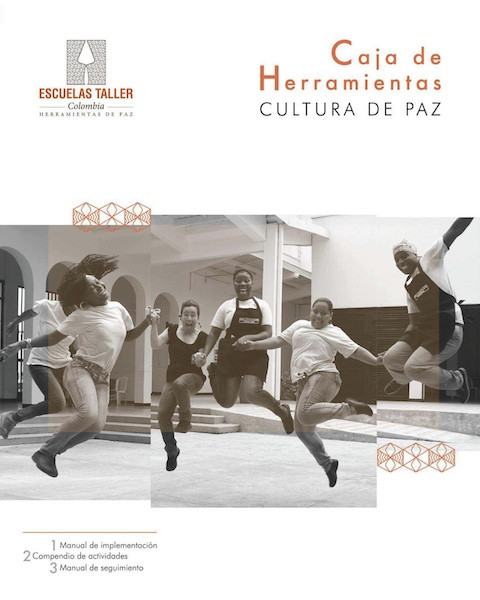 Culture of Peace Toolbox Year of publication: 2016 Corporate author: National Workshop Schools Program (Colombia) | Spanish Agency for International Development Cooperation (AECID) The Workshop Schools with the support of the Ministry of Culture and the Spanish Agency for International Development Cooperation (AECID), take the initiative to promote a Culture of Peace that arises from the ethical principles that define the Workshop School and that allows its protagonists themselves (administrators, instructors, apprentices and parents) assume positions, beliefs and attitudes that promote a Culture of Peace as a way of life. For this, a Tool Box has been designed, the objective of which is to strengthen the apprentices of the Workshop School as citizens who develop personal and social capacities to live healthily with others and generate harmonious environments, while proposing tools to serve as agents of change in society. At a general level, the Toolbox is made up of three large sections: the first contains the Implementation Manual, the second the Compendium of Activities and the third the Follow-up and Monitoring Manual.