
Resources
Explore a wide range of valuable resources on GCED to deepen your understanding and enhance your research, advocacy, teaching, and learning.
8,363 Results found
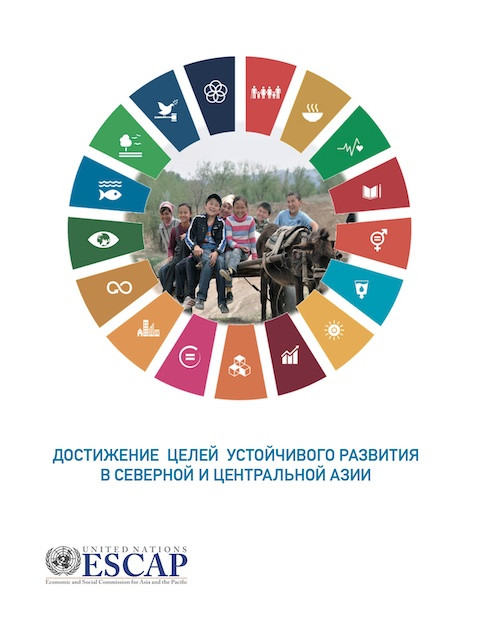 Achieving the Sustainable Development Goals in North and Central Asia Year of publication: 2017 Corporate author: UN. Economic and Social Commission for Asia and the Pacific (UN. ESCAP) This report examines the immediate, medium-, and long-term challenges facing the SCC subregion in achieving the SDGs, especially in the event of sudden shocks to key fiscal drivers such as growth, interest rates, and government revenues.
 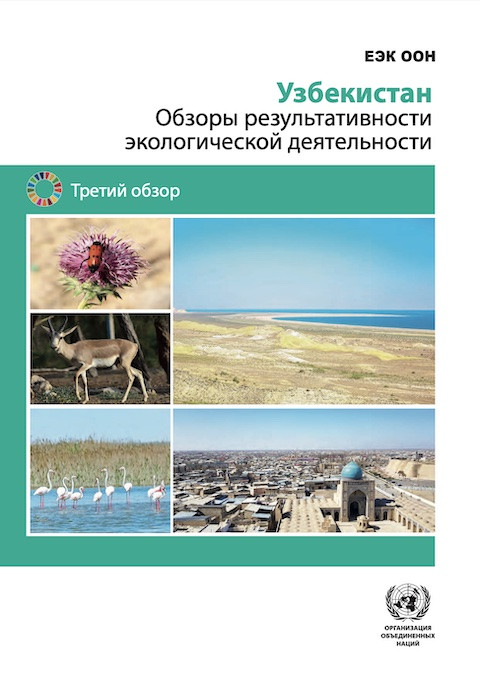 Environmental Performance Reviews: Uzbekistan; Third Review Year of publication: 2020 Corporate author: United Nations Economic Commission for Europe (UNECE) Uzbekistan's third Environmental Performance Review (EPR) builds on the solid experience gained by the United Nations Economic Commission for Europe (ECE) and its member countries in using this tool to regularly assess progress in aligning national economic and environmental objectives.
 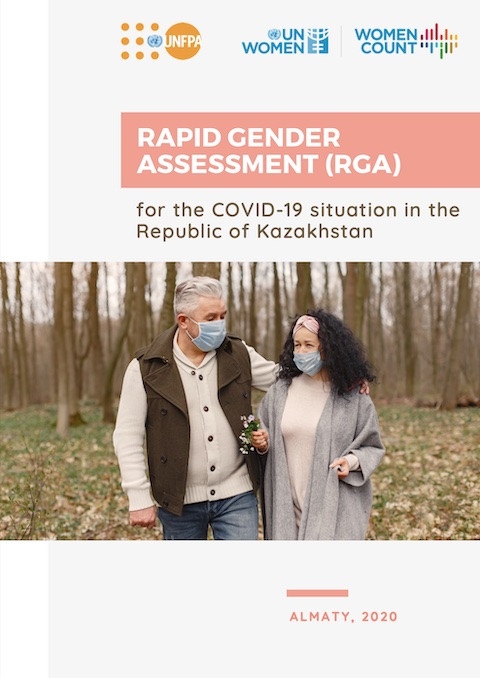 Rapid Gender Assessment: For the COVID-19 Situation in the Republic of Kazakhstan Year of publication: 2020 Corporate author: The Center for Social and Political Studies "Strategy" | United Nations Population Fund (UNFPA) | United Nations Entity for Gender Equality and the Empowerment of Women (UN Women) The Rapid Gender Assessment on COVID-19 in the Republic of Kazakhstan was prepared by the CFSPI "Strategy" for UN Women and the UN Population Fund. It provides important information about gender roles and responsibilities, opportunities and vulnerabilities that have emerged in society in light of the COVID-19 outbreak.
  Preventive Diplomacy Mechanisms and the Development of a Culture of Peace in Central Asia (East European Scientific Journal; vol. 3, no.67) Year of publication: 2021 Author: Z.A. Zaripova The article is devoted to the analysis of mechanisms of preventive diplomacy in the region. Central Asia at the present stage. It examines such UN mechanisms as the Sustainable Development Program. The article examines UN mechanisms for preventive diplomacy in the Central Asian region at the present stage, The study focuses on the activities of the United Nations Regional Center for Preventive Diplomacy for Central Asia as well as on efforts and cooperation among states in the region to find compromise solutions to security and development challenges. The study also examines the efforts of the states of the region to find compromise solutions to security problems and the development of a culture of peace in the region.
 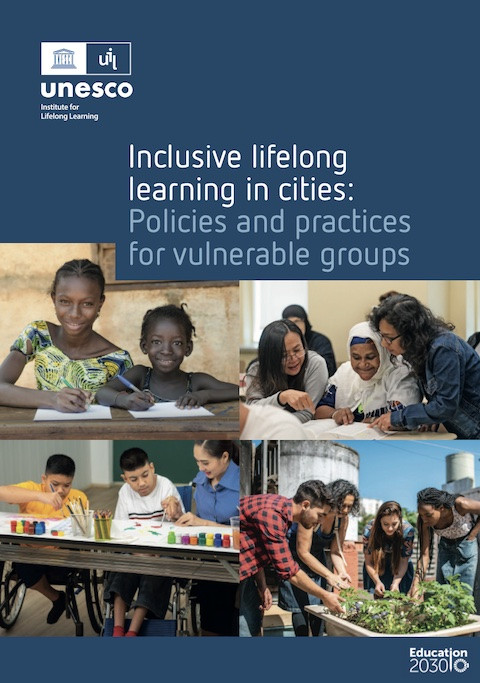 Inclusive Lifelong Learning in Cities: Policies and Practices for Vulnerable Groups Year of publication: 2021 Corporate author: UNESCO Institute for Lifelong Learning (UIL) This publication features chapters on learning cities’ endeavours to promote inclusive lifelong learning for vulnerable groups. It is based on research papers prepared for the fourth International Conference on Learning Cities, which took place in 2019 in Medellín, Colombia, under the theme ‘Inclusion – A principle for lifelong learning and sustainable cities’ and hence marks a transition between the learning city conferences of 2019 and 2021.
 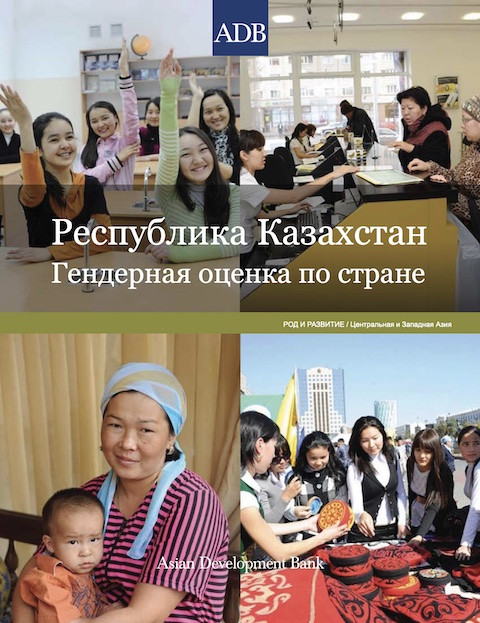 Kazakhstan Country Gender Assessment Year of publication: 2013 Corporate author: Asian Development Bank (ADB) This country gender assessment report for the Republic of Kazakhstan is based on the 2006 report and is based on the experience accumulated by the Asian Development Bank (ADB) in its work to support gender equality and women's rights in Kazakhstan. The assessment takes into account ADB's Strategy 2020 and the various gender equality strategies and objectives adopted for all ADB interventions.
 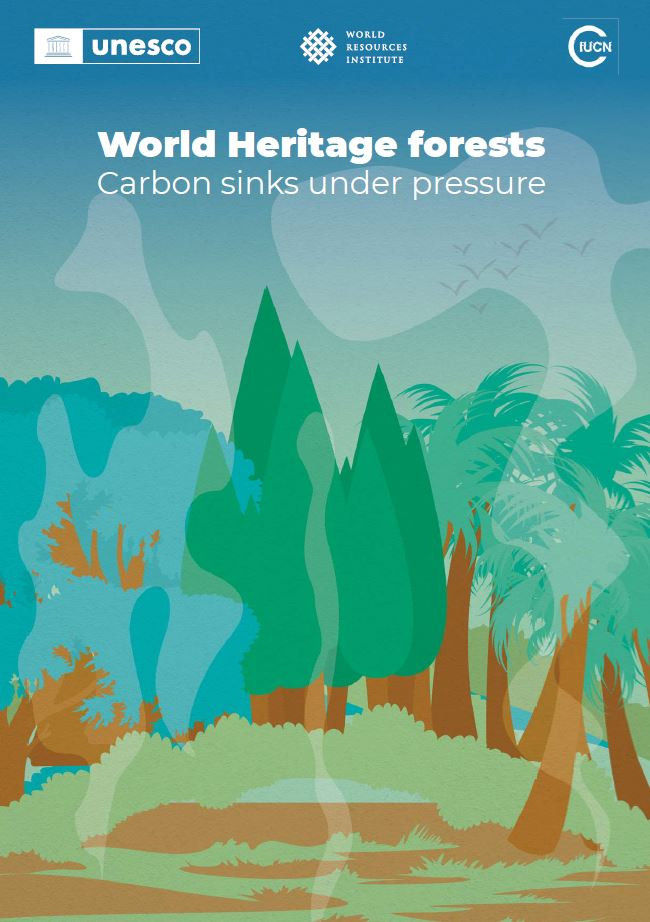 World Heritage Forests: Carbon Sinks Under Pressure Year of publication: 2021 Author: Tales Carvalho Resende | David Gibbs | Nancy Harris | Elena Osipova Corporate author: UNESCO | International Union for Conservation of Nature (IUCN) | World Resources Institute This report provides the first global scientific assessment of greenhouse gas emissions and sequestration in forests found in UNESCO World Heritage sites.World Heritage forests, whose combined area of 69 million hectares is roughly twice the size of Germany, are some of the most biodiversity-rich habitats on Earth and play a crucial role in climate regulation by absorbing carbon dioxide (CO2) from the atmosphere. However, these forests are under increasing anthropogenic pressures, including climate change.By combining remote sensing data with site-level monitoring, this report has quantified the climate benefits of World Heritage forests for the first time, assessed the impacts on carbon of common threats to World Heritage forests and identified sites that are net carbon sources. It therefore provides information to facilitate dialogues between policymakers and local stakeholders for the development of effective solutions aimed at maintaining the continuing role of World Heritage forests as sinks and stable carbon stores for future generations.
  Review and Reflection on Special Education Act in Scotland (Creative Education Studies; vol. 7, no. 1) Year of publication: 2019 Author: Qiuhan Feng Scotland is famous for its high quality education and the development of inclusive education around the world. Education equality is a core concept to improve social justice in Scotland. The government has published many educational acts to enlarge the additional support system, protect parents’ involvement and establish teacher education system to improve the education of children in disadvantaged situations. However, problems come along with the expansion of additional support needs, such as categories and labels, stigmatization, effectiveness of education resource delivery. Education equality still remains as a big problem.
  Investigation and Research on National Unity Education of College Students in Guangxi (Advances in Social Sciences; vol. 10, no. 3) Year of publication: 2021 Author: Liangqiu Meng This study takes Guangxi as an example, which is a model of national unity and progress. Guided by the basic principles of Marxism, this study adopts the methods of questionnaire and interview to study the current situation of national unity education of college students in Guangxi. It is found that the quality of national unity of college students in Guangxi is in a good state, but there are still some problems, such as the outdated and fragmented content of national unity education, un- scientific curriculum setting, the lack of quality education and the lack of quality education. There are many problems, such as backward teaching material construction, disjointed coordination of all aspects of education, single education methods, weak guarantee of education team and so on. In view of the existing problems, this study puts forward some countermeasures, such as enriching the content of national unity education, scientifically setting up the curriculum of national unity education, developing the characteristic teaching materials of national unity education, streng- thening the cooperation of curriculum teaching, innovating the mode of national unity education, and strengthening the construction of team security.
  Young People of Central Asia: Tajikistan Year of publication: 2017 Author: Muzaffar Olimov | Shavkat Sakhibov Corporate author: Friedrich-Ebert-Stiftung Kazakhstan Office The Friedrich Ebert Foundation initiated the Youth of Central Asia project. Its purpose is to study the values and attitudes of young Tajikistanis, lifestyles, identities, political views and foreign policy orientations. The project resulted in a research analytical report by independent economist Shavkat Sahibov and Professor Muzaffar Olimov, Doctor of History.