
Resources
Explore a wide range of valuable resources on GCED to deepen your understanding and enhance your research, advocacy, teaching, and learning.
8,363 Results found
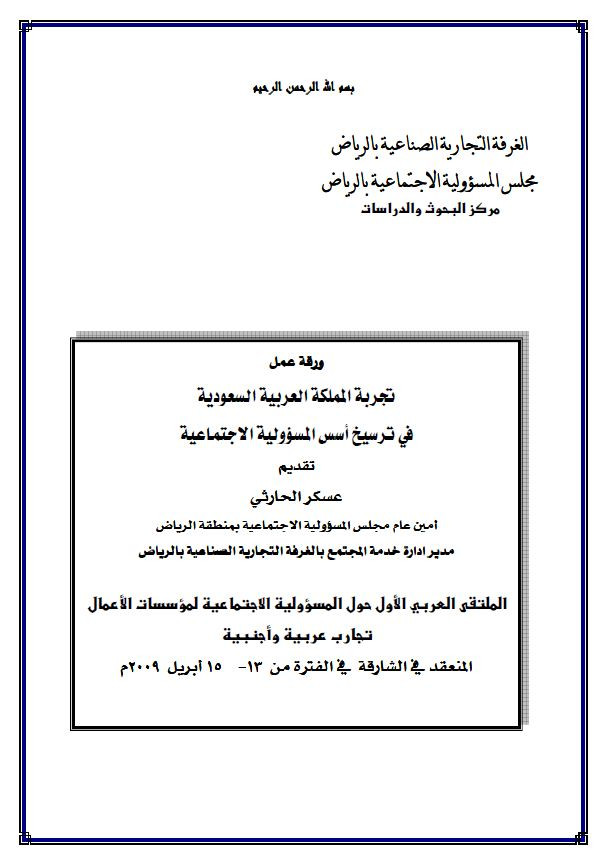 The Experience of the Kingdom of Saudi Arabia in Consolidating the Foundations of Social Responsibility Year of publication: 2009 Author: Mahmoud Issaf The paper reviews the experience of the Kingdom of Saudi Arabia in applying responsibility by identifying the economic and social framework that is the general structure for building this responsibility. Giving a brief overview of the position of social responsibility in the circle of interest of the main sectors, namely the concerned government departments in the country, the charitable sector, and the Chambers of Commerce and Industry, with a review of the experience of the Chamber of Commerce and Industry in Riyadh as a model, and the private sector.
 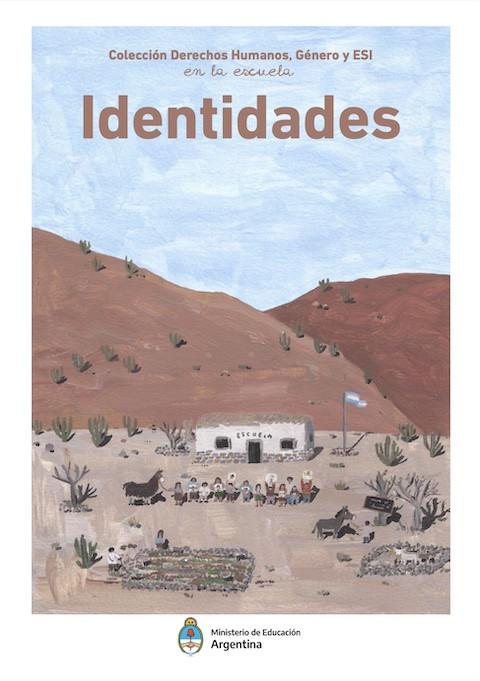 Identities Year of publication: 2021 Corporate author: Argentina. Ministry of Education In these pages, it is invited to rethink the construction of identity and identities within the framework of the school, from a transversal perspective. This concept is traversed by multiple dimensions, genealogies and debates that give shape to a privileged and nodal notion for the formation of a new democratic citizenship in schools. The idea is that both students of different educational levels, as well as teachers and families feel challenged and challenged by the reflections that this concept raises.
 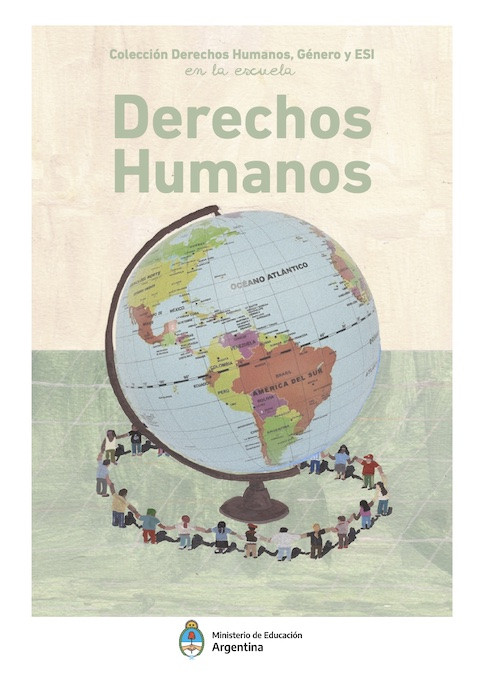 Human Rights Year of publication: 2021 Corporate author: Argentina. Ministry of Education This material takes on the challenge of addressing Human Rights as a living territory, a collective construction, where permanent disputes take place over its meaning and scope. At school, the responsibility for the formation of new citizenships for life in democracy places each teacher at the very center of this challenge.
 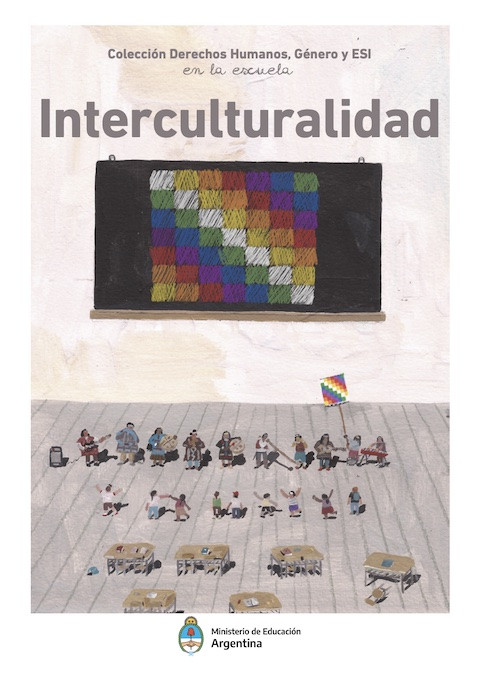 Interculturality Year of publication: 2021 Corporate author: Argentina. Ministry of Education This document addresses the issue of interculturality in the framework of the Human Rights, Gender and ESI at School Collection. It brings together a set of theoretical reflections and guidelines for teachers from different dimensions and senses, on issues that it is essential to continually revisit between different generations.
 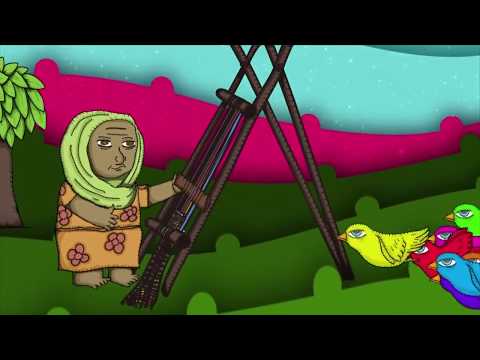 Mother Tongue Year of publication: 2018 Corporate author: Mexiquense TV This video explains how the mother tongue is acquired and its importance to us as human beings. It describes the linguistic diversity in Mexico and suggests that indigenous dialects are about to disappear and therefore February 21 is celebrated as the day of the mother tongue.
  Sustainability: A Strong Concept for Humanity (Tabula Rasa; no. 28) Year of publication: 2018 Author: Plinio Zarta Ávila Corporate author: University College of Cundinamarca The concept of sustainable development is still under construction, having transcended and being enriched, but also fragmenting, moving away from its origin. The indiscriminate use of the term "sustainable" has generated an exhaustion of its initial meaning, losing its meaning and hindering its rigorous analysis. This article promotes a critical discussion of the role of sustainability in the development of society, considering that this concept contemplates important changes in contemporaneity with respect to the values of society.
  The Degree of Responsiveness of Palestinian School Curricula in the Basic stage of the Characteristics of Democratic Education from the Point of View of Teachers Year of publication: 2018 Author: Mahmoud Abdel Majeed Rasheed Assaf Corporate author: University of Babylon The study aimed to identify the estimates of a sample of the teachers of the basic stage in Gaza Governorate to the degree of responsiveness of the Palestinian school curricula to the characteristics of democratic education and to find out if there were statistically significant differences at the level (α≤ 0.05) of significance Attributable to variables (sex, number of years of service). The researcher followed the analytical descriptive method by applying a questionnaire that included (36) paragraphs on a sample of (419) teachers and teachers from the basic education stage in Gaza governorates. The results showed that the total degree of appreciation of the primary school teachers in Gaza governorate to the extent of the school curricula 'response to the characteristics of democratic education was medium with a relative weight (67.8%). The field of (democratic teacher practices) ranked first, the field of (democratic teaching methods) ranked second, and finally the field (promotion of democratic values) in the last rank, There were no statistically significant differences at the level of significance (α≤ 0.05) between the mean scores of the ratings due to the variables. The study recommended the development of school and classroom activities associated with representative curricula, such as class councils, student unions and participation groups.
  General Policy Recommendation No. 15 of the European Commission against Racism and Intolerance: On Combating Hate Speech Year of publication: 2016 Corporate author: Council of Europe | European Committee against Racism and Intolerance (ECRI) The file is the recommendations of the European Committee against Racism and Intolerance on combating hate speech for countries. The file contains statistics and criteria established by the Commission. There are 10 recommendations made by the committee.
 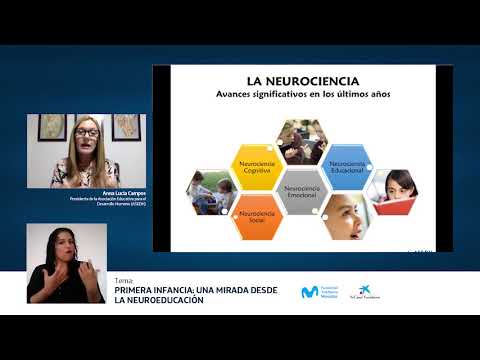 Early Childhood: Neuroscience and Child Development Year of publication: 2020 Corporate author: Telefonica Movistar Foundation Peru Understanding brain development is a fundamental basis for understanding what happens in the first years of life and rethinking the practice of parenting at home and educational practice as well as public policies. Many hypotheses have been put forward about the development of the brain in the first years of life, some truths and some myths. This video describes the concept of neuroscience and classifies it into: social neuroscience, cognitive neuroscience, emotional neuroscience, and educational neuroscience. It poses the great challenges of neuroscience. It presents 15 important evidences of child development in which neuroscience is involved.
  From Sustainable Development According to Brundtland to Sustainability as Biomimicry Year of publication: 2014 Author: Roberto Bermejo Gómez de Segura Corporate author: Hegoa, Institute for International Cooperation and Development Studies This text aims to analyze the concept of sustainability, starting from the concept of sustainable development of the Brundtland Report, and using this as a measuring stick of what government institutions raise on the subject directly or through the agreements of the world conferences. In addition, the academic debate on the concept of sustainability is reviewed, to go on to present its interpretation as an imitation of nature and the epistemological transformations that it causes in neoclassical economics. Finally, the factors that are proposed to generate the transformation are briefly evaluated.