
Resources
Explore a wide range of valuable resources on GCED to deepen your understanding and enhance your research, advocacy, teaching, and learning.
8,340 Results found
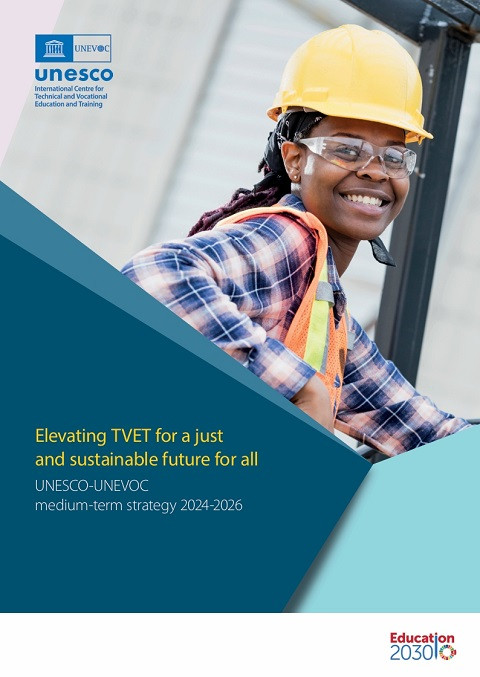 Elevating TVET for a Just and Sustainable Future for All: UNESCO-UNEVOC Medium-term Strategy 2024-2026 Year of publication: 2024 Corporate author: UNESCO International Centre for Technical and Vocational Education and Training (UNEVOC) The UNESCO-UNEVOC medium-term strategy for 2024 to 2026 sets out a roadmap to elevate technical and vocational education and training (TVET) for a just and sustainable future and empower TVET institutions to address the demands of digital, green and inclusive societies and economies. In alignment with the 2030 Agenda for Sustainable Development and the UNESCO strategy for TVET 2022-2029, UNESCO-UNEVOC will support Member States to upgrade their TVET systems and equip all youth and adults with skills for employment, decent work, entrepreneurship and lifelong learning. By working alongside international organizations, governments, UNEVOC Centres and partners, UNESCO-UNEVOC will implement a transformative TVET agenda focused on building flexible pathways for individuals to learn, work and live in a world that demands innovative solutions to complex, interconnected challenges.
 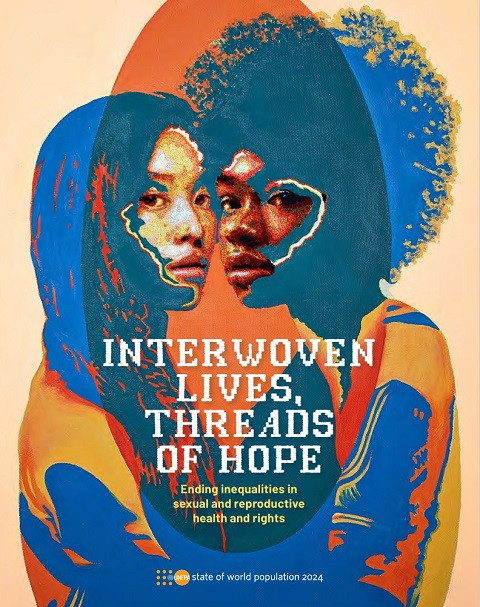 Interwoven Lives, Threads of Hope: Ending Inequalities in Sexual and Reproductive Health and Right; State of World Population 2024 Year of publication: 2024 Author: Daniel Baker | Ann Garbett | Gretchen Luchsinger | Tlaleng Mofokeng | Letlhogonolo Mokgoroane | Gilda Sedgh | Claire Thomas Corporate author: United Nations Population Fund (UNFPA) Everywhere, people seeking essential sexual and reproductive health care are forced to navigate overlapping hurdles because of their gender, economic status, ethnicity, sexual orientation, disability and more. In the few places where data are collected, women of African descent are found to be more vulnerable to obstetric mistreatment and negative maternal health outcomes. Indigenous women are often denied culturally appropriate maternal health care, and their own childbirth practices may be criminalized, resulting in significantly higher risk of death in pregnancy and childbirth. Gender-unequal norms remain embedded in health-care infrastructure, including persistent underinvestment in the world’s largely female midwifery workforce. Women and girls with disabilities face up to 10 times more gender-based violence while also facing higher barriers to sexual and reproductive information and care. LGBTQIA+ people face serious health disparities in addition to – and as a result of – discrimination and stigma. The path forward to fulfill the Cairo International Conference on Population and Development promise of universal sexual and reproductive health and rights is clear: To achieve it we must root out inequalities from our health systems and policies and focus as a priority on those women and young people who are most marginalized and excluded. We need comprehensive, universal and inclusive health care grounded in human rights and evidence of what works. This work is vitally important, it is just, and it is possible. This report contains many examples of programmes and efforts that have expanded access to, and uptake of, quality care, usually with interventions tailored by and for those most in need. To accelerate success, we will require more and better data, disaggregated to understand exactly who is being left behind, and collected with their input and safety assured.
  Managing the State Under the Globalization Analytical Study (Journal of Al Farahidi's Arts; Vol.15, Issue 52-3) Year of publication: 2023 Author: Ahmed Saleh Ahmed Dawood Corporate author: Tikrit University This research dealt with how to manage the state in light of the major global changes, which are imposing its dominance on states and societies, and tampering with their values and cultures. The research problem can be summed up in two things: the first: the interference of international organizations and companies in the policies of countries, and the second: the resulting effects if countries tried to object to the policy of these organizations or drift in their current. Our research aims to: Study and analyze the effects of globalization on countries that have drifted in the current of globalization, and highlight the importance and role of state independence in exercising its authority and making its decisions. Using the descriptive analytical method, the description was to reveal everything related to globalization as a phenomenon that has an important role in changing many countries of their economic policies, trade systems and social affairs. As for the analysis, it was through the explanation and interpretation of the effects of globalization on the sovereignty of the state and how to manage it. This research will be organized into an introduction and a topic that deals with the elements of the research, problem, importance, goal, approach and definition of concepts. Then comes the second topic deals with globalization and the nation-state, and management of the state in light of globalization. As for the third topic, it dealt with developing countries and the challenges of globalization, and managing the Iraqi state in light of globalization, and then globalization and the Keynesian state. In the end of the research, resuls will be presented and recommendations will be made.
  Cultural Identity and Citizenship With the Challenges of Globalization (Journal of Humanities and Social Sciences; Vol.6, No.13) Year of publication: 2022 Author: Huda Alshamsi Corporate author: Arab Institute of Science and Research Publishing (AISRP) Citizenship is the emotional feeling that is based on three important pillars, including democracy in human rights, civil society, and the relationship between citizenship and identity, is manifested in the active role of individuals in social construction within human societies. Globalization affects citizenship when it exists among individuals and groups in society. Individual and social affiliations, characterized by anthropological features within social groups, can also impact citizenship. Thus, there may be a specific relationship between globalization and cultural, religious, or other identity patterns. Today, globalization threatens both identity and citizenship. As societies adapt to the global system through these global changes that force interaction with globalization, it becomes essential for communities to address this issue to preserve their identity and individual belonging, whether geographically or socially. This forms the basis for researching the dimensions related to citizenship, identity, globalization, and their interrelationships, which pose significant challenges for societies.
  The Role of the Teacher in Creating an Atmosphere of Peaceful Coexistence (Arab Journal of Educational and Psychological Sciences; Vol.4, No.15) Year of publication: 2020 Author: Farah Ghanem Saleh | Zeina Salem Mohy Corporate author: Ibn Rushd College of Education The teacher is the main nerve in the educational process, and the effectiveness of this process is affected by his competence. The innovative teacher is the one who diversifies the approaches and methods of presenting activities to suit the growth of his students. He must keep up with the latest developments in learning theories and teaching techniques. He performs multiple teaching roles and activities to help learners achieve Learning at different stages of education. The teacher must have knowledge of everything new in the fields of education, psychology, and other multiple branches of knowledge that broaden the horizon and refine the personality. Thus, the teacher becomes an important and essential source of knowledge that the learner returns to in his search for knowledge. One of the characteristics of a teacher, in order to achieve success in the field of education, is to know the goals of students and involve them in education, in addition to setting classroom rules, opening the door to communication with students, and making education enjoyable. What shows the role of the teacher and his importance in preparing conscious generations is that there is a great duty and responsibility that falls on his shoulders, which is considered one of the priorities of his work are the issue of peaceful coexistence in the classrooms, as the teacher coexists with his students according to the system of tolerance, freedom of opinion, and acceptance of the other party, and it is necessary to include in the school curricula the topics of peaceful coexistence, cooperation, peace, and good citizenship.
  The Role of Kindergarten in the Development of Social Responsibility of the Kindergarten Child (Scientific Journal of the Faculty of Kindergarten in Port Said; Vol. 2020, Issue.16) Year of publication: 2020 Author: Zainab Mousa Al Samahi | Eman Gamal Fickry | Manar Mohammed Al Zanati Corporate author: Port Said University. Faculty of Kindergarten The research aimed to investigate the role of kindergartens in developing social responsibility for the kindergarten child. The research sample consisted of (98) kindergarten teachers, chosen randomly from the Damietta Educational Administration in Damietta Governorate, and the researcher relied on the descriptive approach. To apply the research goals, a questionnaire was used from the researcher's preparation and application to the research sample, The results of the research found a set of factors that prevent kindergartens from playing their role in developing social responsibility of the kindergarten child, including: The small reward of the teacher for the child when he cooperates with his colleagues, a lack of training the teacher for the child to wear his clothes himself, the lack of material resources provided by the kindergarten to develop activities that enhance the child’s responsibility - the kindergarten’s failure to use its financial possbilities to serve the local community.
  SDG4 High-Level Steering Committee Input Paper for the 2024 High-Level Political Forum on Sustainable Development Year of publication: 2024 Corporate author: SDG4 High-Level Steering Committee In alignment with theHigh-level Political Forum on Sustainable Development (HLPF)’s focus for 2024, this SDG4 High-Level Steering Committee paper provides specific inputs as they relate to the following Sustainable Development Goals: Goal 1. End poverty in all its forms everywhere; Goal 2. End hunger, achieve food security and improved nutrition and promote sustainable agriculture; Goal 13. Take urgent action to combat climate change and its impacts; Goal 16. Promote peaceful and inclusive societies for sustainable development, provide access to justice for all and build effective, accountable and inclusive institutions at all levels; and Goal 17. Strengthen the means of implementation and revitalize the Global Partnership for Sustainable Development.
  Quality Physical Education Policies and Practice: The Global State of Play Year of publication: 2023 Corporate author: UNESCO With the majority of countries around the world investing less than 2% of their education budgets into physical education, the well-being of our future generations is at risk. Quality physical education (QPE) can deliver broad physical, social, emotional, and academic benefits. However, QPE is often under-prioritized and poorly implemented, suffering from deficiencies in funding, inclusivity, allocated time, and well-trained staff. UNESCO’s sport flagship, Fit for Life, aims to address this by working with governments to develop quality PE policies and building the capacities of teachers and coaches to deliver inclusive lessons as part of a well-rounded curricula. UNESCO’s work in QPE is directly informed by data collected via a unique global survey, gathering insights on PE policy and provision. Key data highlights from the most recent survey demonstrate the urgent need to increase the status of this subject in our schools. This requires collective action to establish and implement standards, promote knowledge-sharing, and foster inclusive participation for all youth.
 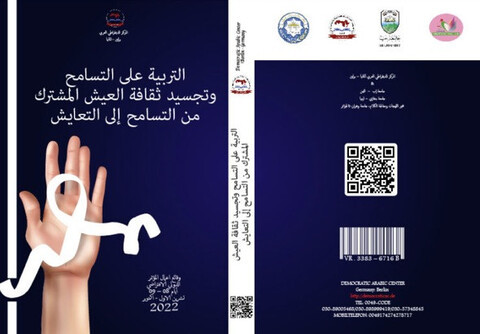 Tolerance Education and the Embodiment of Coexistence Culture: From Tolerance to Coexistence Year of publication: 2022 Corporate author: Democratic Arab Center The concept of tolerance has received great attention in light of contemporary societal changes in order to ensure the stability of society and the coexistence of its members in harmony and peace, in addition to its importance at the level of relations between countries.Tolerance is a human value of a universal nature. The concept of tolerance emerged from the need of societies mired in war and civil strife. It gave remarkable progress to societies and institutions in the West, and liberated people from the shackles of fear. The concept of tolerance established more humane laws and imposed on countries new patterns of thinking. And using reason to devise ways to avoid violence and intolerance for humanity. The United Nations has committed to strengthening tolerance by promoting mutual understanding between cultures and peoples.The United Nations Educational, Scientific and Cultural Organization, UNESCO, became aware of the issue of the culture of tolerance and issued, on November 16, 1995, a declaration containing the basic principles of tolerance as an educational, psychological and social culture. Since the twenty-eighth session of the UNESCO General Conference, this day has become an international day for tolerance.
 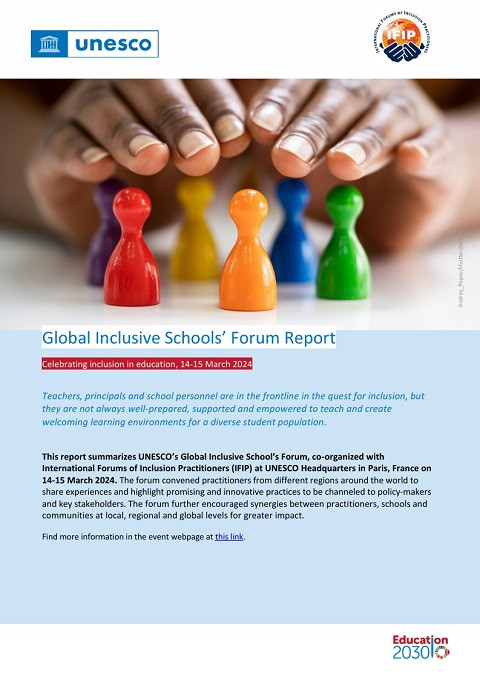 Global Inclusive Schools’ Forum Report: Celebrating Inclusion in Education, 14-15 March 2024 Year of publication: 2024 Corporate author: UNESCO | International Forums of Inclusion Practitioners This report summarizes UNESCO’s Global Inclusive School’s Forum, co-organized with International Forums of Inclusion Practitioners (IFIP) at UNESCO Headquarters in Paris, France on 14-15 March 2024. The forum convened practitioners from different regions around the world to share experiences and highlight promising and innovative practices to be channeled to policy-makers and key stakeholders. The forum further encouraged synergies between practitioners, schools and communities at local, regional and global levels for greater impact.