
Resources
Explore a wide range of valuable resources on GCED to deepen your understanding and enhance your research, advocacy, teaching, and learning.
8,364 Results found
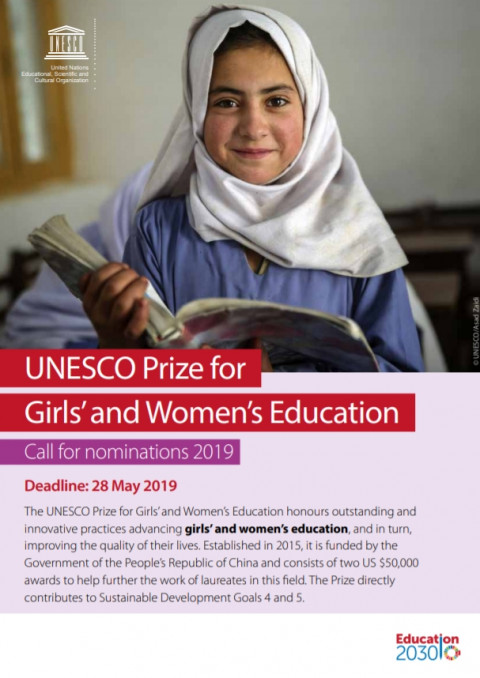 UNESCO Prize for Girls' and Women's Education: call for nominations 2019 Year of publication: 2019 Corporate author: UNESCO The UNESCO Prize for Girls’ and Women’s Education honours outstanding and innovative practices advancing girls’ and women’s education, and in turn, improving the quality of their lives. Established in 2015, it is funded by the Government of the People’s Republic of China and consists of two US $50,000 awards to help further the work of laureates in this field. The Prize directly contributes to Sustainable Development Goals 4 and 5.
 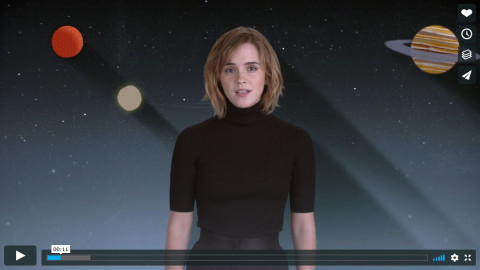 [Video] The World’s Largest Lesson Part 2 - With Thanks to Sir Ken Robinson and Emma Watson Year of publication: 2016 Corporate author: World’s Largest Lesson Sir Ken Robinson, Emma Watson and Aardman Animations invite children to get involved in the Global Goals for Sustainable Development by inventing, innovating and campaigning.To show the version with English subtitles please go to: vimeo.com/181766755
 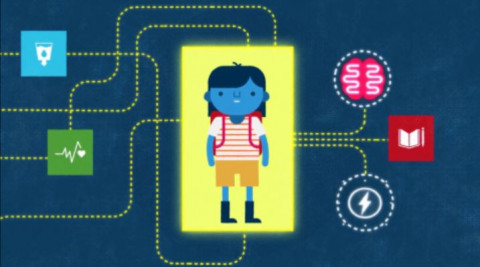 [Video] The Global Goals Food Project: Every Plate Tells a Story Year of publication: 2017 Corporate author: World’s Largest Lesson The World’s Largest Lesson brings the Global Goals to children all over the world, reaching over 130 countries and millions of children since its launch in September 2015.Produced by Project Everyone and delivered in partnership with UNICEF and many NGOs, private sector organisations and foundations, the World’s Largest Lesson reaches students through multiple channels. Ministries of Education are invited annually to take part. NGOs distribute digital content through their networks and education organisations, both for and non-profit, encourage participation through their communities.
  [Video] Transforming Education for Humanity Year of publication: 2017 Corporate author: Mahatma Gandhi Institute of Education for Peace and Sustainable Development (MGIEP) UNESCO MGIEP focuses on achieving the UN Sustainable Development Goal 4.7 towards education for building peaceful and sustainable societies across the world by developing programmes that promote socio-emotional learning, innovate digital pedagogies and empower the youth.
  [Video] Learning about SDG 4 Year of publication: 2017 Corporate author: United Cities and Local Governments (UCLG) Life is continual learning, we learn to read to understand a constantly changing role, to participate and to live together. We learn in the classroom and beyond its world. Cities are places of opportunity but they can be also be places of exclusion. There are 758 million people over the age 15 in the world who can't read or write. Two out of three of them are women. Local governments because they are close to the people are able to respond to their needs and contribute to create equal educational opportunities. They work to ensure that facilities are ideal for learning and community life. They promote the adoption of sustainable life styles and provide education in values. Local government work with educators and administrations to ensure adequate resources and to improve education. In all these ways local governments contribute to achieve sustainable development goals for ensuring inclusive and quality education for all and promote lifelong learning.
  [Video] SDG 4 Data to Get All Children in School and Learning by 2030 Year of publication: 2018 Corporate author: UNESCO Institute for Statistics (UIS) This video speaks in a simple and easy to understand language about the importance of data in achieving SDG 4. It is through data that success and failure can be identified and measure to build upon the successes or tackle the failures can be developed. Go straight to the source for global education data with the UNESCO Institute for Statistics http://on.unesco.org/SDG4web
 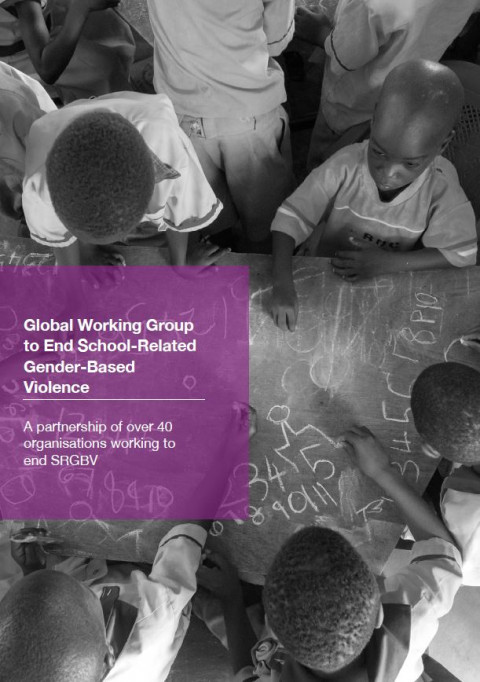 Global Working Group to End School-Related Gender-Based Violence Year of publication: 2017 Corporate author: United Nations Girls' Education Initiative (UNGEI) In August 2014, a coalition of governments, development organizations, civil society activists, UN agencies and research institutions came together to collaborate on ending gender-based violence in and around schools.The Global Working Group to End SRGBV has been a strong advocate to ensure that schools remain safe places for learning and that girls and boys have the opportunity to acquire the knowledge, skills and resources they need to reach their potential.To learn more about the group and its members, please go here:www.ungei.org/srgbv
  [Video] Citizenship and Human Rights Education for Change Year of publication: 2019 Corporate author: Global Campus of Human Rights In increasingly selective, violent and intolerant times, it becomes crucial to reinforce our capacities to deal with topical, controversial and contested issues undermining our human dignity and to promote the supportive values of non-discrimination, democracy, intercultural dialogue and peace. Teaching and learning about democratic citizenship, human rights and EU common values represents an opportunity to react and counter the negative forces of our time.This MOOC aims to foster the promotion of Human Rights Education and EU common values through the transfer of knowledge about the definitions, frameworks and content of Human Rights Education as well as the analysis of existing and innovative practices on teaching styles, approaches and methods.
  The Ontario Curriculum, Grades 11 and 12 : Canadian and World Studies Year of publication: 2015 Corporate author: Ontario (Canada). Ministry of Education In Canadian and world studies, students develop skills, knowledge and understanding, and attitudes that will serve them both inside and outside the classroom, including in the world of work and as responsible citizens in the various communities to which they belong.The focus of teaching and learning in the Canadian and world studies curriculum is the development of ways of thinking and of transferable skills that students need in order to acquire and apply knowledge and understanding. Students apply these ways of thinking and skills in a variety of contexts to examine information critically; to assess the significance of events, developments, and processes; to develop an understanding of and respect for different points of view; to reach supportable conclusions; and to propose solutions to, and courses of action to address, real problems.Citizenship education is an important facet of students’ overall education. In every grade and course in the Grade 11 and 12 Canadian and world studies curriculum, students are given opportunities to learn about what it means to be a responsible, active citizen in the community of the classroom and the diverse communities to which they belong within and outside the school. It is important for students to understand that they belong to many communities and that, ultimately, they are all citizens of the global community.
 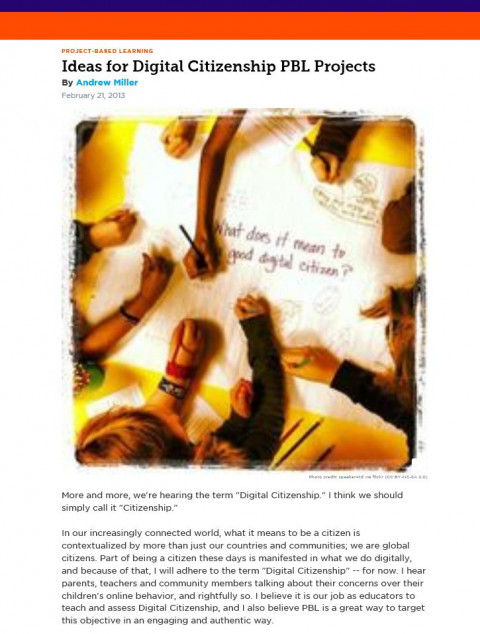 Ideas for Digital Citizenship PBL Projects Year of publication: 2013 Author: Andrew Miller In our increasingly connected world, what it means to be a citizen is contextualized by more than just our countries and communities; we are global citizens. Part of being a citizen these days is manifested in what we do digitally, and because of that, I will adhere to the term "Digital Citizenship" -- for now. I hear parents, teachers and community members talking about their concerns over their children's online behavior, and rightfully so. I believe it is our job as educators to teach and assess Digital Citizenship, and I also believe PBL is a great way to target this objective in an engaging and authentic way.