
Resources
Explore a wide range of valuable resources on GCED to deepen your understanding and enhance your research, advocacy, teaching, and learning.
8,364 Results found
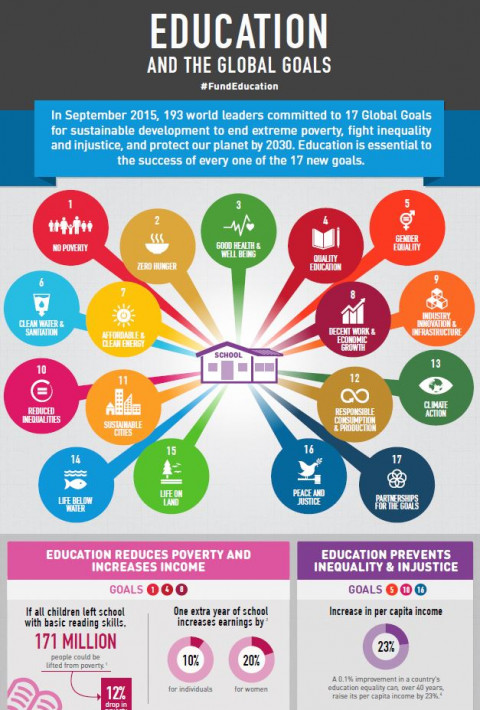 Education and the Global Goals Year of publication: 2015 Corporate author: Global Partnership for Education (GPE) In September 2015, 193 world leaders committed to 17 Global Goals for sustainable development to end extreme poverty, fight inequality and injustice, and protect our planet by 2030. Education is essential to the success of every one of the 17 new goals.To learn more: https://www.globalpartnership.org/blog/17-ways-education-influences-new-17-global-goals
 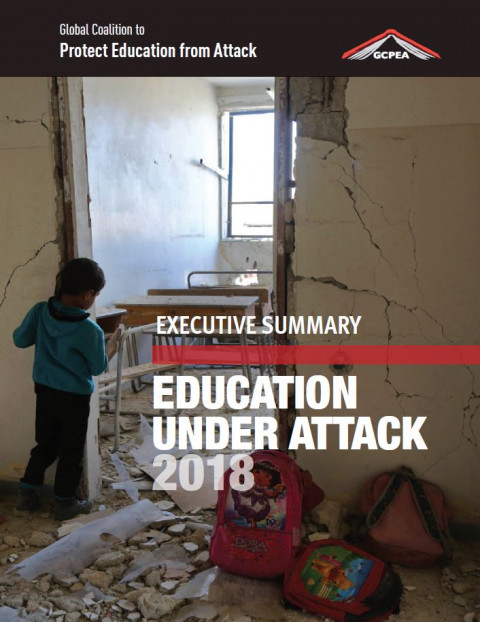 [Summary] Education Under Attack 2018; Executive Summary Year of publication: 2018 Corporate author: Global Coalition to Protect Education from Attack (GCPEA) A global study of threats or use of force, either deliberate or indiscriminate, against students, teachers, academics, education support and transport staff or education officials, and against schools, universities and other education institutions carried out for political military, ideological, sectarian, ethnic or religious reasons from 2013 to 2017.
 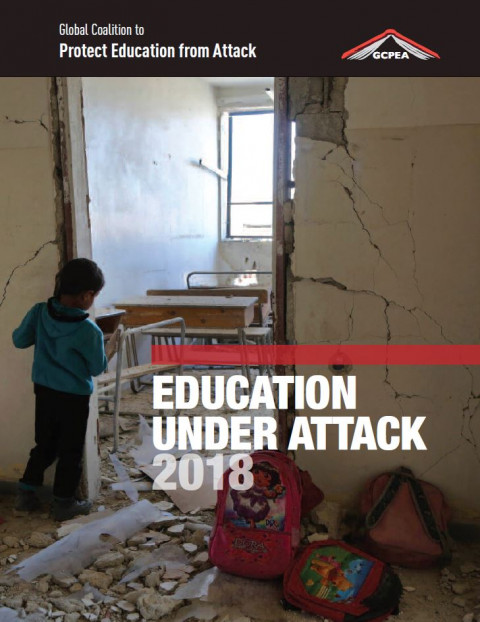 Education Under Attack 2018 Year of publication: 2018 Corporate author: Global Coalition to Protect Education from Attack (GCPEA) This report is the fourth edition of Education under Attack. It builds on the 2014 study published by the Global Coalition to Protect Education from Attack and the 2007 and 2010 publications by the United Nations Educational, Scientific and Cultural Organization (UNESCO). The present edition covers the five-year period from January 2013 to December 2017. The previous edition included profiles of 30 countries that had experienced at least five incidents of attacks on education in which students or education personnel were harmed, including at least one direct attack or one person killed, between 2009 and mid-2013. The current study includes profiles of 28 countries that experienced at least 20 attacks on education during the 2013-2017 reporting period, regardless of the severity of the incidents. Although significant data gaps remain and data quality varies, reporting of attacks on education has become more comprehensive and systematic over the last five years.Each country profile includes information on six categories of attacks on education, as relevant: Physical attacks or threats of attacks on schools Physical attacks or threats directed at students, teachers, and other education personnel Military use of schools and universities Child recruitment at, or en route to or from, school or university Sexual violence by armed parties at, or en route to or from, school or university Attacks on higher education
 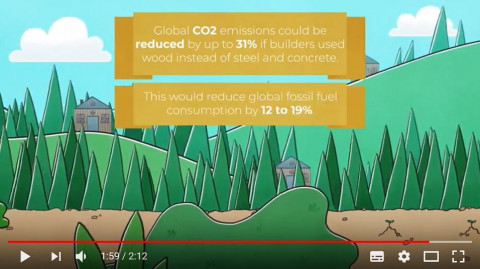 [Video] The Three Little Pigs and Climate Change: The Benefits of Wood as a Low-emission Construction Material Year of publication: 2018 Corporate author: United Nations Economic Commission for Europe (UNECE) | Poland. Ministry of Environment | State Forests Poland Wood can play a crucial role in cutting down emissions when replacing more carbon-intensive materials in the construction sector. The cartoon entitled “The Three Little Pigs & Climate Change”, reminds us that carbon emissions of concrete and steel respectively are 40 and 30 percent higher than those of wood.This video was a joint production of the Forest, Land and Housing Division of the United Nations Economic Commission for Europe, the Polish Ministry of the Environment and State Forests Poland. The video was launched at the 24th Conference of the Parties to the UN Framework Convention on Climate Change (COP24), held in Katowice, Poland, from 2 to 14 December 2018, where global action to reduce emissions and keep global warming within the temperature limits of the Paris Agreement was discussed.UNECE works to promote sustainable solutions for climate neutral buildings:http://www.unece.org/housing.htmlTogether with FAO, it also works to promote the sustainable management of forests:http://www.unece.org/forests/welcome.html
 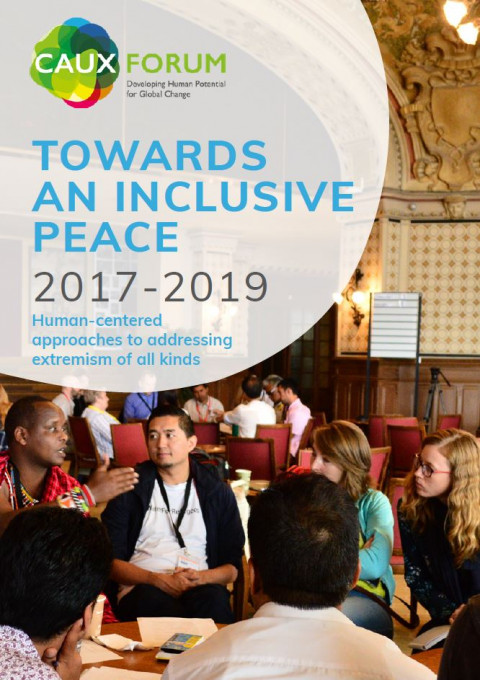 Towards an Inclusive Peace, 2017-2019: Human-centered Approaches to Addressing Extremism of All Kinds Year of publication: 2018 Author: Eliana Jimeno | Johannes Langer Corporate author: Initiatives of Change Switzerland Current approaches to violent extremism which excessively focus on counter terrorism and increasing military capacity, have failed to either stop violence or create peace. On the contrary, they have led to distrust in government institutions and alienation of large sections of the population.Doubling down on these past approaches will not resolve the issue. A new approach is needed and Towards an Inclusive Peace can offer it. Come and learn about human-centred approaches that prioritize sustainable peace, while dealing with root causes, advancing human rights, strengthening communities and enabling development.
 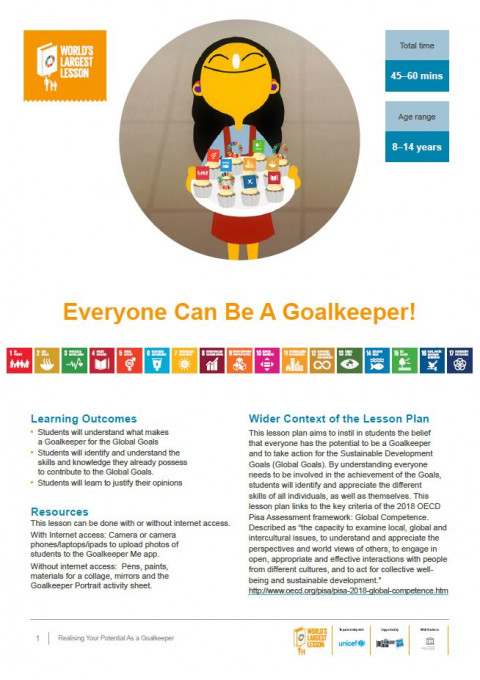 Everyone Can Be a Goalkeeper! Corporate author: World’s Largest Lesson Learning Outcomes• Students will understand what makes a Goalkeeper for the Global Goals• Students will identify and understand the skills and knowledge they already possess to contribute to the Global Goals.• Students will learn to justify their opinions Resources This lesson can be done with or without internet access.With Internet access: Camera or camera phones/laptops/ipads to upload photos of students to the Goalkeeper Me app.Without internet access: Pens, paints, materials for a collage, mirrors and the Goalkeeper Portrait activity sheet. Wider Context of the Lesson PlanThis lesson plan aims to instil in students the belief that everyone has the potential to be a Goalkeeper and to take action for the Sustainable Development Goals (Global Goals). By understanding everyone needs to be involved in the achievement of the Goals, students will identify and appreciate the different skills of all individuals, as well as themselves. This lesson plan links to the key criteria of the 2018 OECD Pisa Assessment framework: Global Competence.Described as “the capacity to examine local, global and intercultural issues, to understand and appreciate the perspectives and world views of others, to engage in open, appropriate and effective interactions with people from different cultures, and to act for collective wellbeing and sustainable development.”
 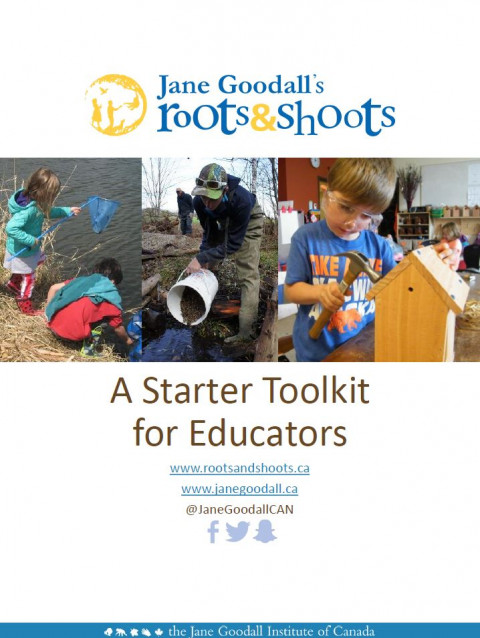 Jane Goodall's Roots & Shoots: A Starter Toolkit for Educators Year of publication: 2016 Corporate author: Jane Goodall Institute of Canada This toolkit (Jane Goodall's Roots and Shoots) is designed to assist you as you guide young people on their Roots & Shoots journey. Whether you’re an educator, parent or trusted adult, you’ll find something useful to inspire the youth around you to make a positive difference for people, animals and the environment we all share.Jane Goodall’s Roots & Shoots is humanitarian and environmental education and youth empowerment program of the Jane Goodall Institute and is active in 87 countries. The program inspires and prepares young people to become compassionate conservation leaders who are globally mindful and locally active by guiding them through youth-led, community projects that help people, other animals and the environment. This toolkit will help educators or parents looking to inspire young people to make a positive difference in the community or young people wanting to lead the change themselves.
 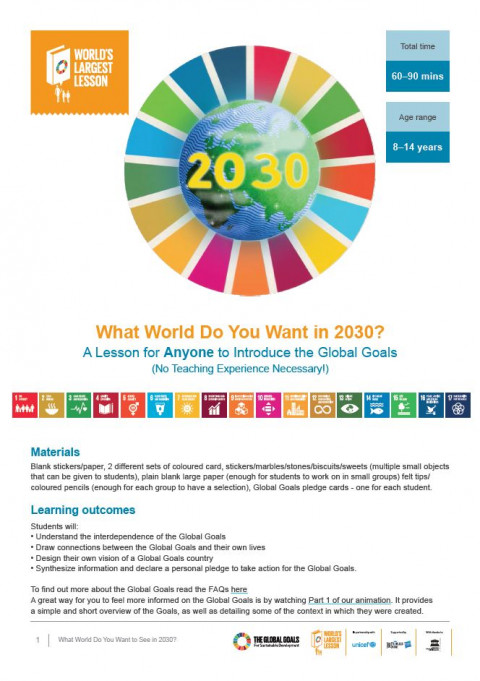 What World Do You Want in 2030?: A Lesson for Anyone to Introduce the Global Goals Year of publication: 2018 Corporate author: World’s Largest Lesson MaterialsBlank stickers/paper, 2 different sets of coloured card, stickers/marbles/stones/biscuits/sweets (multiple small objects that can be given to students), plain blank large paper (enough for students to work on in small groups) felt tips/coloured pencils (enough for each group to have a selection), Global Goals pledge cards - one for each student. Learning outcomesStudents will:• Understand the interdependence of the Global Goals• Draw connections between the Global Goals and their own lives• Design their own vision of a Global Goals country• Synthesize information and declare a personal pledge to take action for the Global Goals.
 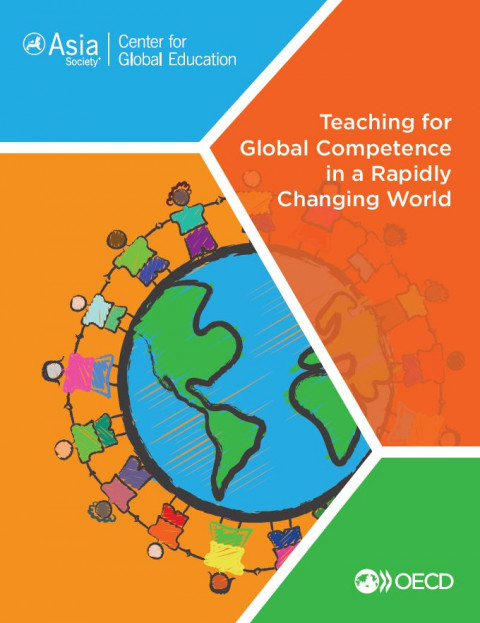 Teaching for Global Competence in a Rapidly Changing World Year of publication: 2018 Author: Richard Lee Colvin | Virginia Edwards Corporate author: Asia Society | Organisation for Economic Co-operation and Development (OECD) Educators and education systems worldwide are reassessing the knowledge, skills, and dispositions students need for success in today's rapidly changing and complex world. In a remarkable moment of global consensus, the member states of both the United Nations (UN), through its adoption of the Sustainable Development Goals (SDGs) in 2015, and the Organisation for Economic Co-operation and Development (OECD), through its Programme for International Student Assessment (PISA) in 2018, prioritized education for global citizenship and global competence.The OECD and the Center for Global Education at Asia Society have worked with academics, educators, and stakeholders in the global education field over several years to define global competence for primary and secondary education. The Center also has extensive experience supporting educators to integrate global competence into their teaching.A new publication from both organizations, entitled Teaching for Global Competence in a Rapidly Changing World, sets forward a new framework for global competence developed by OECD, which aligns closely with the definition developed by the Center for Global Education, and provides practical guidance and examples of how educators can embed global competence into their existing curriculum, instruction, and assessment.
  Global Education for Ontario Learners: Practical Strategies - A Summary of Research Year of publication: 2018 Author: Caroline Manion | Nadya Weber Corporate author: Ontario (Canada). Ministry of Education This summary report flows from the policy outlined in Ontario’s Strategy for K–12 International Education (OME, 2015). The report highlights current knowledge about good and/or promising practices in global education1 in order to suggest practical strategies for improved teaching, learning, and achievement. The intended audience for this piece includes all education stakeholders – community members, parents, learners, system leaders, school leaders, and educators – as active agents of change in support of an education strategy designed to integrate global perspectives, cultures, and experiences in the curriculum and learning environment. The purpose is to enable students to develop the competencies they will need to thrive as citizens in an increasingly globalized world.The discussion is organized by theme. To underline why global education is critically important for Ontario learners, we begin by outlining the significant contributions global education can make to the well-being of individuals and society as a whole. We then provide an overview synthesizing different conceptualizations of “global education” and “global citizenship education”, as well as a broad range of their overlapping sub-concepts. Next, through a review of the international literature on the subject, we present a series of challenges and opportunities for implementing global education, and list pertinent examples of good practices associated with delivering global education. A further section focuses on good practice in building system capacity and leadership for effective global education. We conclude by identifying key messages and lessons learned.