
Resources
Explore a wide range of valuable resources on GCED to deepen your understanding and enhance your research, advocacy, teaching, and learning.
8,370 Results found
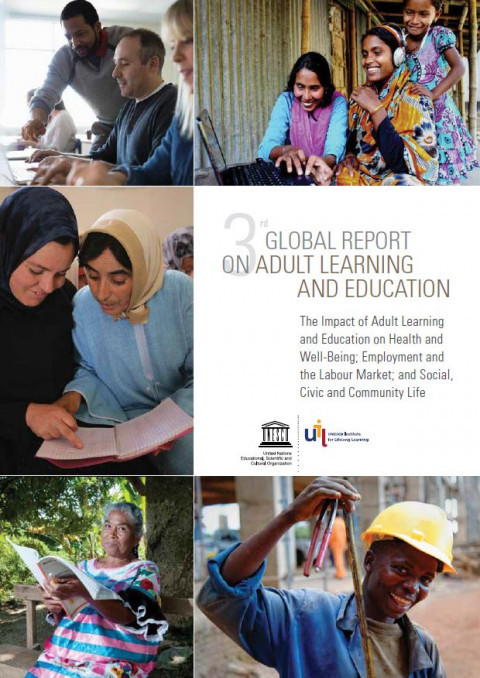 3rd Global Report on Adult Learning and Education: The Impact of Adult Learning and Education on Health and Well-being, Employment and the Labour Market, and Social, Civic and Community Life Year of publication: 2016 Corporate author: UNESCO Institute for Lifelong Learning (UIL) The Global Reports on Adult Learning and Education (GRALE) play a key role in meeting UNESCO’s commitment to monitor and report on countries’ implementation of the Belém Framework for Action. This Framework was adopted by 144 UNESCO Member States at the Sixth International Conference on Adult Learning and Education (CONFINTEAVI), which was held in Belém, Brazil, in 2009. In the Belém Framework for Action, countries agreed to improve ALE across five areas of action: policy; governance; financing; participation, inclusion and equity; and quality (UNESCO Institute for Lifelong Learning, 2010b).GRALE III appears as the ALE community prepares for an important global conference: the 2017 Mid-Term Review of CONFINTEA VI. GRALE III will help high-level decision makers take stock of progress in delivering their Belém promises since 2009. It will also help them look ahead to 2030. Policymakers are now considering how to put into practice the ALE promises made in the 2030 Agenda for Sustainable Development (United Nations, 2015) and the Recommendation on Adult Learning and Education (2015) (UNESCO, 2015). GRALE III will support their deliberations by showing how ALE can help achieve broader health, economic and social outcomes. It will identify major challenges for ALE and examine the implications for ALE of major global trends like migration and demographic shifts.GRALE III brings together the latest data, policy analysis and case studies on ALE. Government leaders will find high quality evidence to inform their policies, strategies and budgets. Proponents of change will find compelling arguments showing how ALE promotes sustainable development, healthier societies, better jobs and more active citizenship. Policy analysts will find entry points and ideas for future research and policy.
 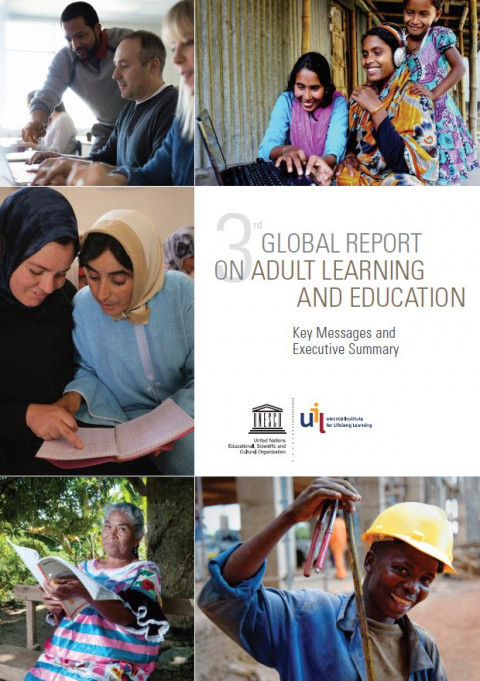 [Summary] 3rd Global Report on Adult Learning and Education: The Impact of Adult Learning and Education on Health and Well-being, Employment and the Labour Market, and Social, Civic and Community Life; Key Messages and Executive Summary Year of publication: 2016 Corporate author: UNESCO Institute for Lifelong Learning (UIL) The third Global Report on Adult Learning and Education (GRALE III) draws on monitoring surveys completed by 139 UNESCO Member States to develop a differentiated picture of the global state of adult learning and education (ALE). It evaluates countries’ progress in fulfilling the commitments they made in the Belém Framework for Action, which was adopted at the Sixth International Conference on Adult Education (CONFINTEA VI) in 2009.In addition, the report examines the impact of ALE on three major areas: health and well-being; employment and the labour market; and social, civic and community life. GRALE III provides policymakers, researchers and practitioners with compelling evidence for the wider benefits of ALE across all of these areas. In so doing, it highlights some of the major contributions that ALE can make to realizing the 2030 Agenda for Sustainable Development. This report is guided by three goals: first, to analyse the results of a monitoring survey of UNESCO Member States, and to take stock of whether countries are fulfilling the commitments they made at CONFINTEA VI; second, to strengthen the case for adult learning and education with evidence of its benefits on health and well-being,employment and the labour market, and social, civic and community life; and third, to provide a platform for debate and action at national, regional and global levels.
 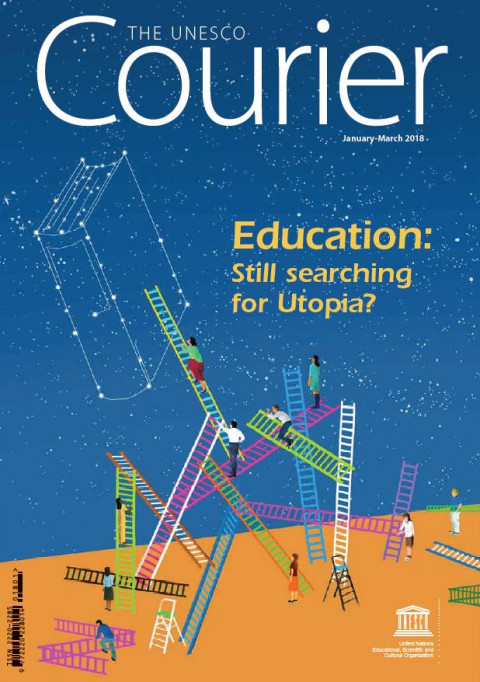 Education: Still Searching for Utopia? (The UNESCO Courier no. 1, January-March 2018) Year of publication: 2018 Corporate author: UNESCO At a time of heightened global tension, when human rights, freedom of speech, peace and the future of the planet itself may seem challenged as never before, the transformational power of education is of critical importance.In Learning: The Treasure Within, the landmark Report to UNESCO by the International Commission on Education for the Twenty-first Century in 1996, Jacques Delors, then Chairman of the Commission (1992 to 1996), spoke of education as “the necessary Utopia” and “an indispensable asset in its attempt to attain the ideals of peace, freedom and social justice.”Education was held up as neither miracle nor magic, but rather the best means to foster a climate where humanity would be improved −. and where the rich potential for learning, inherent in every individual, would be tapped. Our humanity is confronted with a very strange paradox: the world’s population has never been better educated, and yet, according to the UNESCO Institute for Statistics, 263 million children and young people are out of school, 617 million children and adolescents worldwide do not meet the minimum threshold for literacy and mathematics, at least 750 million adults are illiterate, and girls remain more likely than boys to never set foot in a classroom. Yet education is still called upon to address inequalities, poverty, terrorism and conflict. It is seen as one of the keys to global citizenship and sustainable development, two of UNESCO’s fields of action. The Organization is also mandated to lead the Education 2030 global agenda with a special focus on ensuring that no one is left behind. Under the title, “Education: Still searching for Utopia?”, the UNESCO Courier evaluates the state of global education and explores how it responds to some of the main challenges we face.
 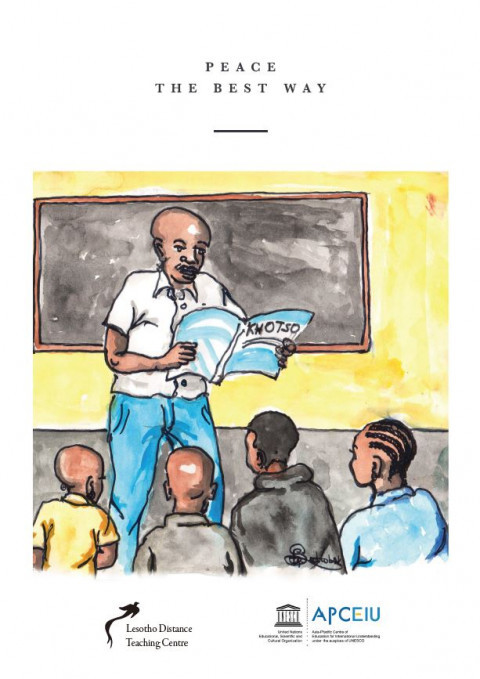 Peace the Best Way Year of publication: 2017 Corporate author: Lesotho Distance Teaching Centre (LDTC) The storybook titled “Peace, the Best Way (Ngoan’a Khotso Ha a Lebale Tsa Khotso)” is an end-product of Workshop in Lesotho on GCED: Teacher Training on Peace Education & GCED Learning Material Development held between 12 and 14 of July 2017. During the workshop, participants created learning materials on peace and conflict transformation based on what they have learned throughout the sessions.The authors share their stories of conflicts that they encounter in their everyday lives and further identify ways of managing and resolving the conflicts in a peaceful manner to let everyone live in harmony. They hope to instill the importance of peace not only to the adults reading the book, but also to the younger generation who learn from their parents and adults of the community.The book published in English as well as Sesotho, will be used as teaching and learning resources for learners and also be disseminated to public locations including schools, community centers and libraries.For more information on the Workshop, Please click here.
 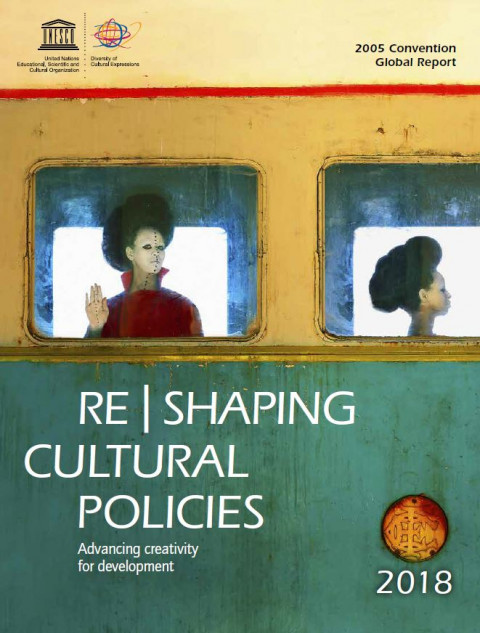 Re|shaping Cultural Policies: Advancing Creativity for Development; 2005 Convention Global Report, 2018 Year of publication: 2018 Corporate author: UNESCO The Global Report series has been designed to monitor the implementation of the UNESCO Convention on the Protection and Promotion of the Diversity of Cultural Expressions (2005). It also provides evidence of how this implementation process contributes to attaining the United Nations 2030 Sustainable Development Goals and targets.The 2018 Global Report analyses progress achieved in implementing the 2005 Convention since the first Global Report was published in 2015.Grounded in the analysis of the Quadrennial Periodic Reports submitted by Parties to the Convention and relevant new findings, this report examines how the 2005 Convention has inspired policy change at the global and country level in ten areas of monitoring. It puts forward a set of policy recommendations for the future, addressing the adaptation of cultural policies to rapid change in the digital environment, based on human rights and fundamental freedoms.When deployed together, the two editions of the Global Report are beginning to produce new and valuable evidence to inform cultural policy making and advance creativity for development.
 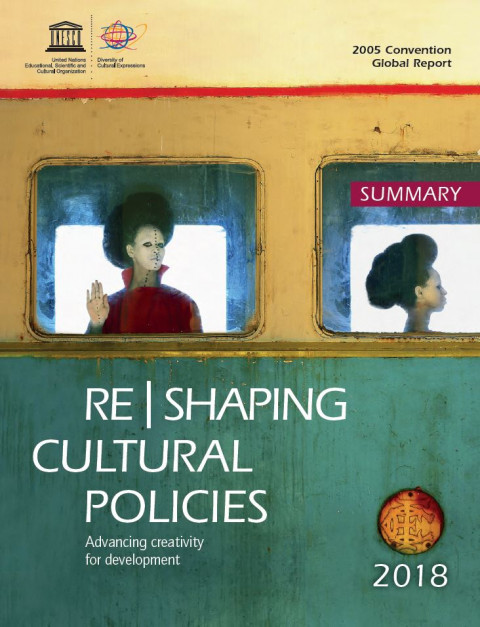 [Summary] Re|shaping Cultural Policies: Advancing Creativity for Development; 2005 Convention Global Report, 2018: Summary Year of publication: 2017 Corporate author: UNESCO The Global Report series has been designed to monitor the implementation of the UNESCO Convention on the Protection and Promotion of the Diversity of Cultural Expressions (2005). It also provides evidence of how this implementation process contributes to attaining the United Nations 2030 Sustainable Development Goals and targets.The 2018 Global Report analyses progress achieved in implementing the 2005 Convention since the first Global Report was published in 2015.Grounded in the analysis of the Quadrennial Periodic Reports submitted by Parties to the Convention and relevant new findings, this report examines how the 2005 Convention has inspired policy change at the global and country level in ten areas of monitoring. It puts forward a set of policy recommendations for the future, addressing the adaptation of cultural policies to rapid change in the digital environment, based on human rights and fundamental freedoms.When deployed together, the two editions of the Global Report are beginning to produce new and valuable evidence to inform cultural policy making and advance creativity for development.
  CONFINTEA VI Mid-Term Review: Report of the Conference Year of publication: 2017 Author: Clinton Robinson Corporate author: UNESCO Institute for Lifelong Learning (UIL) The Sixth International Conference on Adult Education (CONFINTEA VI), held in Brazil in 2009, closed with the adoption of the Belem Framework for Action (BFA), which recorded the commitments of Member States and presented a strategic guide for the global development of adult learning and education. The third Global Report on Adult Learning and Education (GRALE 3), published in 2016, drew on survey data to evaluate progress made by countries in fulfilling the commitments made in Brazil.The CONFINTEA VI Mid-Term Review, held in Suwon, Republic of Korea, in October 2017, took stock of progress made by Member States in the past eight years, looking ahead to GRALE 4 in 2019 and CONFINTEA VII in 2021.This report summarizes the discussions that animated the Mid-Term Review conference and gives readers a brief survey of the key issues concerning progress against the BFA, across all world regions.
 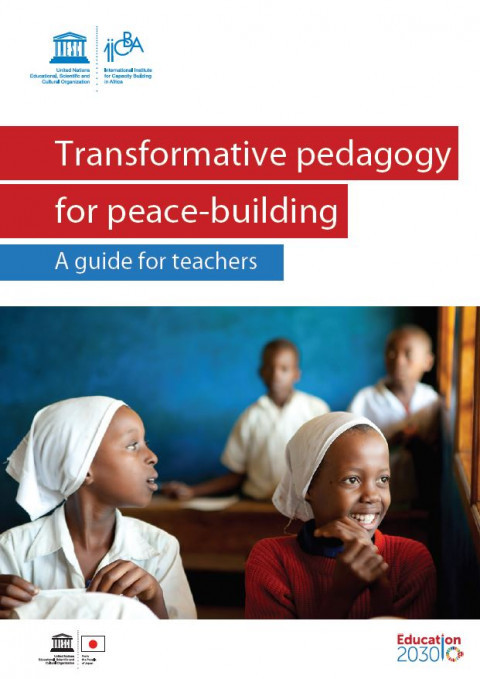 Transformative Pedagogy for Peace-building: A Guide for Teachers Year of publication: 2017 Corporate author: UNESCO International Institute for Capacity-Building in Africa (IICBA) This publication is a guide for teachers and teacher trainers on transformative pedagogy so that they are able to empower youth with peace-building knowledge, skills and competencies necessary to develop into advocates and actors of peace.The guide particularly aims to introduce teachers to the foundation of conflict analysis and peace-building and to equip them with a learner-centered approach to peace education and community engagement.This guide is a resource for educators to engage and support youth in their journey to becoming active peace-builders and fostering transformation in the Horn of Africa and Surrounding Countries.
 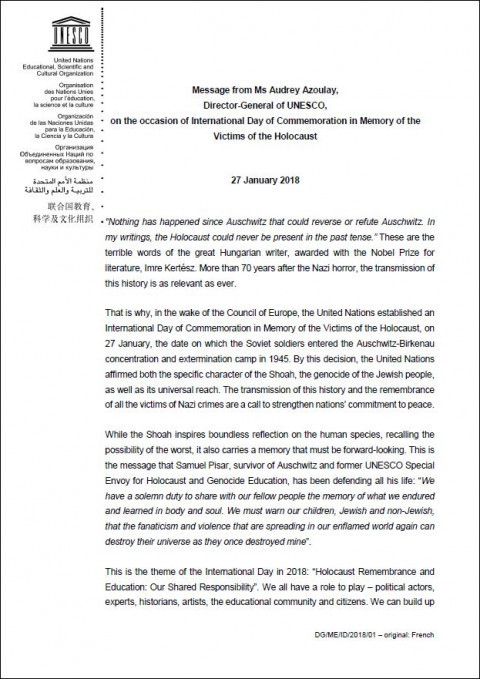 Message from Ms Audrey Azoulay, Director-General of UNESCO, on the occasion of International Day of Commemoration in Memory of the Victims of the Holocaust Year of publication: 2018 Corporate author: UNESCO. Director-General, 2009-2017 (Bokova, I.G.) This message was delivered by Audrey Azoulay, Director-General of UNESCO, on the occasion of International Day of Commemoration in Memory of the Victims of the Holocaust, on 27 January 2018.
  Meeting on Learning to Live Sustainably in Cities in Latin America and the Caribbean, Villa María, Argentina (26-28 April 2017): Meeting Report Year of publication: 2017 Corporate author: UNESCO Villa Maríia, the first Argentinian city to join the UNESCO Global Network of Learning Cities (GNLC), co-hosted the first GNLC meeting in the region, titled ‘Learning to live sustainably in cities in Latin America and the Caribbean’. This three-day event was a joint effort of the City of Villa Maríia, the UNESCO Institute for Lifelong Learning (UIL), UNESCO Headquarters, and the UNESCO Regional Bureau for Education in Latin America and the Caribbean (OREALC/UNESCO Santiago). Participants explored new ways to implement sustainable solutions at the local level, as well as increase awareness and training related to Education for Sustainable Development (ESD). More than 170 city representatives from over 40 cities and 20 countries (including mayors and deputy mayors, experts, authorities and practitioners) were welcomed by the host city. The first day of the meeting was composed of plenary sessions; the second day consisted of two parallel workshop sessions: (1) a regional workshop on the Global Action Programme (GAP) on ESD and Cities, and (2) a regional workshop on learning cities.