
Resources
Explore a wide range of valuable resources on GCED to deepen your understanding and enhance your research, advocacy, teaching, and learning.
8,354 Results found
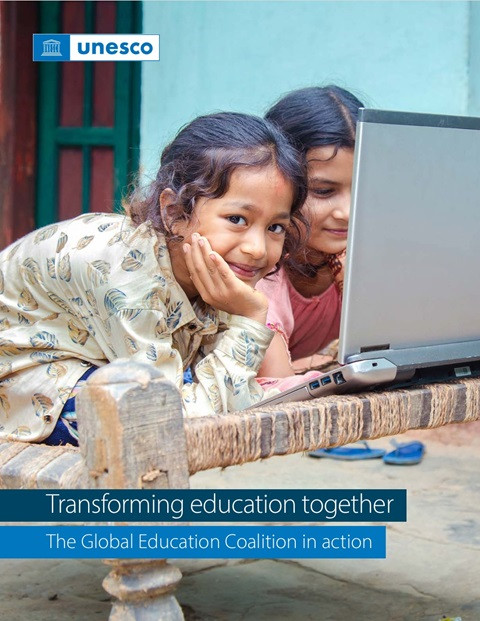 Transforming Education Together: The Global Education Coalition in Action Year of publication: 2023 Corporate author: UNESCO The Global Education Coalition, launched by UNESCO, is a platform for col-laboration and exchange to protect the right to education during this unprec-edented disruption and beyond. This is the fourth progress report of the Coalition and builds on the inaugural document released in September 2020 and the first annual report published in March 2021. This document covers activity between November 2021 and March 2023.
  Research on Child Labour in Agriculture in Eastern Europe and Central Asia Year of publication: 2024 Author: Абдолова Садаф | Янбых Рената | Серова Евгения Corporate author: Народонаселение The article deals with the problem of child labor in agriculture in Eastern Europe and Central Asia. An analysis of the legislation of these countries and scientific literature allowed us to uncover the causes and formulate some recommendations for preventing and reducing the use of child labor in agriculture in Eastern Europe and Central Asia. The article was prepared on the basis of a study conducted by The Institute of Agricultural Research of the Higher School of Economics in cooperation with the Food and Agriculture Organization of the United Nations (FAO) and the International by the International Labour Organization (ILO) in 2021.
  Global Capacity-Building Workshop on GCED 2023: Follow-Up Activity Report Year of publication: 2023 Corporate author: APCEIU This report summarizes 15 GCED projects implemented by the selected mentees/grantees of APCElU's 8th Global Capacity-Building Workshop on GCED on 13-21 July 2023. The projects include teacher training workshops, curriculum development, school-based activities, and community development projects, undertaken by educators, teachers, and practitioners in Asia, Europe, Africa, Latin America, and the Caribbean. The mentees/grantees first participated in the 8th Global Capacity-Building Workshop on GCED in August 2023. After completing the Workshop, graduates submitted GCED proposals to be selected as grantees/mentees. The selected 15 mentees/grantees were matched with expert mentors who guided them in their project development and implementation. This report describes the summary of 15 projects held in different corners of the world along with their outputs.
  2023 Asia-Pacific Training Workshop on EIU: Mentorship Programme Final Report Year of publication: 2023 Corporate author: APCEIU Asia-Pacific Training Workshop on EIU/GCED (APTW) is APCEIU's flagship Training of Trainers (TOT) programme for educators and teacher trainers in the Asia-Pacific region. Over the last 23 years, APCEIU benefitted more than 650 educators through the workshop. Especially, since 2021, the workshop has been carried out online training workshops, mentorship, and local project implementation to further support the participants to bring positive and sustainable changes in their local communities. In 2023, the 22nd APTW was virtually held from 30 May to 8 June with the theme of 'GCED as a Common Vision for Change.' 56 enthusiastic educators from 16 UNESCO member states in the Asia-Pacific region joined the programme. The workshop provided a venue to learn and discuss how GCED could contribute to transforming current education. This report summarizes 14 GCED projects implemented in the Asia-Pacific region by the 22nd APTW alumni who participated in the mentorship programme.
  Greening Education Partnership: Getting Every Learner Climate-Ready Year of publication: 2024 Corporate author: UNESCO Bangkok The UN Secretary-General calls the climate crisis ‘a battle for our lives’, as we still struggle to transform our societies to reach the 1.5°C-degree path recommended by the Paris Agreement. Rapid and radical transformation at all levels and in many aspects of our life is required, with education as a central and powerful means to support the adaptation and strengthening of the resilience of learners and societies. It is also important to ensure that education systems become more resilient to climate change to create safe and climate-proof schools. Building off of the knowledge and practice accumulated in Education for Sustainable Development (ESD), a new Greening Education Partnership aims to deliver strong, coordinated and comprehensive action which will prepare every learner to acquire the knowledge, skills, values, and attitudes to tackle climate change and to promote sustainable development.
  Harnessing the Power of the Social and Human Sciences to Shape Inclusive, Sustainable, and Just Societies in South-East Asia: A Position Paper Year of publication: 2023 Author: Phinith Chanthalangsy Corporate author: UNESCO Bangkok This paper provides an overview of the Social and HumanSciences (SHS) Unit, UNESCO Regional Office in Bangkok holisticapproach to building a more just and fair society for all in theSouth-East Asian region toward 2030 and beyond. The paperprovides two sections focused on thechallengesidentified in theregion and some potentialpathways for the future, from thepoint of view of UNESCO’s Social and Human Sciences Sector. The content of this paper has been discussed with aregionalexpert consultative group that gathered in Bangkok during aMOST regional Conference on 22–23 June 2023. The paper offersgrounds forstrategic orientations and partnershipsin keydomains where UNESCO's expertise in the social and humansciences can make a difference in South-East Asia
  Freedom of Expression Toolkit: A Guide for Students Year of publication: 2013 Corporate author: UNESCO Everyone should have all the necessary tools and mechanism to allow the free flow of information. Much has been written about freedom of expression, indeed it is one of the most debated concepts and issues of our times. However, few such publications are written with youth as the main target readers, especially for young women and men still in high schools and pre-university level. This Toolkit is one such tool targeted at high schools and pre-university students. Young women and men must be empowered and literate in the issues and concepts of freedom of expression in order to become a discerning citizen in a democracy.
  Supporting Schools’ and Teachers’ Use of Assessment to Inform Learning of All Students (Using Assessment Data in Education Policy and Practice: Examples from the Asia-Pacific issue 5, December 2023) Year of publication: 2023 Author: Ursula Schwantner | Soumaya Maghnouj Corporate author: UNESCO Bangkok | Australian Council for Educational Research (ACER) In more than half of Asia-Pacific countries, a majority of learners in primary and secondary education do not have the required foundational skills. The fifth issue of the topical case studies series 'Using Assessment Data in Education Policy And Practice: Examples From The Asia-Pacific' under the Network for Education Quality Monitoring in Asia-Pacific (NEQMAP), documents four promising practices from countries in the Asia-Pacific region on how education systems can better support teachers and schools in effectively integrating assessment practices in the teaching and learning process. The goal of this support is to identify and meaningfully address every learner’s needs, so that every learner can learn successfully. The case studies look at a variety of levers that promote a better use of assessment for learning such as how to develop teachers’ assessment literacy and capacity to design, implement and use assessment to inform their classroom teaching and learning; how to improve the use of standardized assessment data to inform teaching and learning and how to rethink the organization of instruction to address the needs of all learners.
  2023 Asia-Pacific Regional Global Citizenship Education (GCED): Network Activities Summary Report Year of publication: 2023 Author: Seek Ling Tan Corporate author: UNESCO Bangkok This is a summary report from the Global Citizenship Education (GCED) network activities in Asia-Pacific in 2023. The Asia-Pacific Regional Global Citizenship Education Network, spearheaded by UNESCO Bangkok and the Asia-Pacific Centre of Education for International Understanding (APCEIU), has illuminated the path to empower learners to become global citizens since its inception in 2018. In 2023, their journey was punctuated by significant milestones and a revitalized commitment to propel GCED across the region. This commitment is particularly evident in the key priority areas of advocacy, capacity building, learning/teaching materials, policy and research and the synergizing of regional collaboration towards Education 2030.
  Navigating Migration and Global Citizenship Education (SangSaeng no. 61, 2023) Year of publication: 2023 Corporate author: APCEIU Migration is reshaping our societies and challenging traditional notions of identity, belonging, and cultural diversity. Global Citizenship Education, with its emphasis on fostering an understanding of global interconnectedness, human rights, social justice, and intercultural competence, is uniquely positioned to address the complex issues arising from migration. In this context, SangSaeng No. 61 explores the multifaceted relationship between migration and GCED to inspire innovative approaches to education and advocacy that address the challenges and opportunities presented by migration. Contents 03 Editor's Note 04 Special Column Renewing Our Commitment — Global Citizenship Education Should Address International Migration / Geon-soo Han 08 FOCUS: Navigating Migration and Global Citizenship EducationAfrican Migration Narratives — Mozambican Migrants in Southern Africa and Trends of African International Migration in Contemporary Africa / Joel das Neves TembeReimagining Thai Society — Burmese Migrant Children and Their Education in Thailand / Nongyao NawaratFortress Europe’s Educational Obstructions — Accessing Education for Refugees and Asylum Seekers in Europe / Prem Kumar RajaramCost of Invasion and Colonial War — Russian Invasion of Ukrainian, Refugees and Migration Governance / Franck DüvellPathway to Empowerment — Self-Reliance: A New Vision Toward Sustainable Solutions for Refugees / Kari Diener 24 Special ReportExploring Transformative Learning for Critical Empowerment through GCED / APCEIU IGCED and RND 26 Best PracticesTaking It Local — Using a Collaborative Approach to Contextualise an International Global Competence Framework / Karena Menzie-BallantyneHarmonizing the Streets for Youth — Jelajah Harmoni: Exploring the Meaning of Harmony through Community-Based Learning / Anna TanTeach to Transform — Creating Empowering Learning Spaces and Building Community of Changemakers / Rajvi Trivedi 35 Story TimeUnparalleled Look into Lives of Migrants / Virginia Pittaro 38 Peace in My MemoryCultivating Tranquillity: Thoughts on Peace / Wisdom Addo 42 GCED YOUTH NETWORKMigration and Global Citizenship Education — Youth Voices from the Ground / Oshan M. GunathilakeEducation without Borders — Empowering Displaced Children and Youth through Global Citizenship Education / Victoria Ibiwoye 48 LetterFacilitating Connections through My Experience with APCEIU / Lorena Gamerra 50 APCEIU in Action