
Resources
Explore a wide range of valuable resources on GCED to deepen your understanding and enhance your research, advocacy, teaching, and learning.
8,354 Results found
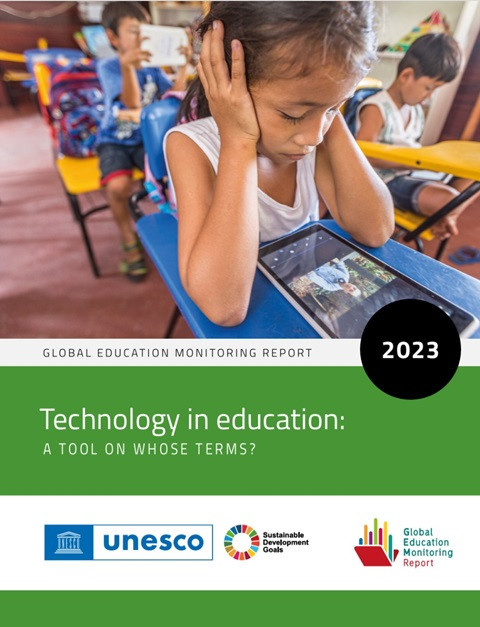 Global Education Monitoring Report 2023: Technology in Education; A Tool on Whose Terms? Year of publication: 2023 Corporate author: UNESCO | Global Education Monitoring Report Team This report recommends that technology should be introduced into education on the basis of evidence showing that it would be appropriate, equitable, scalable and sustainable. In other words, its use should be in learners’ best interests and should complement face-to-face interaction with teachers. It should be seen as a tool to be used on these terms. Midway to the deadline, the 2023 Global Education Monitoring Report assesses the distance still to go to reach the 2030 education targets. Education is the key to unlocking the achievement of other development objectives, not least the goal of technological progress.
  [Executive Summary] Climate Change and Girls' Education: Barriers, Gender Norms and Pathways to Resilience Year of publication: 2023 Corporate author: Plan International This is the Executive Summary for the report: Climate Change and Girls’ Education: Barriers, Gender Norms and Pathways to Resilience. The full technical report and accompanying synthesis report are also available.
  [Technical Report] Climate Change and Girls' Education: Barriers, Gender Norms and Pathways to Resilience Year of publication: 2023 Corporate author: Plan International This is the technical report of the Climate Change and Girls' Education: Barriers, Gender Norms and Pathways to Resilience for further detail on the findings and research itself.
  [Synthesis Report] Climate Change and Girls' Education: Barriers, Gender Norms and Pathways to Resilience Year of publication: 2023 Corporate author: Plan International This research explores the relationship between climate change and girls' education: what are the direct and indirect impacts of climate change on girls' access to school and completion of their education? How do these impacts intersect with existing gender barriers to education? And how does your education help girls respond and adapt to climate change in their communities? A synthesis report and summary are also available, along with the technical report for more details on the conclusions and the research itself.
 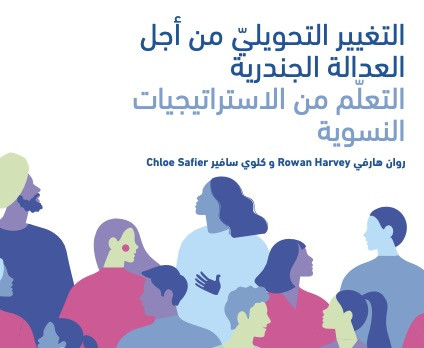 Transformative Change for Gender Equality Learning from Feminist Strategies Year of publication: 2022 Author: Arab Campaign for Education for All Corporate author: Arab Campaign for Education for All This guide was born out of a request from the Center for Gender Justice in Asia of the Friedrich Ebert Foundation. Its aim is to encourage the Friedrich-Ebert Foundation and its partner organizations to reflect on their ways of working, and to provide information to any other organization or individual interested in learning more about feminist strategies for transformative change by taking a closer look at feminist strategies.
  Futures of Education: learning to become - Report on the future of education in the Arab region - Building the future 2020-2050 Year of publication: 2020 Corporate author: UNESCO Institute for Lifelong Learning (UIL) A report that monitors the most important results of the regional and national consultations in the Arab region, which were conducted by the Arab Campaign for Education for All - IKEA and its partners and members in the Arab educational coalitions on the future of education. It comes as part of their contribution to the global Future of Education initiative launched by UNESCO.
 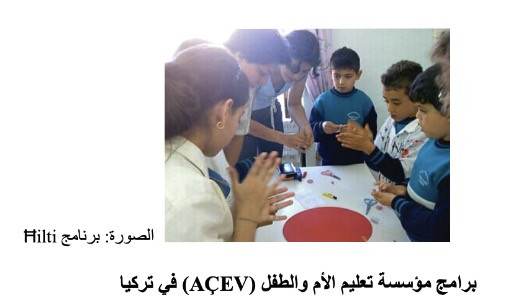 Reaching the Marginalized - Good Practices in Adult Learning and Teaching in the Middle East, Southeast Asia and South Asia Year of publication: 2020 Author: Johann Heilmann | Nazaret Nazaretyan Corporate author: DVV International This publication aims to enrich the theoretical and practical aspects of adult teaching and learning. Providing access to information, communication channels, and exchange, which will serve to deepen knowledge, experience, and increase cooperation in adult education at the international level.
 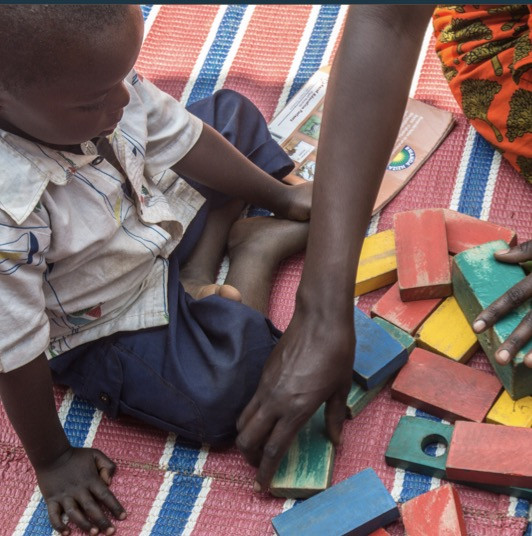 Promoting Climate-Sensitive Early Childhood Care and Education in Emergencies Year of publication: 2023 Corporate author: Inter-agency Network for Education in Emergencies (INEE) This brief addresses a gap in climate change and education literature: young children who are affected by crises. Climate mitigation and adaptation efforts often exclude early childhood care and education (ECCE), especially in crises and emergencies. Therefore, the brief outlines multisectoral ECCE interventions that can serve as solutions to broader climate change mitigation and adaptation goals. These interventions look at long-term solutions that reduce children’s exposure to climate change risks. The aim of these long-term solutions is to create new climate-adapted ways of thinking, being, and doing by focusing on care – for each other and for the earth – and by building climate resilience among children and their supporting care systems.
 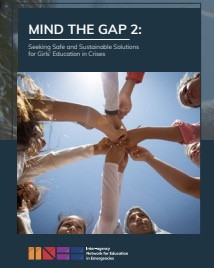 Girls’ Education and Climate Change: Investing in Education for Resilience Year of publication: 2021 Corporate author: Inter-agency Network for Education in Emergencies (INEE) This brief was developed to support dissemination of key messages in Mind the Gap 2: Seeking Safe and Sustainable Solutions for Girls’ Education in Crises. It provides an overview of evidence and gaps on the relationship between girls’ education and climate crises, and recommends actions to mitigate the impacts of climate change on girls’ education and promote resilience.
 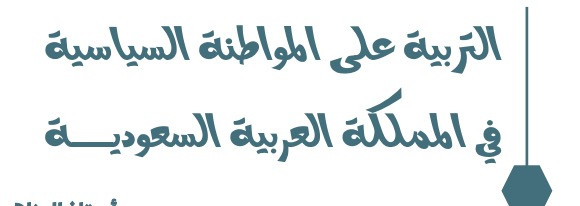 Education on political citizenship in Saudi Arabia Year of publication: 2020 Author: Sara Thonian bin Muhammad Al Saud Corporate author: Al Imam Mohammad Ibn Saud Islamic University (IMSIU) The study under consideration analyses the political citizenship in the Kingdom of Saudi Arabia by employing documentation and a qualitative methodology: the rooted theory method. Indeed, the survey utilizes documents on political citizenship and the surveys of a number of experts specialized in citizenship, educational social studies, geopolitics and politics (precisely 10 scholars).