
Resources
Explore a wide range of valuable resources on GCED to deepen your understanding and enhance your research, advocacy, teaching, and learning.
8,354 Results found
 Korea-Japan Teacher's Network on GCED 2023: Final Report Year of publication: 2023 Corporate author: APCEIU APCEIU launched the Korea-Japan Teachers’ Network on GCED in 2021, and since then, participating teachers from Japan and Korea have engaged in varied activities, including collaborative lesson plan development, online seminars, joint classroom projects, and student exchanges. In 2023, the first in-person training workshop was held in the Republic of Korea. Designed to deepen the understanding of GCED/peace education of participants, strengthen their capacities to foster global citizenship through education, share good practices and cases, and plan for future collaboration, the Workshop was attended by 33 Korean and Japanese teachers who have actively engaged in Network activities, including teacher-student exchange.
 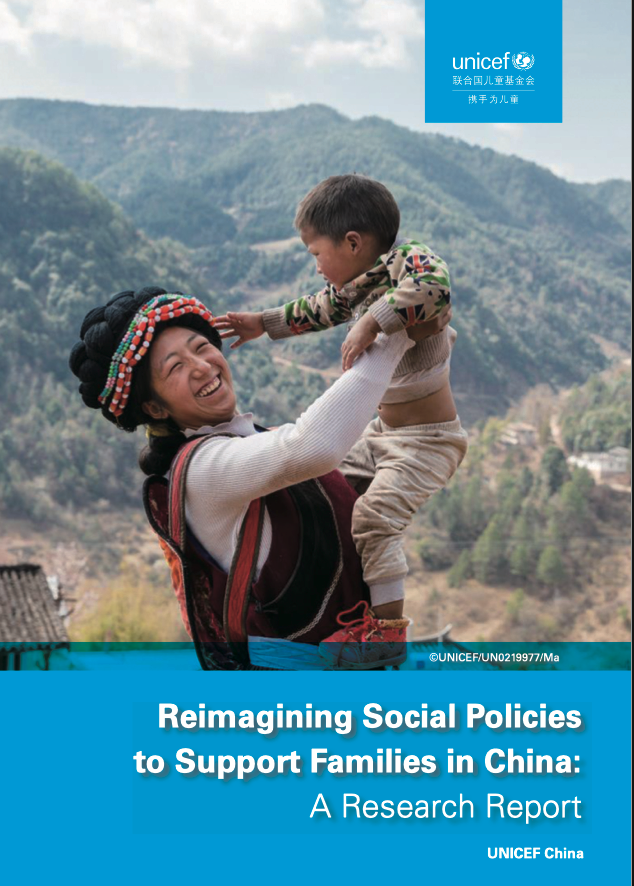 Reimagining Social Policies to Support Families in China: A Research Report Year of publication: 2023 Corporate author: 联合国儿童基金会驻华办事处 There have been significant changes in the population and society in China over recent decades. The birth rate has declined, and the population has aged. The average family size shrank from 3.1 people in 2010 to 2.8 in 2022[i], and the one-child policy has been reversed. Urbanization, rural-urban migration and the growth of the informal sector have changed how people live and work. Gender inequality persists, with women frequently facing discrimination and barriers to employment. All these changes have implications for family policy – statutory policies and government-led programmes that aim to improve conditions for adult family members, particularly those caring for children up to the age of 18.A new report, ‘Reimaging Social Policies to Support Families in China’ by UNICEF synthesizes the context and challenges of family policies in China and reviews over 180 evaluations of family policies worldwide. The report highlights case studies of policies that could be adapted and incorporated into family policy in China, and it identifies implications for designing and implementing innovative policy.
  7th Global Capacity-Building Workshop on GCED: Mentorship Programme Activity Report Year of publication: 2023 Corporate author: APCEIU This report summarizes 15 GCED projects implemented by the selected mentees/grantees of APCElU's 7th Global Capacity-Building Workshop on GCED in 2022. 15 GCED initiatives, including teacher training workshops, curriculum development, school-based activities, and community development projects, have been taken by educators, teachers, and practitioners in Asia, Europe, Africa, Latin America, and the Caribbean. The mentees/grantees first participated in the 7th Global Capacity-Building Workshop on GCED in September 2022. After the completion of the Workshop, graduates submit the GCED proposals to be selected as the grantees/mentees. The selected 15 mentees/grantees are matched with expert mentors to be guided for their project development and implementation. This report describes the summary of 15 projects held in different corners of the world, along with its outputs.
  Popular Education and Critical Pedagogies in Latin America and the Caribbean: Emancipatory Currents for Public Education in the 21st Century Year of publication: 2018 Author: Estela Quintar | Inés Cappellacci | Anahí Guelman | Claudia Loyola | María Mercedes Palumbo | Shirly Said | Laura Tarrio | Silvya De Alarcón | Beatriz Areyuana | Fabián Cabaluz | Felipe Zurita | Jonathan Piedrahita | Yicel Giraldo | Cindy Guzmán | Yolanda Pino | Andrés Castaño | Mónica Salazar Castilla | Héctor Fabio Ospina | Piedad Ortega Valencia | María Teresa Cruz Bustamante | Juan Carlos Hernández | Cándida Chávez | Ariana Celeste Aquino | Suyapa Pérez | Danilo R. Streck | Alfonso Torres Carrillo | Alfredo Manuel Ghiso | Oscar Jara Holliday Corporate author: Consejo Latinoamericano de Ciencias Sociales (CLACSO) In the pages and chapters of the book you walk through the corners of Bolivia with indigenous voices and struggles, through a Chile and an Argentina that go through stories, struggles and disputes over public affairs in the midst of hostile contexts, through a Central America (El Salvador, Costa Rica and Mexico) that rescues a tremendous legacy of organizational and revolutionary processes, and for Colombia, which in its fight for peace, collects the voices of organized youth. At the same time, this construction takes up great thinkers and collective actors who have enriched the paths of Popular Education and Critical Pedagogies.Thus, crossed by our Latin American history, by the distressing challenges and tensions that democracies go through today in each of our territories and contexts, by the conservative restorations that condition and surround us, Critical Pedagogies and Popular Education cannot but, according to what we have been seeing, that working in defense of the right to education that seems to be liquefying in several of our countries, they cannot help but put on the attire of a teacher to resist, from the state public school, the right to learn from children and young people and the right to be a teacher, to teach, of thousands of teachers who seem to want to be replaced by “educational leaders” and canned technological programs, with very good dividends for their importers.
  Inequalities and Gender Violence in Latin America and the Caribbean Year of publication: 2023 Author: Karina Batthyány Corporate author: Consejo Latinoamericano de Ciencias Sociales (CLACSO) The chapters of this book are the result of the powerful research work carried out within the framework of the call “Inequalities and gender violence in Latin America and the Caribbean", promoted by CLACSO. They seek, as a whole, to outline answers to these questions, through innovative methodologies that redefine conventional tools and give the texts great singularity. The point of view is, in all cases, novel and localized: territorially, but also in terms of theory and epistemology. The reading of This book manages to immerse the reader's gaze in a truly critical approach to the reality of the continent.
  Being and Knowing: Teaching Profile for Sustainable Development and Global Citizenship Year of publication: 2023 Corporate author: InteRed Document of a pedagogical nature that describes the characteristics of the teaching profile necessary to educate in Sustainable Development and Global Citizenship. Identify what skills are necessary to carry out transformative education that responds to global challenges as proposed by social movements, NGOs and civil society. This publication is the result of collaborative work carried out during the years 2022 and 2023 by a Movement 4.7 team formed for this purpose.
  Tourism, Heritage and School: A Journey through the Heritage of Our Country Year of publication: 2017 Corporate author: Argentina. Ministry of Tourism Aimed at students in the final years of primary school, this manual is a tool for the study and learning of world heritage sites in Argentina and their relationship with tourist activity. Designed and created by the Tourism Training Directorate of the Ministry of Tourism of the Argentine Nation.
  Reading and Writing in Digital Culture: Trends and Education Year of publication: 2023 Author: Carina Maguregui Corporate author: Educ.ar This video presents an expanded talk whose central theme or narrative thread, «Reading and writing in digital culture: trends and education», provides a contextual framework for three possible itineraries or expansions: a.) Artificial intelligence as a virtual assistant for writing and other productions; b) Ecosystem of screens and platforms, and c) The right to digital disconnection.Each expansion—itinerary or talk—is self-contained, has a presentation, development and closure. However, the three complement each other and, in some way, dialogue with each other. The most important thing is that they provide a much richer overview.
  Education for Global Citizenship: Promoting Democracy Year of publication: 2019 Author: Manuela Mesa Corporate author: Autonomous University of Madrid | Red Iberoamericana de Investigación sobre Cambio y Eficacia Escolar (RINACE) This paper makes a reflection on the role of education in the current international context, marked by profound changes and by a situation of uncertainty and instability and reverse in rights. It discusses the various interpretative frameworks that explain the current world and that are articulated around the global-local axis and ethnic-national identities and multiple identities. In a world characterized by the complexity and speed of changes, it is very important to overcome the the compartmentalization of knowledge in areas such as mathematics, social, language, etc and look for global approaches. Education as a transformative practice cannot be outside of the major challenges facing humanity at the national and multilateral. The 2030 Agenda and the Sustainable Development Goals gives opportunities for the consolidation of the Education for Global Citizenship.
 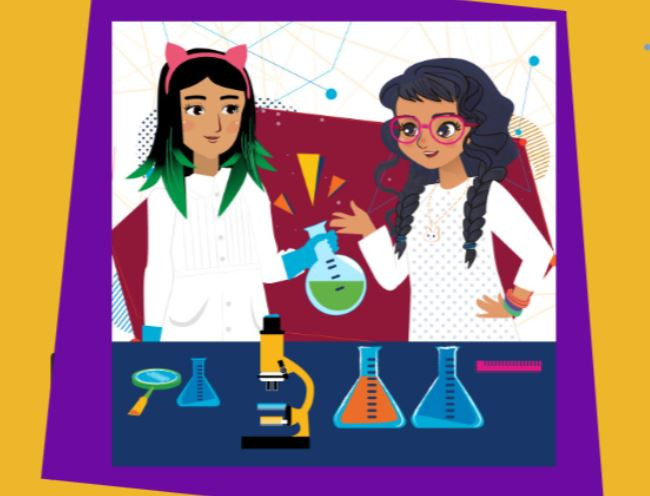 International Day of Women and Girls in Science Corporate author: Global Citizenship (Buenos Aires) Regarding the International Day of Women and Girls in Science, this infographic presents relevant information about the gaps in female participation in research and work on scientific topics. Includes links to support materials.