
Resources
Explore a wide range of valuable resources on GCED to deepen your understanding and enhance your research, advocacy, teaching, and learning.
8,354 Results found
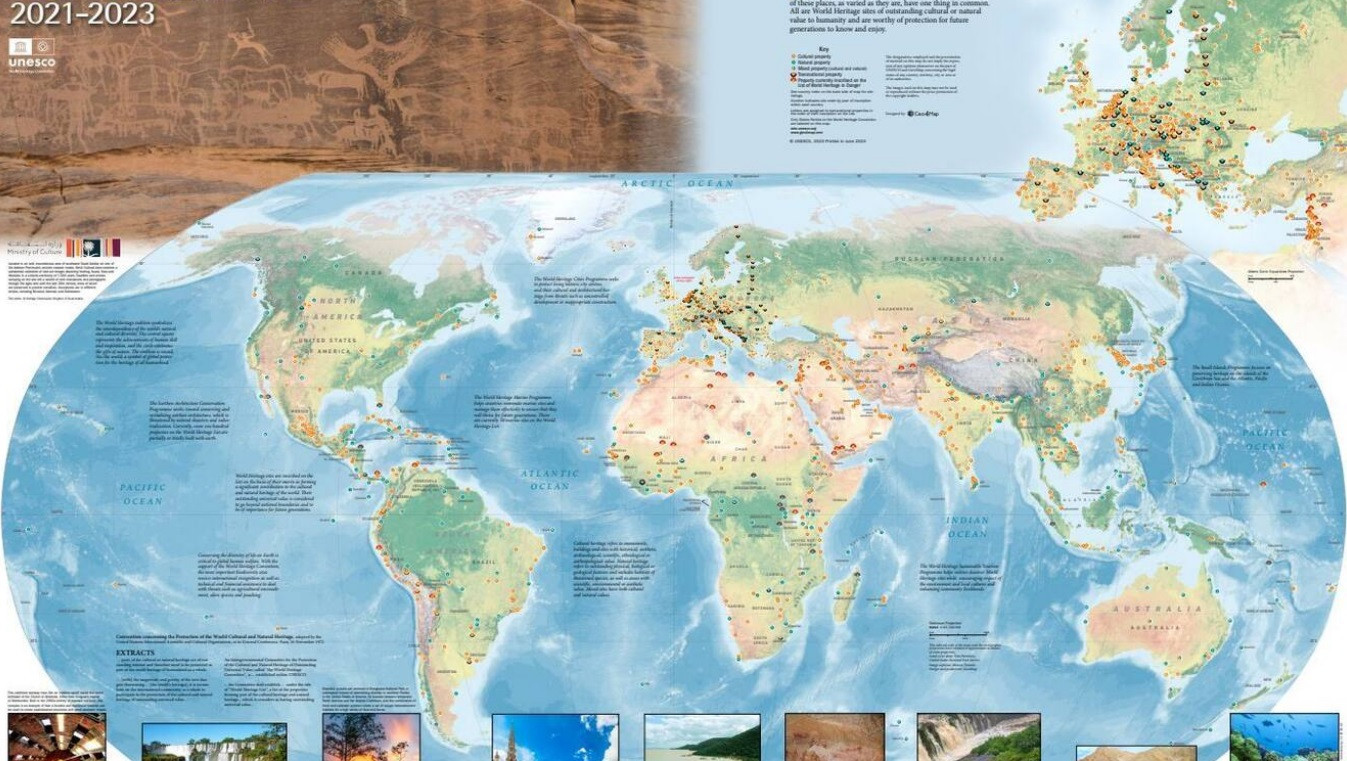 2021-2023 World Heritage Map Published Year of publication: 2023 Corporate author: UNESCO World Heritage Convention The latest version of the World Heritage map, produced by the World Heritage Centre and Geo4Map with the generous support of the Kingdom of Saudi Arabia, can now be ordered from the World Heritage Centre website.The featured image on the map presents the Ḥimā Cultural Area World Heritage property in Saudi Arabia, country hosting the next session of the World Heritage Committee in September 2023.This poster-sized wall map features all 1,157 World Heritage properties and is illustrated with magnificent photos and explanatory captions. It also presents brief explanations of the World Heritage Convention and its related Marine, Earthen Architecture and other conservation programmes.
 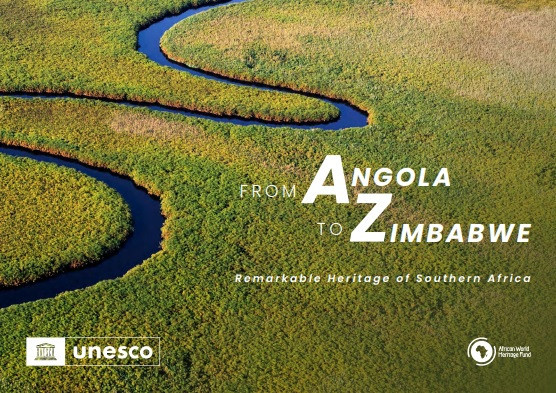 From Angola to Zimbabwe: remarkable heritage of Southern Africa Year of publication: 2022 Corporate author: UNESCO Harare | African World Heritage Fund A celebration of Southern Africa’s rich and diverse heritageToday, Southern Africa’s diverse heritage faces a rising number of challenges which need to be addressed, including climate change, natural disasters, conflicts, urban development and tourism pressures. The region currently has 42 World Heritage sites and 24 Living Heritage elements inscribed on the UNESCO World Heritage and Intangible Cultural Heritage Lists, making it a vibrantly rich home to cultural diversity and human creativity. However, more work needs to be done to further recognize the value of Southern Africa’s multifaceted heritage and enhance its protection in the face of increasing threats.World Heritage sites in the region continue to play an essential role in the lives of the communities who live in and around them, as they constitute a source of pride, history and knowledge, a powerful driver of local economic development, and a vital resource for reconciliation, social integration and sustainable peace. Similarly, Southern Africa’s living heritage elements provide communities with a strong sense of identity and help create a favorable environment for nurturing cultural diversity and human creativity.Inviting you on a journey of discovery from Angola’s Mbanza Kongo to Zimbabwe’s Mbende Jerusarema dance, this publication provides a new outlook on the exceptional heritage that can be found in the countries of the Southern African Development Community region and emphasizes the need for its long-term protection and safeguarding as a shared responsibility.
  Role of Women in Leading Change: Applied Study on Working Women Organizations in Jordan Year of publication: 2020 Author: RukayaAlBadarin The main objective of this study was to explore the role of Jorda- nian women in leading organizational change. The study also aimed to get awareness about the characteristics of leadership skills, the change strategies that women possess/use and their impact on women’s capabil- ities in leading change in Jordanian organizations. To meet the objec- tives of the study, a relevant questionnaire was designed and distributed to all employees in about 18 women’s organizations operating in Jordan, from which (254) questionnaires were suitable for analysis and discussion.
  A Geographical - Political Analysis of the Determinants of women's empowerment in Iraq Year of publication: 2020 Author: Zainab Ali Mazloum, Lateef Kamel Kelaiwy Empowering women is one of the modern topics that geopolitics is concerned with, especially after the United Nations adopted in the eighties of the twentieth century the strategy of empowering women against the background of discrimination against them on the basis of gender and depriving them of equal opportunities compared to males in the fields of learning and work as well as drawing state policy, that empowerment The political status of women is based on two main variables: the first is the removal of legislative, administrative, and social determinants that hinder women's political participation, and the second is the creation of political measures and measures that support women's participation and increase their effectiveness by developing their capabilities, nah As for employing those capabilities in the institutional framework of political units, so states at various levels and orientations, including Iraq, are keen to eliminate gender differences and women's empowerment through achieving comprehensive development in general and political development in particular because they mimic political empowerment, however Iraq has said a lot in this field by doing The many political transformations and wars that affected the state, as well as the great challenges that faced and still face the Iraqi political decision-maker with its various political, security, economic and social dimensions.
  Violence against Women, its forms and Legal Protection Mechanisms against it in light of Law No. 15-19 of 2015 Year of publication: 2020 Author: Houbah Abdel Qader,Awad Fateha Violence against women is a real appearance of a social phenomenon. It has been widespread in recent years since the beginning of this millennium, as violence in its material and moral appearance has become a real threat to all vulnerable groups in societies. Violence against women in all its forms is also considered a crime punishable by law, which requires combating, criminalizing it, and emphasizing its perpetrators. Since violence against women is a crime recognized today locally and internationally, most laws and legislations have come to condemn it. It also recognizes its serious, health and psychological effects on women specifically. This research paper discusses the forms of physical and moral violence practiced against her, and to identify the mechanisms adopted by the criminal Algerian legislator following the recent changes taking place in the Penal Code for the year 2015 in order to combat violence.
  The factors associated with a Woman and Causing her Violence from her Husband from This point of view Psychologists, Social and legal Professionals Working with abused Women Year of publication: 2020 Author: Muhammad Hadi Al Shehri، Abdul Qader Muhammad Atoum This study aimed at investigating the extent and the spread factors related to women, which cause husband’s violence against his wife as perceived by the psychological, social, and legal experts who work with bittered women.The sample of the study consisted of (54) social and psychological workers, and legal experts who answered 62-item questionnaire that covers four domains: personal, health, social, and economic aspect. The results of this analysis revealed that the degree of women–related factors that cause husband’s violence against his wife was moderate. And there wasn’t any significant difference due to being psychological workers, social workers, and legal experts in relation to gender, qualification, specialization, and experience in determining these factors.Moreover, the study revealed that the first and the most frequent domain, which caused husband’s violence, was the social domain (83%) of variation, while health (hygienic) domain became as second (9%) of variation. The third domain was the personal, (5%) of variation. The analysis showed that the economic domain had no effect at all. Regarding the results, the researchers recommended the necessity of implementing prevention and treatment programs in order to overcome the problem of violence practices against women. Furthermore, the researcher recommended the necessity of activating the role of media, in order to shed light upon the violence issue against women for the sake of clarifying and exploring the negative effects of this phenomena on the community in general and the family in particular.
  The Effect of Community-Based Rehabilitation Programs on Behavioral Problems among Children with Disabilities and the Quality of Life of their Families Year of publication: 2022 Author: Mohammad Abedel Hameed This study aimed at revealing the impact of community-based rehabilitation (CBR) programs on behavioral problems of children with disabilities and the quality of life of their families. A sample consisting of (115) families (75 beneficiary families and 40 non-beneficiary families). A behavioral problem scale and a quality of life (QoL) measure were applied. Results indicated statistically significant differences in the degree of behavioral problems between the beneficiaries and non-beneficiaries of CBR in favor of the first group, where the degree of behavioral problems among the children of the beneficiary families was medium, while it was high among the children of non-beneficial families, in addition to differences in the degree behavioral problems attributed to the duration of received services in favor of the longer duration, and no differences attributed to the child gender. Results also indicated statistically significant differences in QoL of families due to receiving CBR services, and the differences were in favor of beneficiary families with average QoL on all dimensions while it was low for non-beneficiary families on all dimensions except for health status.
  The Digital Transformation of Governmental Higher Education Institutions in the Southern Governorates of Palestine Year of publication: 2023 Author: Randa Ead Shrair The article aimed to identify the level of digital transformation in government higher education institutions in the Southern Governorates of Palestine from the point of view of its faculty members and to reveal whether there are statistically significant differences at the significance level (α ≤ 0.05). between the averages of the respondents' responses about the level of digital transformation in Government higher education institutions in the Southern Governorates of Palestine are attributed to the variables: (gender, years of service, academic degree, and specialization); by using the descriptive/surveying, a questionnaire was designed consisted of (30) items distributed on (4) axes. After verifying its validity and reliability, the questionnaire was applied to a stratified random sample of (123) male and female faculty members. The study concluded that the level of digital transformation in higher education institutions was “high" and there were no statistically significant differences between the averages of the respondents' responses about the level of digital transformation in those institutions due to the variables of the study .
  The rights of political women in Islam and their role in the political sphere Year of publication: 2020 Author: Hussein Zubair Thalj Al-Fahdawi | Mayada Ali Abdel Nabi Karim Praise be to God, who by His grace the righteousness is fulfilled and the pitfalls are forced and the honorees and may God’s prayers be granted to the foreboding Bashir and the enlightening OS and all his family and companions.And it was from the success of God Almighty for me to reach, through this study, some results. I summarize it as follows:Islam honored the humanity of man, so he raised it to the highest ranks and did not differentiate between it between a man and a woman. Rather, he made a man (a man and a woman) the most important thing in this universe. Human dignity, and Islam. A man and a woman are obligated to learn and understand everything and agree in religion and science, and commit them to peaceful jihad to spread the supreme belief and meanings both in the field in which he can work.It was clear from the previous presentation that the increased participation of women in political work is a pivotal factor for the advancement of gender equality and women's empowerment, as women participate in political action.And that all areas of political work are legally permissible to be assumed by whoever is her family, man or woman, just as the view of Islam for women is derived from the view of Islam for the honorable man, so there is no distinction or difference, and the provisions of the Sharia in which equality and justice are established and the origin is equal for women and men in the origin of creation and costs Legitimacy, and what is different between them is an exception to the original, and what was an exception, it is not correct to measure it.Finally, what is right in this research is from God Almighty, and all the defects and shortcomings in it are from myself and from Satan, and I cannot conclude this humble research except that Ahmed is the Most High, praise be to God, Lord of knowledge and prayer and peace be upon our Prophet Muhammad and his family and companions and from his family to the Day of Judgment.
  The effectiveness of field training in qualifying students of media faculties for the labor market: Yarmouk and Middle East universities as a model Year of publication: 2023 Author: Saddam Al-Masshaqbah | Ramez Abuhasirah The study aimed to identify the effectiveness of the field training course in raising the capabilities of students of media faculties in public and private Jordanian universities and qualifying them for the labor market. The results showed that the degree of students' commitment to attendance during the field training period in media institutions came to a "huge" degree, at a rate of (39.8%), while the degree of their benefit from field training came to a "medium" degree, at a rate of (29.2%). In: "Journalism Editing," Preparation of Radio and Television Programs," and "The Art of Speaking and Presentation." training" with an arithmetic mean of (4.27) and a high degree. In contrast, the effectiveness of the field training was represented in qualifying students for the labor market by: "recognizing the mechanism of work of the media institution," "acquiring new relationships in the labor market." and "Identifying the problems of workers in media institutions.