
Resources
Explore a wide range of valuable resources on GCED to deepen your understanding and enhance your research, advocacy, teaching, and learning.
8,354 Results found
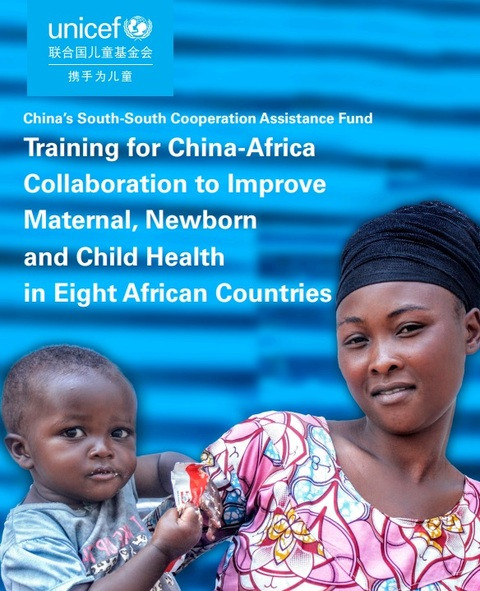 Training to Improve Maternal, Newborn and Child Health in Eight African Countries Year of publication: 2022 Corporate author: UNICEF China This document presents a description of a training program provided by China to improve maternal, newborn, and child health in eight African countries, including training objectives, curriculum design, and rubrics, and summarizes experiences and challenges.
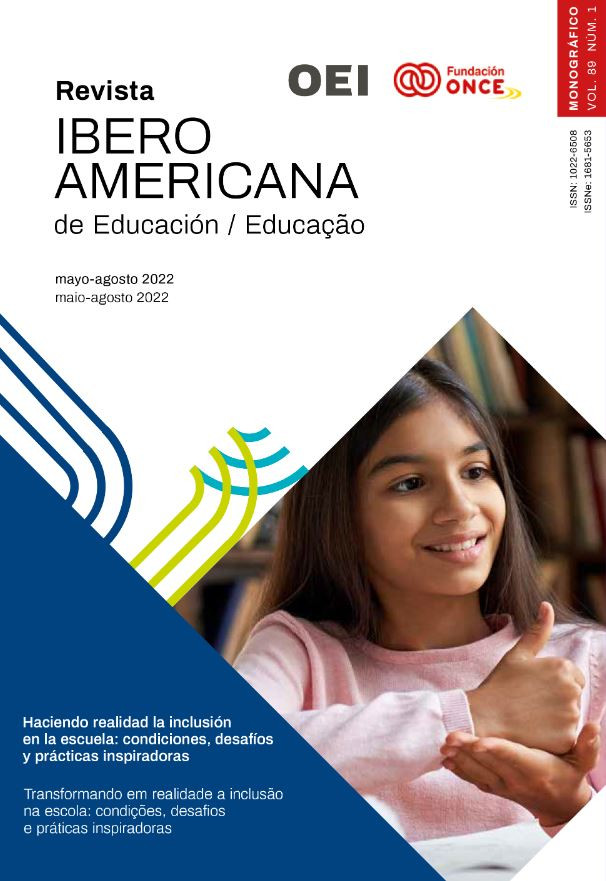
 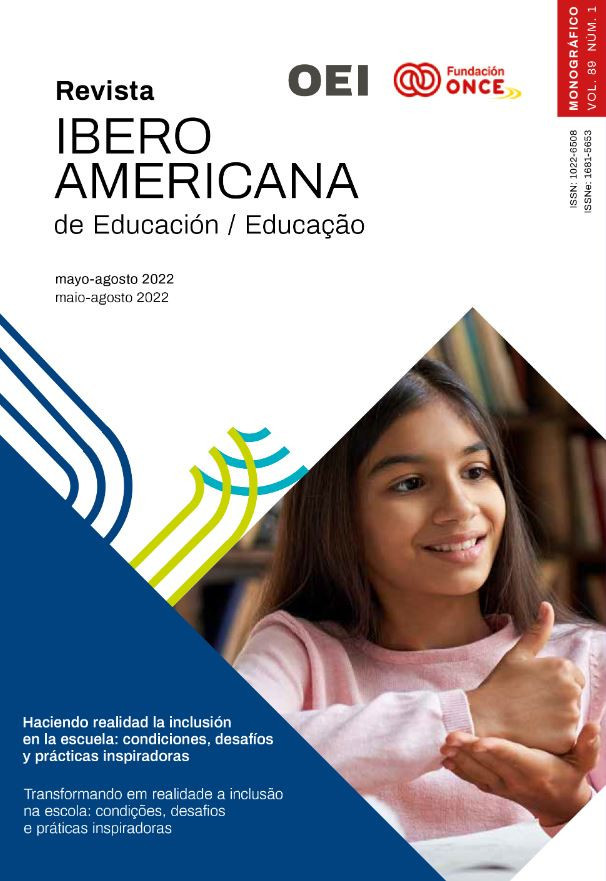 Educational Contexts, Feminism and Gender identities of Adolescents from a Rural Mayan Town in Yucatan (Iberoamerican Journal of Education; vol. 89, no. 1) Year of publication: 2022 Author: Silvia Montejo Murillo Corporate author: Organization of Ibero-American States for Education, Science and Culture (OEI) The purpose of this article is to compare and explore the gender identity of adolescent women from a rural Mayan locality, from two of their educational contexts: the telesecundaria school and daily life in the community. Interviews and participant observation were used to obtain qualitative primary data. Among the main findings, it stands out that the institutional structure and rigidity of the school limits adolescents from being able to act at certain times from social attributes different from those offered by their locality. Likewise, the school contributed to the individualization of the participants and trained them to have foreign values as a desirable representation of “development”, aspects that do not necessarily contribute to the idea of “community”.
 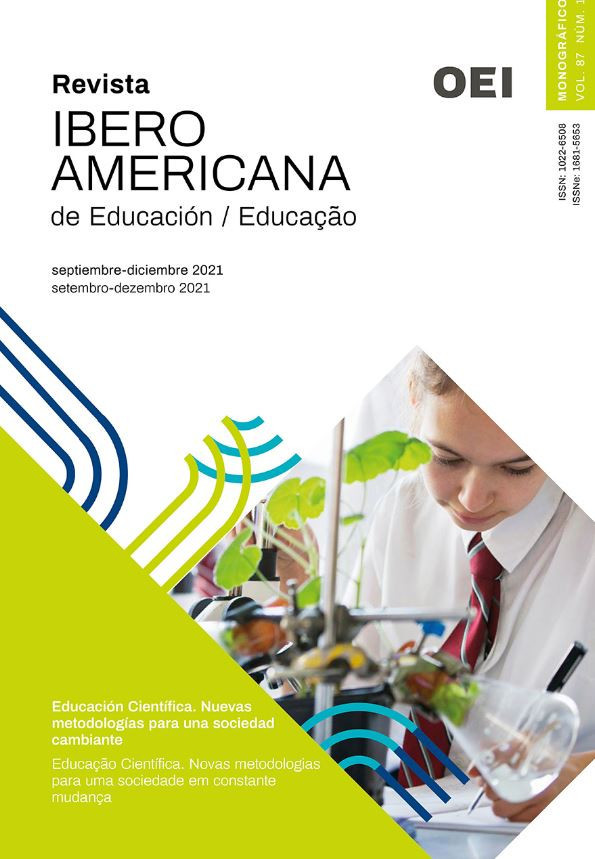 Scientific Education: New Methodologies for a Changing Society (Iberoamerican Journal of Education; vol. 87, no. 1) Year of publication: 2021 Author: F. Javier Perales | David Aguilera Corporate author: Organization of Ibero-American States for Education, Science and Culture (OEI) A society as changing as ours needs changes (innovations) and adaptations in the educational field that allow academics to be combined with social demands. We believe that this first monograph is representative of the richness and diversity of the proposals received which, in turn, constitute a sample of the strength of the community of teachers and researchers in their desire to make science education an attractive and efficient for new generations.
  Teachers and Migrant Families: Pressing Communication (Iberoamerican Journal of Education; vol. 89, no. 1) Year of publication: 2022 Author: Mohamed Chamseddine Habib Allah Corporate author: Organization of Ibero-American States for Education, Science and Culture (OEI) This article presents the results of a study whose objective is to analyze the state of communication between migrant families and teachers in Early Childhood and Primary Education Centers in the Region of Murcia. Two questionnaires were chosen to develop a descriptive non-experimental quantitative research. The main results reveal that extracurricular activities are not part of the usual conversations between families and teachers. However, acceptable but improvable aspects are detected, such as delving into discipline issues, and student learning, etc. On the other hand, it is evident that the parents still do not go to visit the teachers on their own initiative to address the relevant elements of the teaching-learning process of their children.
 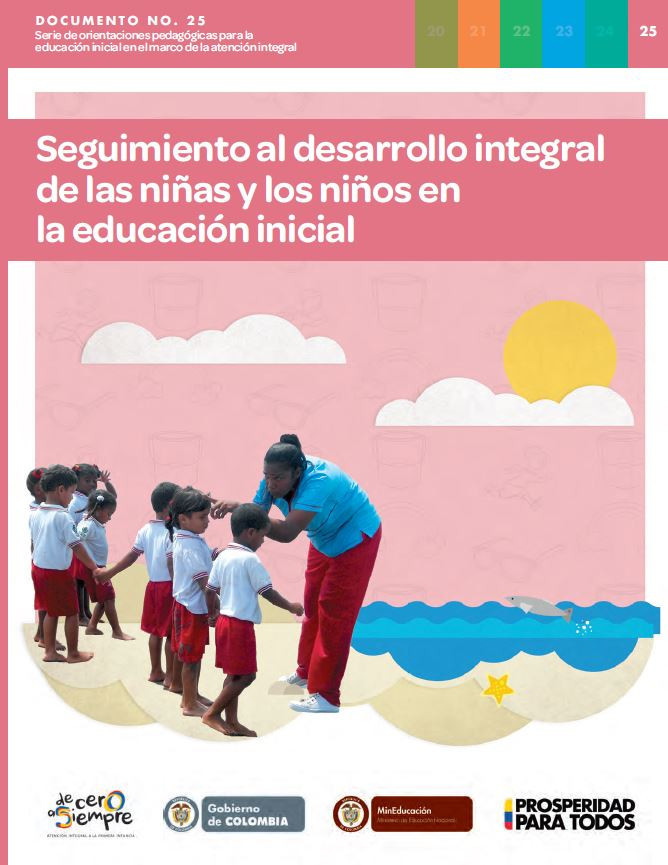 Tracing the Integral Development of Girls and Boys in Early Childhood Education Year of publication: 2014 Author: Sonia Marcela Tellez Corporate author: Colombia. Ministry of National Education This series of pedagogical guidelines for initial education takes up elements of the base document for the construction of the pedagogical guideline for initial education of the Ministry of National Education of Colombia and presents the technical line to favor the development and implementation of initial education within the framework of the Comprehensive care in a pertinent, timely and quality manner, through technical references.
 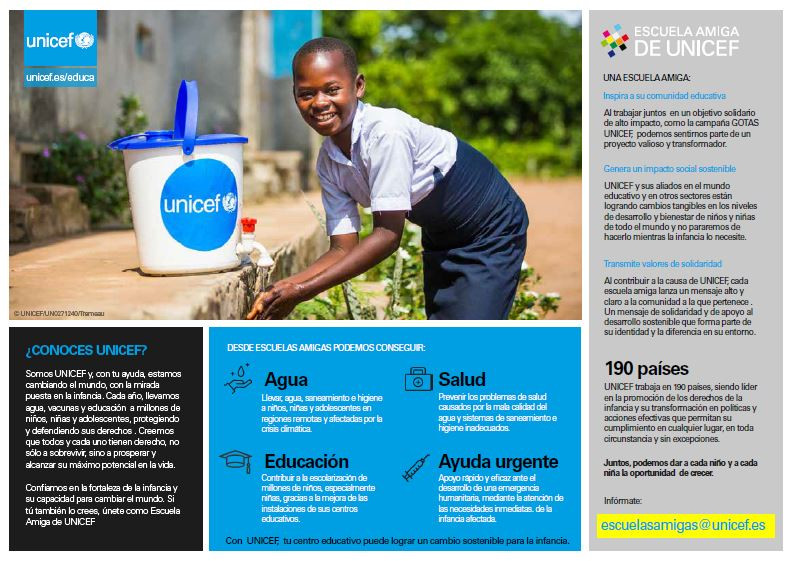 School Friend of UNICEF Year of publication: 2006 Corporate author: UNICEF Spain This infographic presents the program in which each school establishes a personalized commitment to UNICEF in the form of a collaboration agreement by which they undertake, depending on their circumstances, interests and capacity, to carry out different awareness-raising and fundraising activities throughout the school year. The activities can be framed within the GOTAS UNICEF school campaign or directed to an emergency humanitarian action campaign proposed by UNICEF.
  My Plan, My Life and My Future: Pedagogical Guidelines for Economic and Financial Education Year of publication: 2014 Corporate author: Colombia. Ministry of National Education | Asobancaria This document is circumscribed within the framework of the pedagogical component of the EFE program (economic and financial education) and provides pedagogical guidance and tools to teachers, educational directors, parents and officials of the offices of education so that from the role that corresponds to them and, in accordance with the school autonomy established in the General Law of Education, lead the process of incorporating the EFE in the school curricula of the country's educational establishments.
  Discourses on Global Citizenship Education in Africa: Questioning and Answering from a Post-Colonial Perspective (Journal of Education for International Understanding; vol.16, no.3) Year of publication: 2021 Author: Yoonjung Choi | Yeji Kim Corporate author: Korean Society of Education for International Understanding (KOSEIU) Theoretically framed by post-colonialism and critical global citizenship education(GCED), this study explored major discourses on and practices of GCED in African countries through the use of a systematic review method. The findings demonstrated that studies related to GCED in African countries pointed out the limitations of state-centered civic education based on uncritical patriotism and passive citizenship, and further emphasize the importance of promoting more critical and reflective GCED. In addition, research emphasized the implementation of alternative and unique GCED education unique built on indigenous African knowledge and philosophy. This study provides significant insights into GCED in the context of South Korea and discusses the pursuit of globally oriented, sustainable GCED aiming for peace and solidarity around the world.
 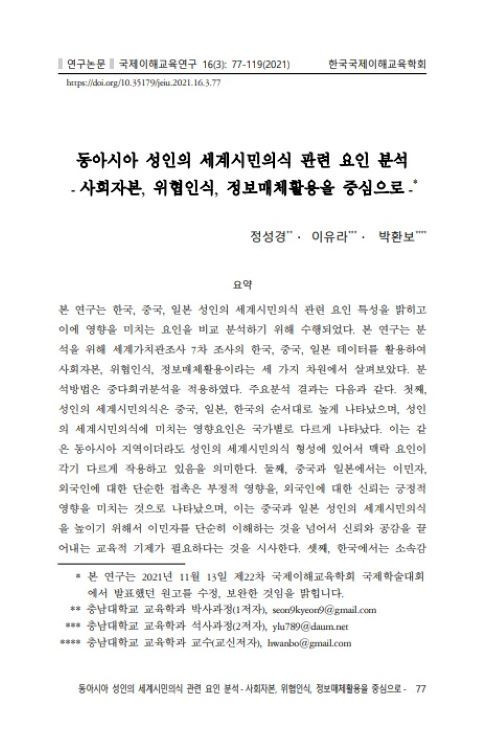 An Analysis of the Factors Affecting East-Asian Adults’ Global Citizenship: Social capital, Threat Recognition, Information Media Utilization (Journal of Education for International Understanding; vol.16, no.3) Year of publication: 2021 Author: Seongkyeong Jeong | Yura Lee | Hwanbo Park Corporate author: Korean Society of Education for International Understanding (KOSEIU) This paper puts an in-depth study on identifying the characteristics of factors related to global citizenship in adults from South Korea, China, and Japan and analyzing the elements affecting them. For this purpose, data from the 7th World Value Survey which was undertaken in South Korea, China, and Japan were used, and they were examined with three different perspectives of social capital, threat recognition, and information media utilization to get to know the influence of variables from various aspects. Multiple regression was applied for this and the results are as follows. Firstly, the global citizenship of adults was high in the order of China, Japan, and South Korea, and the factors influencing global citizenship depend on the country. This implies that contextual factors are acting differently in the formation of the global citizenship of adults even they are from the same East Asian region. Secondly, simple contact with immigrants and foreigners in China and Japan has negative effects while having a positive effect on trust in foreigners. This suggests that an educational mechanism is required to raise trust and empathy beyond understanding immigrants simply to foster global citizenship among Chinese and Japanese adults. Thirdly, depending on the hierarchy of the sense of belonging, the impact on global citizenship was different in South Korea. Educational activities and programs should be implemented to establish the sense of global citizenship of adults in South Korea. Fourthly, the treat perception of social safety and employment insecurity in South Korea and China did not have statistical significance to global citizenship. While the higher the social safety perception the heavier the employment insecurity, adults in Japan had higher global citizenship awareness. This implies that Japanese adults perceive the problems of immigration as a matter of national or social situation and structure. Finally, the utilization of information media in all countries revealed statistical significance, which means that attitude for immigrants would vary depending on which information medica is used from those three countries.
  From Radio to Artificial Intelligence: Review of Innovative Technology in Literacy and Education for Refugees, Migrants and Internally Displaced Persons Year of publication: 2022 Corporate author: UNESCO Institute for Lifelong Learning (UIL) The publication From radio to artificial intelligence: Review of innovative technology in literacy and education for refugees, migrants and internally displaced persons presents a review of relevant literature and an analysis of 25 programmes from across the world that have used innovative ICTs in literacy and education for refugees, migrants and IDPs. It identifies a lack of data on the state of literacy for youth and adults globally, and limited literature on the effectiveness of ICTs in supporting literacy and education programmes for refugees, migrants and IDPs. The 25 analysed programmes reveal that ICTs play an important role in overcoming barriers to learning for these target groups, however. The strategies followed by these innovative ICT-supported programmes are elaborated across six thematic areas: (1) access and inclusion, (2) capacity-building of teachers and educators, (3) relevant content and innovative andragogy, (4) monitoring and evaluation, (5) strategic partnerships and (6) recognition, validation and accreditation of learning.