
Resources
Explore a wide range of valuable resources on GCED to deepen your understanding and enhance your research, advocacy, teaching, and learning.
8,354 Results found
 Environment, Climate Change and Good Living in Latin America and the Caribbean Year of publication: 2022 Author: Tatiana Cuenca Castelblanco | Letícia Larín | Juan Manuel Delgado Estrada | Luz Carina Durán Solarte | Cindy Vanessa Quintero Ramírez | Manuel Alejandro Henao Restrepo | Sara Latorre | Andrea Bravo | Marisabel García Acelas | Robert Adrián Quintero Leguizamón | Marisela Pilquimán Vera | Stepfanie Ramírez | Clarena Rodríguez Jaramillo | Melisa Argento | Ariel Slipak | Florencia Puente | Sarah Patricia Cerna Villagra | Agustín Carrizosa | María Irene Rodríguez | Stefannia Parrado Morales Corporate author: Latin American Council of Social Sciences (CLACSO) This book is the result of the call launched by CLACSO in February 2020 for the development of research projects on "Environment, climate change and good living in Latin America and the Caribbean". The essays presented bring together more than twenty researchers from eight Latin American countries, who approached the proposed themes from different perspectives, considering the links between the concept of "good living" and the environmental and economic phenomena that are occurring throughout the world, as the undeniable climate change, and in particular in Latin American countries, as the extractivist model of exploitation of nature.
 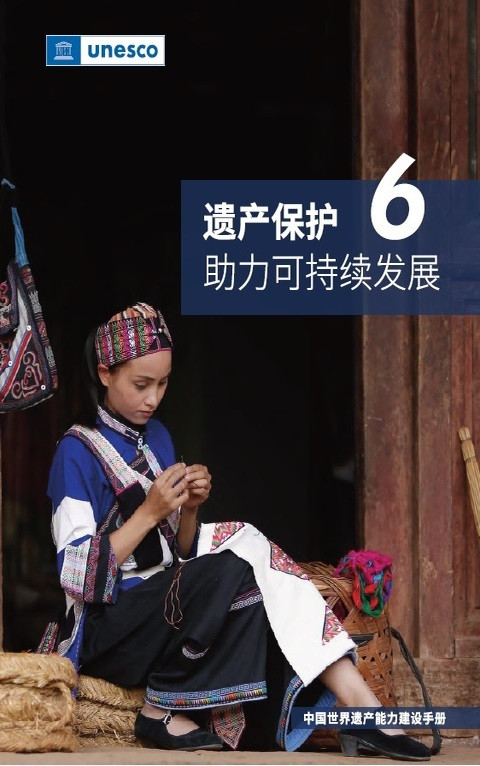 Inheritage Conservation Facilitating Sustainable Development Year of publication: 2021 Author: Yanxia LI | Gang Zhao | Ai Zhong | Ping Kong Corporate author: UNESCO Beijing The document presents international and Chinese policies for heritage conservation and sustainable development, summarising in case studies the enormous potential of culture to eradicate poverty, promote gender equality, foster economic growth and employment, enhance the resilience of World Heritage sites, and promote rural revitalisation.
  The Universal Periodic Review (UPR) and its Potential to Foster Freedom of Expression, Access to Information and Safety of Journalists: Guidelines for National Human Rights Institutions (NHRIs) Year of publication: 2022 Author: Hina Jilani Corporate author: UNESCO This document introduces The Universal Periodic Review (UPR), including its function, content and guideline for practice, and evaluates its positive contributions to global human rights.
 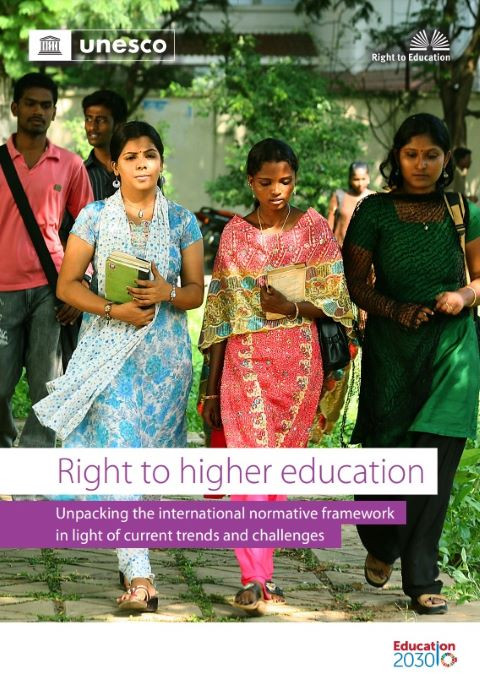 Right to Higher Education: Unpacking the International Normative Framework in Light of Current Trends and Challenges Year of publication: 2022 Corporate author: UNESCO | Right to Education Initiative (UK) The right to higher education is well-established in international human rights law. It requires states to progressively introduce free higher education and ensure that all have access on the basis of capacity. Yet, access to education is unequal from the very early years, which together with deep-rooted discrimination in education as well as differences in upbringing, often result in unfair admission procedures when reaching higher education. Drastic changes worldwide, due to rising inequalities, human movement, growing digitalization and the effects of the COVID-19 pandemic, are further challenging how this right can be concretely implemented. This publication seeks to bring clarity not only to existing obligations and rights, but also to unravel what aspects of the right to higher education might require further explanation in light of new contexts and challenges. It provides policy recommendations to guide states in their endeavour to ensure effective equal opportunities to higher education for all.
  Educate in Feminism: Why the Urgency? Year of publication: 2019 Author: Heydi Pastor A full-time feminist, Heydi Pastor, tells us the main reasons why in a society like ours feminism should be imparted through education to promote equal rights.
 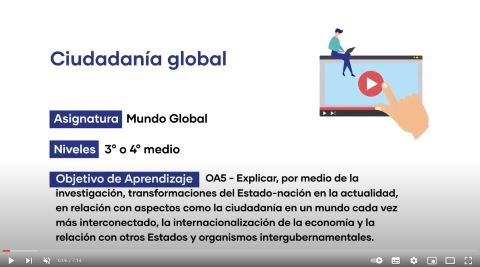 Global Citizenship Year of publication: 2020 Corporate author: Educar Chile | Chile Foundation This video seeks to explain how nation-states have been transformed today, in relation to aspects such as citizenship in an increasingly interconnected world, the internationalization of the economy, and the relationship with other states and intergovernmental organizations.
  Global Education to Improve the World: How to Promote Citizenship from School Year of publication: 2021 Author: Fernando Reimers Giving priority to global education would help make what is learned in school relevant, more current and attractive for both male and female students and their educators. This video offers an overview of this topic and the multidimensional theoretical model of global education that places teachers, administrators and other members of the educational community at the center of the definition of what the education of global citizens should be and how should develop. Its objective is to provide guidance on how to educate students with a global mindset so that they are competent and responsible when acting in the face of the global challenges of their time.
  [Executive Summary] 5th Global Report on Adult Learning and Education: Citizenship Education; Empowering Adults for Change Year of publication: 2022 Corporate author: UNESCO Institute for Lifelong Learning (UIL) Lifelong learning is not only a right; it is also a crucial asset in facing social and economic uncertainty and environmental and digital disruption. It is a culture that must be developed to ensure social cohesion, equal opportunities, gender equality and the economic vitality of societies.The Global Reports on Adult Learning and Education (GRALE) play a key role in meeting UNESCO's commitment to monitor and report on countries' implementation of the Belem Framework for Action. In this Framework, countries agreed to improve ALE across five areas of action: policy; governance; financing; participation, inclusion and equity; and quality. This report contributes to these goals by providing international reference data to support and inform public policies.
  5th Global Report on Adult Learning and Education: Citizenship Education; Empowering Adults for Change Year of publication: 2023 Corporate author: UNESCO Institute for Lifelong Learning (UIL) Lifelong learning is not only a right; it is also a crucial asset in facing social and economic uncertainty and environmental and digital disruption. It is a culture that must be developed to ensure social cohesion, equal opportunities, gender equality and the economic vitality of societies.The Global Reports on Adult Learning and Education (GRALE) play a key role in meeting UNESCO's commitment to monitor and report on countries' implementation of the Belem Framework for Action. In this Framework, countries agreed to improve ALE across five areas of action: policy; governance; financing; participation, inclusion and equity; and quality. This report contributes to these goals by providing international reference data to support and inform public policies.
  Defense and Citizenship Day Year of publication: 2022 Corporate author: Secretary General for Administration of the Ministry of Armed Forces (France) The JDC is a key step not to be missed. This mandatory day raises young people's awareness of the spirit of Defense and commitment to society. Coming after the census, this is the third and final stage of the citizenship journey. For one day, it presents young people with the issues and general objectives of defense and national security, raising their awareness of the rights and duties related to citizenship, road safety, organ donation, etc. This day also makes it possible to evaluate the basic learning of the French language or even to detect young people without diplomas and without jobs to offer them solutions. The JDC is the keystone of the Armed Forces Youth Ambition Plan to follow young people, introduce them to the professions of the armed forces and support them until they are hired.